
[Paper Review] Handwritten Text Recognition Using Convolutional Neural Network
This paper proposes a custom Convolutional Neural Network (CNN) architecture for handwritten text recognition using the NIST dataset, achieving 90.54% accuracy after 20 epochs. The model employs multiple convolutional and pooling layers with ReLU activation, dropout regularization, and a softmax output layer trained via Adam optimizer and categorical cross-entropy loss.
OCR (Optical Character Recognition) is a technology that offers comprehensive alphanumeric recognition of handwritten and printed characters at electronic speed by merely scanning the document. Recently, the understanding of visual data has been termed Intelligent Character Recognition (ICR). Intelligent Character Recognition (ICR) is the OCR module that can convert scans of handwritten or printed characters into ASCII text. ASCII data is the standard format for data encoding in electronic communication. ASCII assigns standard numeric values to letters, numeral, symbols, white-spaces and other characters. In more technical terms, OCR is the process of using an electronic device to transform 2-Dimensional textual information into machine-encoded text. Anything that contains text both machine written or handwritten can be scanned either through a scanner or just simply a picture of the text is enough for the recognition system to distinguish the text. The goal of this papers is to show the results of a Convolutional Neural Network model which has been trained on National Institute of Science and Technology (NIST) dataset containing over a 100,000 images. The network learns from the features extracted from the images and use it to generate the probability of each class to which the picture belongs to. We have achieved an accuracy of 90.54% with a loss of 2.53%.
Motivation & Objective
- To develop a deep learning model capable of recognizing handwritten digits and characters from images.
- To evaluate the performance of a custom CNN architecture on the NIST dataset for handwritten text recognition.
- To investigate the effectiveness of convolutional layers, pooling, and regularization techniques in improving recognition accuracy.
- To compare the model's performance against existing OCR systems and identify limitations in character classification.
Proposed method
- A custom CNN architecture with three convolutional layers using 1024, 512, and 256 filters of sizes 5×5, 3×3, and 3×3 respectively.
- ReLU activation function applied after each convolutional layer to introduce non-linearity.
- Max-pooling layers used after each convolutional block to reduce spatial dimensions and prevent overfitting.
- Dropout regularization applied to the fully connected layers to improve generalization.
- Flatten layer used to convert the 2D feature maps into a 1D vector for the final dense layers.
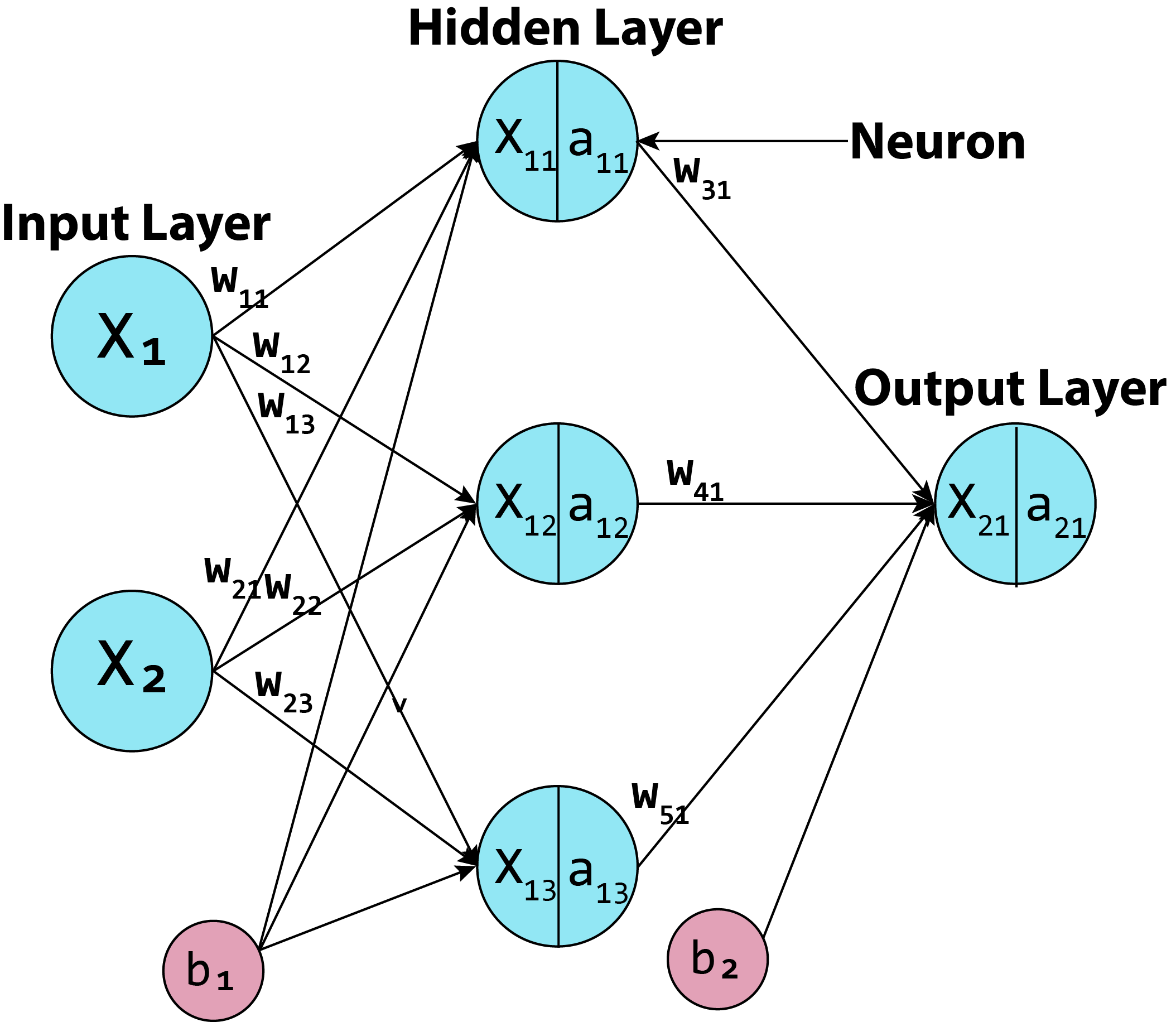
- Two fully connected layers with 256 and 128 neurons, followed by a 47-way softmax output layer for multi-class classification.
Experimental results
Research questions
- RQ1Can a custom CNN architecture achieve high accuracy in recognizing handwritten alphanumeric characters from the NIST dataset?
- RQ2How do convolutional and pooling layers contribute to feature extraction and classification performance in handwritten text recognition?
- RQ3What impact does dropout regularization have on reducing overfitting in the trained model?
- RQ4How do the choice of optimizer (Adam) and loss function (categorical cross-entropy) affect model convergence and accuracy?
- RQ5Why do certain characters (e.g., 't' vs 'T') show misclassification despite high overall accuracy?
Key findings
- The proposed CNN model achieved a test accuracy of 90.54% on the NIST dataset after 20 training epochs.
- The model exhibited a validation loss of 2.53%, indicating moderate generalization performance.
- The ROC curves revealed low AUC values for similar-looking characters such as '1', 'I', 'J', 'S', 'T', and 'f', suggesting confusion due to visual similarity.
- Misclassification of lowercase 't' as uppercase 'T' was observed in test samples, highlighting challenges in distinguishing similar character shapes.
- The use of ReLU activation, dropout, and batch normalization (implied by Adam optimizer) contributed to stable training and improved generalization.
- The model demonstrated strong performance on most classes, but performance degradation was observed for visually ambiguous characters, indicating a need for data augmentation or architectural refinement.
Read this paper
Open the full text in the Nubint reader and ask about any passage as you read.
Read this paper on NubintThis review was generated by AI from the original paper. Please check the paper before citing it.