
[Paper Review] How important are activation functions in regression and classification? A survey, performance comparison, and future directions
This survey investigates the role of activation functions in deep learning for regression and classification, comparing fixed (e.g., ReLU) and adaptive (e.g., Rowdy, Swish) functions across tasks. It finds that ReLU variants underperform in physics-informed machine learning due to derivative issues, while sine, tanh, and adaptive functions excel—especially in multiscale PDE problems—with JAX enabling superior accuracy and efficiency.
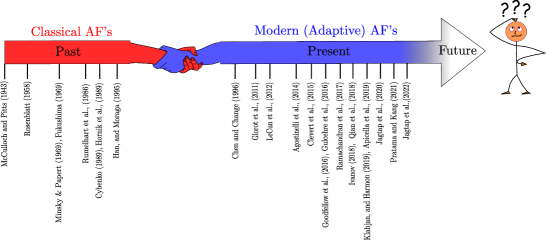
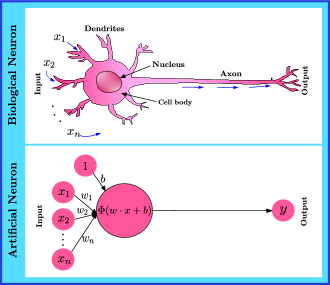
Inspired by biological neurons, the activation functions play an essential part in the learning process of any artificial neural network commonly used in many real-world problems. Various activation functions have been proposed in the literature for classification as well as regression tasks. In this work, we survey the activation functions that have been employed in the past as well as the current state-of-the-art. In particular, we present various developments in activation functions over the years and the advantages as well as disadvantages or limitations of these activation functions. We also discuss classical (fixed) activation functions, including rectifier units, and adaptive activation functions. In addition to discussing the taxonomy of activation functions based on characterization, a taxonomy of activation functions based on applications is presented. To this end, the systematic comparison of various fixed and adaptive activation functions is performed for classification data sets such as the MNIST, CIFAR-10, and CIFAR- 100. In recent years, a physics-informed machine learning framework has emerged for solving problems related to scientific computations. For this purpose, we also discuss various requirements for activation functions that have been used in the physics-informed machine learning framework. Furthermore, various comparisons are made among different fixed and adaptive activation functions using various machine learning libraries such as TensorFlow, Pytorch, and JAX.
Motivation & Objective
- To systematically evaluate the impact of activation functions on deep learning performance in both classification and regression tasks.
- To identify limitations of classical fixed activation functions (e.g., ReLU) in physics-informed machine learning (PIML), particularly regarding derivative requirements.
- To compare fixed and adaptive activation functions across multiple datasets (MNIST, CIFAR-10, CIFAR-100) and machine learning frameworks (TensorFlow, PyTorch, JAX).
- To propose a novel applications-based taxonomy of activation functions, emphasizing scientific computing and multiscale modeling.
- To explore future directions, including quantized adaptive activations and integration with spiking neural networks for improved efficiency and biological plausibility.
Proposed method
- Conduct a comprehensive survey of classical (e.g., ReLU, ELU, sigmoid, tanh) and modern adaptive activation functions (e.g., Swish, Rowdy, Sine-based).
- Perform systematic performance comparisons on standard classification benchmarks (MNIST, CIFAR-10, CIFAR-100) using TensorFlow, PyTorch, and JAX.
- Evaluate activation functions in physics-informed machine learning (PIML) frameworks, focusing on accuracy in solving PDEs with clean and noisy data.
- Analyze the spectral bias problem in fixed activation functions and assess how adaptive and sinusoidal-based functions (e.g., Rowdy) mitigate it.
- Leverage JAX’s JIT compilation and Hessian computation capabilities to enable high-accuracy, high-efficiency training of PIML models.
- Introduce and test adaptive activation functions with dynamic parameters that reshape the loss landscape to avoid local minima and saturation.
Experimental results
Research questions
- RQ1How do fixed activation functions like ReLU and its variants perform in classification tasks compared to adaptive activation functions?
- RQ2Why do ReLU-based activation functions fail in physics-informed machine learning (PIML) frameworks despite their success in classification?
- RQ3What are the key properties of activation functions that make them suitable for solving multiscale PDEs in scientific machine learning?
- RQ4How does the choice of machine learning framework (TensorFlow, PyTorch, JAX) influence the performance of different activation functions in PIML?
- RQ5Can adaptive activation functions overcome the spectral bias problem and improve generalization in high-frequency or multiscale problems?
Key findings
- ReLU and its variants, while state-of-the-art for classification on MNIST, CIFAR-10, and CIFAR-100, perform poorly in physics-informed machine learning due to non-differentiable derivatives.
- Activation functions such as hyperbolic tangent, Swish, and sine-based functions (e.g., Rowdy) outperform ReLU in PIML tasks, especially for multiscale problems.
- Adaptive activation functions, particularly Rowdy, effectively mitigate the spectral bias problem by injecting sinusoidal noise into the base activation function.
- JAX significantly improves predictive accuracy (by an order of magnitude) in PIML compared to TensorFlow and PyTorch, due to superior Hessian computation and JIT compilation.
- Higher-order optimization methods like AdaHessian are more efficiently implemented in JAX, enabling faster convergence and better performance in complex PDE solving.
- Quantized adaptive activation functions are a promising direction to reduce computational cost in large-scale models without sacrificing performance.
Read this paper
Open the full text in the Nubint reader and ask about any passage as you read.
Read this paper on NubintThis review was generated by AI from the original paper. Please check the paper before citing it.