
[Paper Review] How important are socioeconomic factors for hurricane performance of power systems? An analysis of disparities through machine learning
This study uses Random Forest machine learning with Mean Decrease in Accuracy (MDA) to analyze hurricane-induced power outage performance in Florida, revealing that socioeconomic factors—particularly race/ethnicity, language ability, and unemployment—contribute 48% of model importance, indicating significant social disparities in grid resilience.
This paper investigates whether socioeconomic factors are important for the hurricane performance of the electric power system in Florida. The investigation is performed using the Random Forest classifier with Mean Decrease of Accuracy (MDA) for measuring the importance of a set of factors that include hazard intensity, time to recovery from maximum impact, and socioeconomic characteristics of the affected population. The data set (at county scale) for this study includes socioeconomic variables from the 5-year American Community Survey (ACS), as well as wind velocities, and outage data of five hurricanes including Alberto and Michael in 2018, Dorian in 2019, and Eta and Isaias in 2020. The study shows that socioeconomic variables are considerably important for the system performance model. This indicates that social disparities may exist in the occurrence of power outages, which directly impact the resilience of communities and thus require immediate attention.
Motivation & Objective
- To investigate whether socioeconomic factors influence the performance of electric power systems during hurricanes in Florida.
- To quantify the relative importance of socioeconomic variables compared to hazard intensity and recovery time in predicting outage outcomes.
- To address social disparities in power system resilience using a data-driven, machine learning approach.
- To use publicly available data from multiple hurricanes to ensure model generalizability and transparency.
- To evaluate model robustness under unbalanced data conditions and varying training/test splits.
Proposed method
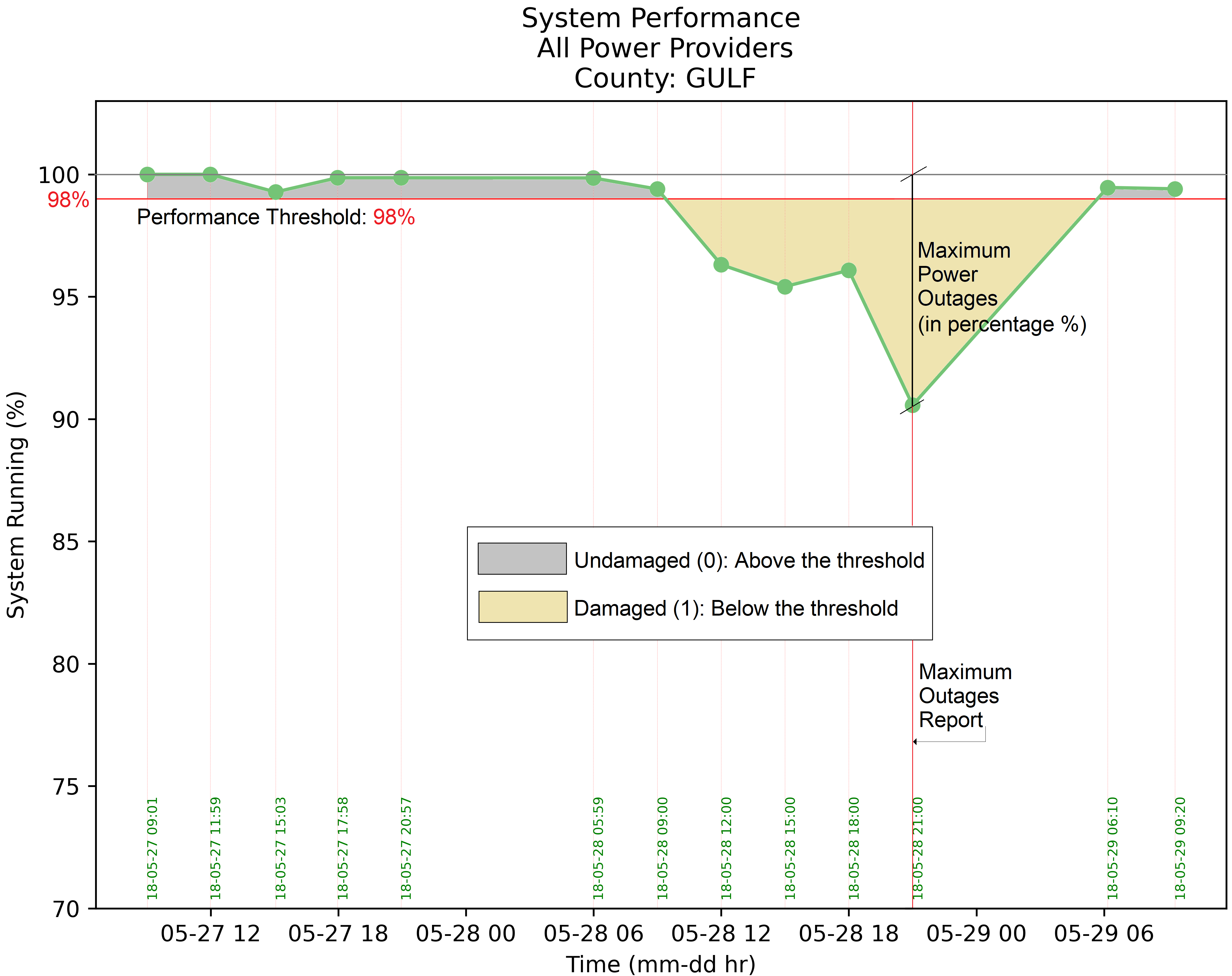
- Employed a Random Forest classifier to predict binary system performance (damaged/undamaged) based on input variables at the county level.
- Used Mean Decrease in Accuracy (MDA) to measure variable importance, reducing bias from traditional permutation importance methods.
- Integrated data from five hurricanes (Alberto, Michael, Dorian, Eta, Isaias) across 2018–2020, using county-level outage thresholds (2% customer outages).
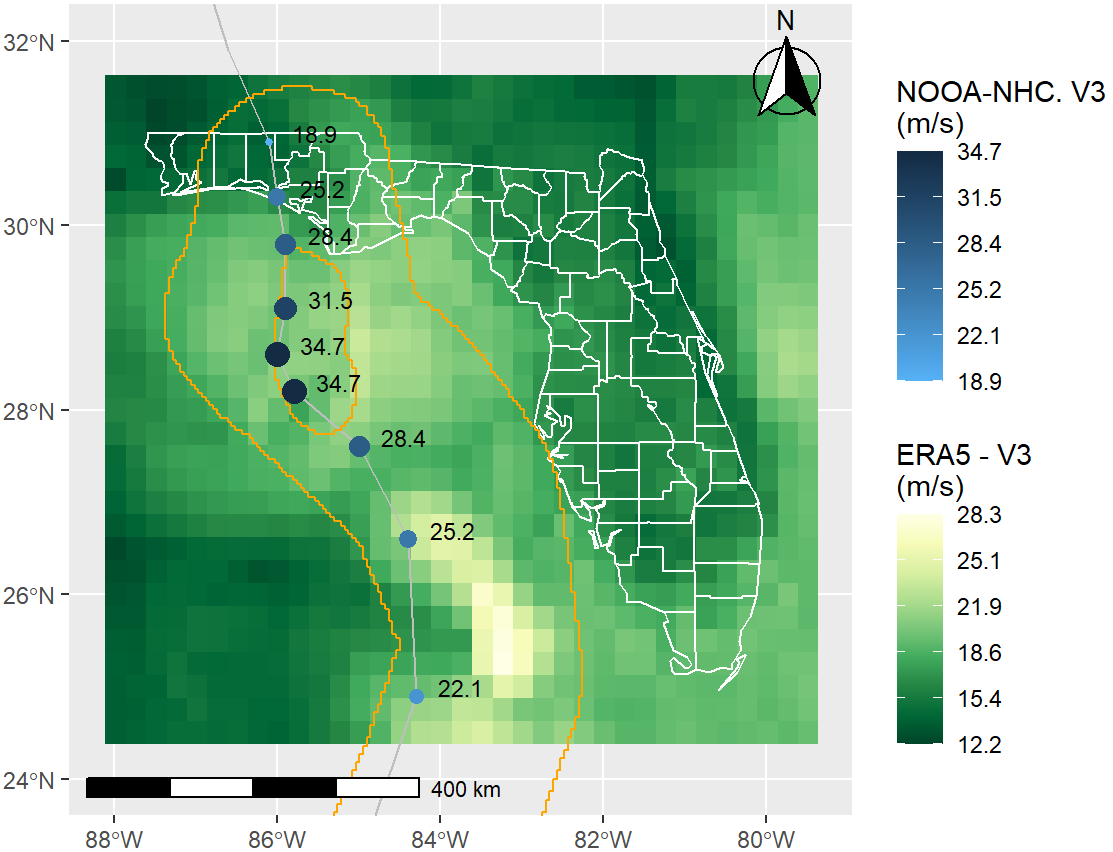
- Incorporated socioeconomic variables from the 5-year American Community Survey (ACS), wind velocity from ERA5 reanalysis, and recovery time metrics.
- Conducted 1000 random train-test partitions to assess model stability and robustness under data imbalance.
- Evaluated model performance using accuracy, AUC, and F1-score, with particular attention to the minority 'damaged' class.
Experimental results
Research questions
- RQ1To what extent do socioeconomic factors influence the likelihood of power system damage during hurricanes in Florida?
- RQ2How do socioeconomic variables compare in importance to wind hazard intensity and recovery time in predicting outage performance?
- RQ3How stable are the variable importance rankings across multiple random data partitions and model iterations?
- RQ4What specific socioeconomic indicators (e.g., race, language ability, unemployment) are most predictive of power outage outcomes?
- RQ5How does data imbalance affect model performance and reliability, particularly in detecting the 'damaged' system state?
Key findings
- Socioeconomic variables collectively accounted for 48% of the model’s predictive importance, indicating they are highly influential in outage performance.
- The top socioeconomic predictors were: percentage of Other population (6.31% MDA), Limited English Speaking Ability (4.99%), Latino population (3.35%), unemployment rate (2.91%), and Indian-American population (2.77%).
- Wind hazard variables contributed 49% of importance, with past maximum wind speed being the single most important factor (39.81% MDA).
- The average model accuracy was 91%, but the F1-score for the 'damaged' class was only 31%, indicating poor detection of high-impact outages.
- Model performance varied significantly across 1000 iterations, with AUC ranging from 0.594 (worst) to 0.995 (best), highlighting instability due to data imbalance.
- Despite high overall accuracy, the model exhibited low recall for the 'damaged' class, suggesting it under-predicts severe outages, which poses risks for emergency planning.
Read this paper
Open the full text in the Nubint reader and ask about any passage as you read.
Read this paper on NubintThis review was generated by AI from the original paper. Please check the paper before citing it.