
[Paper Review] Huatuo-26M, a Large-scale Chinese Medical QA Dataset
Huatuo-26M releases a 26.5M Chinese medical QA dataset and benchmarks retrieval and generation models, showing current methods still struggle with medical QA and demonstrating transfer, RAG, and pre-training benefits.
In this paper, we release a largest ever medical Question Answering (QA) dataset with 26 million QA pairs. We benchmark many existing approaches in our dataset in terms of both retrieval and generation. Experimental results show that the existing models perform far lower than expected and the released dataset is still challenging in the pre-trained language model era. Moreover, we also experimentally show the benefit of the proposed dataset in many aspects: (i) trained models for other QA datasets in a zero-shot fashion; and (ii) as external knowledge for retrieval-augmented generation (RAG); and (iii) improving existing pre-trained language models by using the QA pairs as a pre-training corpus in continued training manner. We believe that this dataset will not only contribute to medical research but also facilitate both the patients and clinical doctors. See \url{https://github.com/FreedomIntelligence/Huatuo-26M}.
Motivation & Objective
- Motivate the need for a large-scale Chinese medical QA resource to advance medical NLP with pre-trained language models.
- Create a diverse, multi-source QA dataset covering online consultations, encyclopedias, and knowledge bases.
- Benchmark retrieval and generation models on the dataset to reveal current capabilities and gaps.
- Demonstrate practical uses: transfer to other QA tasks, external knowledge for RAG, and continued pre-training.
- Discuss limitations, ethics, and potential applications to clinicians and patients.
Proposed method
- Assemble Huatuo-26M from online medical consultations, encyclopedias, and medical knowledge bases, followed by data cleaning and deduplication.
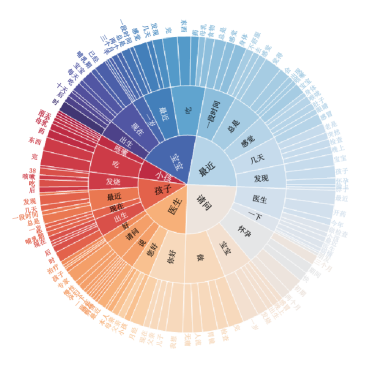
- Provide dataset statistics: total QA pairs, source breakdown, and average question/answer lengths.
- Benchmark retrieval methods (BM25, DeepCT, DPR) and generation models (GPT-2, T5) on the dataset.
- Evaluate generation and retrieval via standard metrics (Recall, MRR, BLEU/ROUGE/GLEU for generation).
- Demonstrate use cases: zero-shot transfer to other medical QA datasets, RAG with Huatuo-26M as external knowledge, and continued pre-training of BERT/RoBERTa families on Huatuo-26M.
- Show downstream improvements when Huatuo-26M is used for pre-training or as external knowledge.
Experimental results
Research questions
- RQ1How well can existing retrieval and generation models perform on the Huatuo-26M Chinese medical QA dataset?
- RQ2Do models trained on Huatuo-26M transfer effectively to other Chinese medical QA datasets in zero-shot or few-shot settings?
- RQ3Can Huatuo-26M improve retrieval-augmented generation (RAG) when used as external knowledge?
- RQ4Does continued pre-training on Huatuo-26M benefit general biomedical NLP models (e.g., BERT/RoBERTa) on downstream medical tasks?
Key findings
- Retrieval models (DeepCT and DPR) outperform BM25 across data sources, with dense retrieval often surpassing sparse methods.
- Generation models improve substantially when finetuned on Huatuo-26M (T5 and GPT-2), but overall generation scores remain relatively modest due to long, complex medical answers.
- Using Huatuo-26M as external RAG knowledge or as pre-training data yields measurable gains on downstream medical QA datasets like cMedQA2 and webMedQA, though effects vary by target dataset.
- Pre-training or RAG with Huatuo-26M can yield notable improvements in zero-shot or transfer settings, illustrating the dataset's value beyond its own QA pairs.
- Huatuo-26M as a pre-trained corpus improves multiple medical language understanding benchmarks (e.g., CBLUE) for models like BERT and RoBERTa.
Read this paper
Open the full text in the Nubint reader and ask about any passage as you read.
Read this paper on NubintThis review was generated by AI from the original paper. Please check the paper before citing it.