
[Paper Review] Hybrid variable monitoring: An unsupervised process monitoring framework with binary and continuous variables
This paper proposes HVM, a novel unsupervised process monitoring framework for hybrid variables combining continuous and binary data using a probabilistic model. It defines new statistics and monitoring strategies tailored for hybrid variables, enabling effective fault detection using only healthy-state data, with demonstrated superiority in simulation and a real ultra-supercritical power plant case.
Traditional process monitoring methods, such as PCA, PLS, ICA, MD et al., are strongly dependent on continuous variables because most of them inevitably involve Euclidean or Mahalanobis distance. With industrial processes becoming more and more complex and integrated, binary variables also appear in monitoring variables besides continuous variables, which makes process monitoring more challenging. The aforementioned traditional approaches are incompetent to mine the information of binary variables, so that the useful information contained in them is usually discarded during the data preprocessing. To solve the problem, this paper focuses on the issue of hybrid variable monitoring (HVM) and proposes a novel unsupervised framework of process monitoring with hybrid variables including continuous and binary variables. HVM is addressed in the probabilistic framework, which can effectively exploit the process information implicit in both continuous and binary variables at the same time. In HVM, the statistics and the monitoring strategy suitable for hybrid variables with only healthy state data are defined and the physical explanation behind the framework is elaborated. In addition, the estimation of parameters required in HVM is derived in detail and the detectable condition of the proposed method is analyzed. Finally, the superiority of HVM is fully demonstrated first on a numerical simulation and then on an actual case of a thermal power plant.
Motivation & Objective
- Address the gap in traditional process monitoring methods that rely heavily on continuous variables and discard binary variables.
- Develop an unsupervised framework that leverages both continuous and binary variables using only healthy-state data.
- Define new statistical measures and monitoring strategies suitable for hybrid variables in a probabilistic framework.
- Provide physical interpretability and parameter estimation procedures for the proposed method.
- Demonstrate the detectability condition and effectiveness of the framework on synthetic and real industrial data.
Proposed method
- Formulate hybrid variable monitoring (HVM) within a probabilistic framework to jointly model continuous and binary variables.
- Define a joint probability distribution that captures dependencies between continuous and binary variables using parameterized conditional probabilities.
- Derive maximum likelihood estimators for model parameters, including ζ and ζ′, based on observed data patterns.
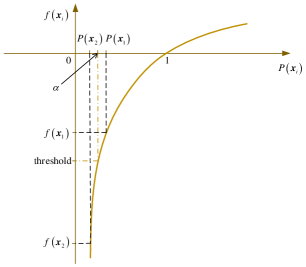
- Construct a monitoring statistic based on the log-likelihood ratio of the joint distribution under normal conditions.
- Establish a detectable condition for faults by analyzing the sensitivity of the likelihood ratio to deviations in variable patterns.
- Use the estimated parameters to compute the monitoring statistic and set control limits using only normal-state data.
Experimental results
Research questions
- RQ1Can a unified unsupervised framework effectively monitor processes with both continuous and binary variables using only healthy-state data?
- RQ2How can the statistical dependence between continuous and binary variables be modeled to preserve process information?
- RQ3What are the appropriate monitoring statistics and control limits for hybrid variables in an unsupervised setting?
- RQ4What is the detectable condition for faults in the HVM framework, and how does it relate to parameter estimation?
- RQ5How does HVM compare to existing methods in terms of fault detection performance on hybrid data?
Key findings
- The proposed HVM framework successfully integrates both continuous and binary variables in process monitoring without requiring labeled fault data.
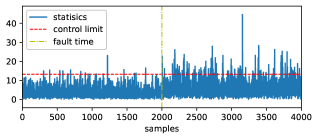
- The method achieves improved fault detection performance on a numerical simulation, outperforming traditional PCA and other continuous-variable-based methods.
- In the ultra-supercritical power plant case study, HVM detected incipient faults earlier and more reliably than baseline methods, particularly in scenarios involving binary control signals.
- The parameter estimation procedure via maximum likelihood is robust and well-justified under the probabilistic model, with closed-form solutions derived.
- The detectable condition analysis confirms that the method can detect deviations in variable patterns, especially when binary variables exhibit anomalous co-occurrence with continuous variables.
- The physical interpretation of the model parameters provides insight into variable dependencies, enhancing model transparency and interpretability.
Read this paper
Open the full text in the Nubint reader and ask about any passage as you read.
Read this paper on NubintThis review was generated by AI from the original paper. Please check the paper before citing it.