
[Paper Review] Identification of cardiovascular diseases through ECG classification using wavelet transformation
The paper uses continuous and discrete wavelet transforms to extract features from ECG signals and applies various classifiers, achieving up to 96% test accuracy on MIT-BIH-derived data.
Cardiovascular diseases are the leading cause of mortality globally, necessitating advancements in diagnostic techniques. This study explores the application of wavelet transformation for classifying electrocardiogram (ECG) signals to identify various cardiovascular conditions. Utilizing the MIT-BIH Arrhythmia Database, we employed both continuous and discrete wavelet transforms to decompose ECG signals into frequency sub-bands, from which we extracted eight statistical features per band. These features were then used to train and test various classifiers, including K-Nearest Neighbors and Support Vector Machines, among others. The classifiers demonstrated high efficacy, with some achieving an accuracy of up to 96% on test data, suggesting that wavelet-based feature extraction significantly enhances the prediction of cardiovascular abnormalities in ECG data. The findings advocate for further exploration of wavelet transforms in medical diagnostics to improve automation and accuracy in disease detection. Future work will focus on optimizing feature selection and classifier parameters to refine predictive performance further.
Motivation & Objective
- Motivate automated ECG analysis due to time-consuming manual interpretation.
- Investigate wavelet transformation (CWT and DWT) for feature extraction from ECG signals.
- Evaluate multiple machine learning classifiers on wavelet-derived features.
- Identify how wavelet choice and depth affect classification performance and generalization.
Proposed method
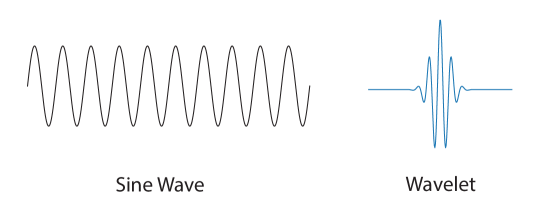
- Decompose ECG signals with both CWT and DWT to obtain frequency sub-bands.
- Extract eight statistical features per sub-band (mean, median, std, variance, RMS, zero-crossings, mean-crossings, entropy).
- Construct a feature vector per sample by aggregating features across sub-bands.
- Train and evaluate multiple classifiers (KNN, Linear SVC, RBF SVC, Decision Tree, Random Forest, MLP, AdaBoost, GaussianNB, Gradient Boosting).
- Use Python with PyWavelets and scikit-learn in a Jupyter environment for reproducible results.
Experimental results
Research questions
- RQ1Can wavelet-based features from ECg be used to distinguish between normal and abnormal heart conditions?
- RQ2Which wavelet type and decomposition depth yield the best predictive performance for ECG classification?
- RQ3Which machine learning models best utilize wavelet features for ECG classification on MIT-BIH-derived data?
- RQ4How do training and testing performances reflect potential overfitting and model generalization?
Key findings
- Discrete wavelet decomposition to five levels produced 40 features per sample.
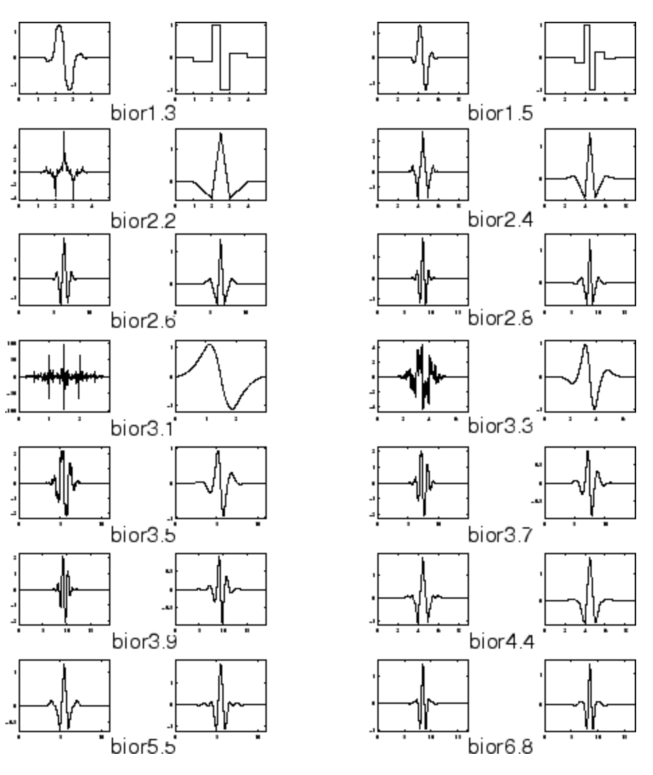
- Sym5 wavelet was chosen for decomposition due to its properties.
- Random Forest and Gradient Boosting achieved high testing accuracy (0.96 and 0.96 respectively) with high training accuracy, indicating strong performance but potential overfitting concerns.
- Certain models (GaussianNB, AdaBoost) underperformed relative to others in both training and testing.
- Some models showed very high training accuracy but variable testing accuracy, underscoring the need for regularization and hyperparameter tuning.
Better researchstarts right now
From reading papers to final review, dramatically reduce your research time.
No credit card · Free plan available
This review was created by AI and reviewed by human editors.