
[Paper Review] Identifying Fabricated Networks within Authorship-for-Sale Enterprises
This paper proposes a network-based detection method for authorship-for-sale enterprises by modeling the social structure of fabricated co-authorship networks, which exhibit low co-author recurrence and non-organic collaboration patterns. The method identifies statistically significant network fingerprints that correlate with known paper-mill activity, detecting 37% of papers flagged by textual analysis tools like the Problematic Paper Screener.
Fabricated papers do not just need text, images, and data, they also require a fabricated or partially fabricated network of authors. Most `authors' on a fabricated paper have not been associated with the research, but rather are added through a transaction. This lack of deeper connection means that there is a low likelihood that co-authors on fabricated papers will ever appear together on the same paper more than once. This paper constructs a model that encodes some of the key characteristics of this activity in an `authorship-for-sale' network with the aim to create a robust method to detect this type of activity. A characteristic network fingerprint arises from this model that provides a robust statistical approach to the detection of paper-mill networks. The model suggested in this paper detects networks that have a statistically significant overlap with other approaches that principally rely on textual analysis for the detection of fraudulent papers. Researchers connected to networks identified using the methodology outlined in this paper are shown to be connected with 37% of papers identified through the tortured-phrase and clay-feet methods deployed in the Problematic Paper Screener website. Finally, methods to limit the expansion and propagation of these networks is discussed both in technological and social terms.
Motivation & Objective
- To address the growing threat of paper mills that fabricate not only content but also co-authorship networks for credibility.
- To identify structural anomalies in author collaboration networks that signal transactional authorship rather than genuine research collaboration.
- To develop a statistically robust method for detecting paper-mill networks independent of textual or image-based analysis.
- To support publishers and institutions in identifying compromised journals and at-risk researchers through network-level detection.
- To advocate for institutional and technological changes that limit the creation of fabricated author profiles and prevent long-term reputational damage.
Proposed method
- Constructs a model of authorship-for-sale networks based on low recurrence of co-author pairs across multiple publications.
- Uses network analysis to detect statistically significant deviations from natural co-authorship patterns, such as sparse, non-repeating collaborations.
- Applies a fingerprinting approach to identify network-level characteristics unique to fabricated author networks.
- Validates the model against known paper-mill networks and established detection tools like the Problematic Paper Screener.
- Leverages shared scientometric datasets to enable cross-institutional analysis while respecting GDPR constraints.
- Proposes integration with ORCID and publisher-level data sharing to disrupt the creation of fake author profiles.
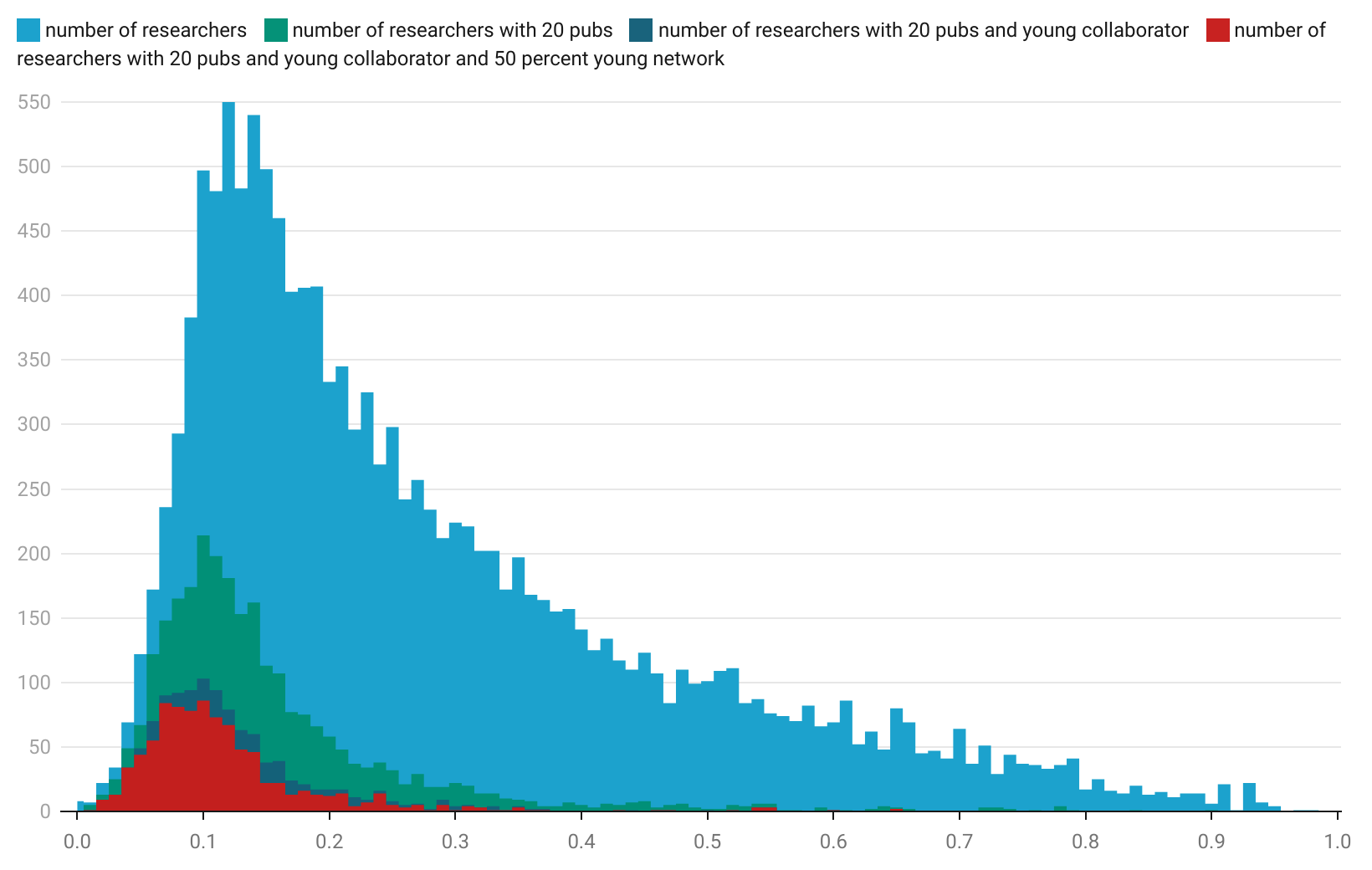
Experimental results
Research questions
- RQ1What structural characteristics distinguish fabricated co-authorship networks from genuine research collaborations?
- RQ2Can network-level patterns in authorship be used to detect authorship-for-sale enterprises independently of textual or image-based signals?
- RQ3How well do the detected network fingerprints align with existing paper-mill detection methods based on textual anomalies?
- RQ4To what extent can network-based detection reduce the success rate of paper mills in establishing credible author profiles?
- RQ5What institutional and technological interventions can effectively limit the expansion of fabricated author networks?
Key findings
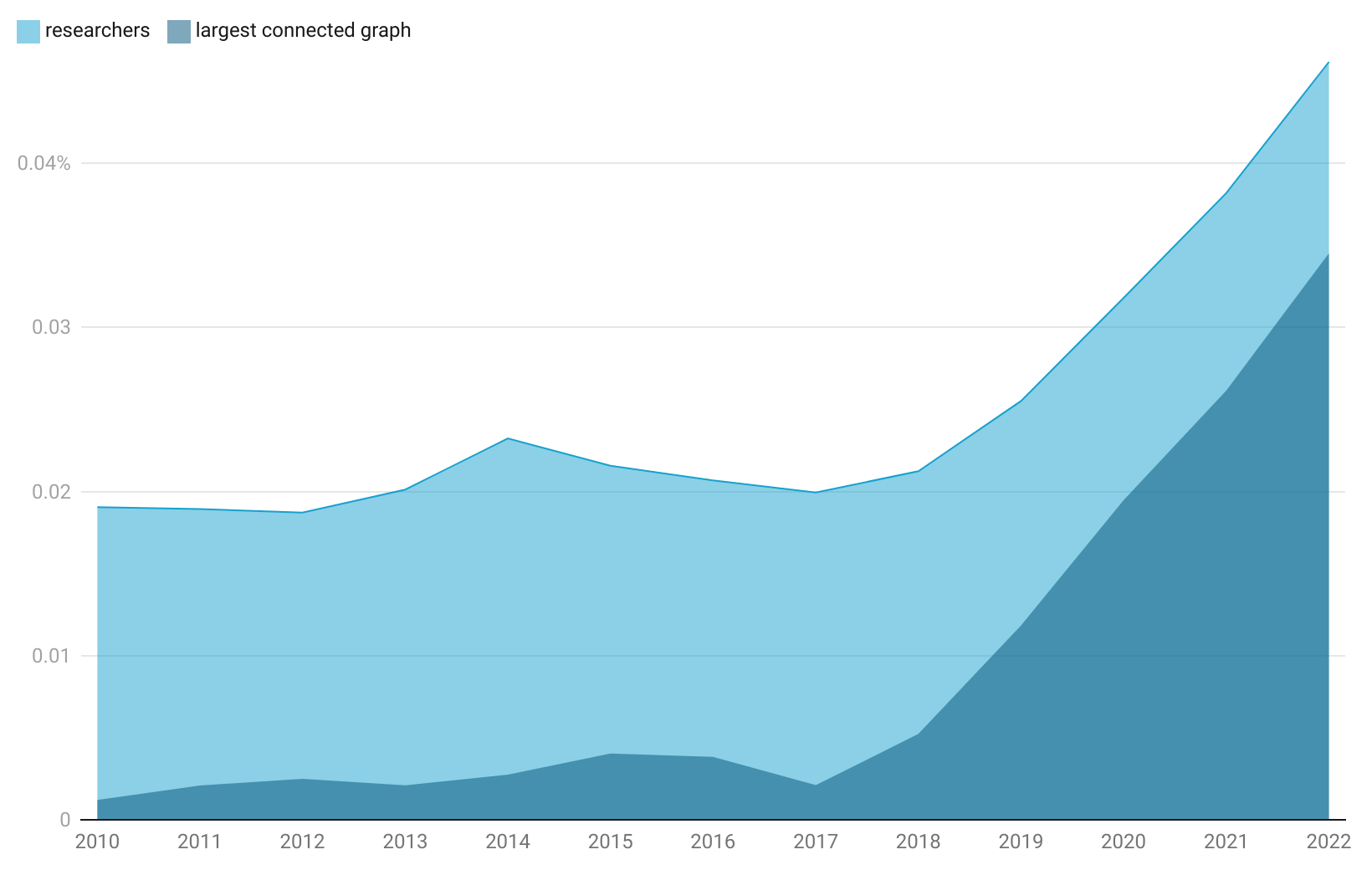
- The proposed method detects 37% of papers identified as suspicious by the Problematic Paper Screener’s tortured-phrase and clay-feet analysis, demonstrating strong alignment with textual detection methods.
- Fabricated co-authorship networks exhibit a statistically significant lack of repeated co-author pairs, forming a distinct fingerprint that can be reliably modeled.
- The method remains effective even as generative AI makes textual and image-based detection increasingly difficult, preserving a critical detection pathway.
- The model identifies researchers and journals with high risk of involvement in authorship-for-sale networks, enabling proactive intervention.
- Institutional collaboration and shared scientometric data are essential to track and disrupt the growth of fabricated author networks.
- Open sharing of detection methodologies and anonymized data is critical for advancing collective research integrity, despite concerns about adversarial adaptation.
Read this paper
Open the full text in the Nubint reader and ask about any passage as you read.
Read this paper on NubintThis review was generated by AI from the original paper. Please check the paper before citing it.