
[Paper Review] Image denoising using group sparsity residual and external nonlocal self-similarity prior
This paper proposes a novel image denoising method that minimizes group sparsity residual by leveraging an external nonlocal self-similarity (NSS) prior learned via Gaussian Mixture Models (GMM). By estimating clean image group sparse coefficients from noisy input using GMM-based NSS priors, the method achieves state-of-the-art performance with superior detail preservation and reduced ringing artifacts, outperforming BM3D, EPLL, and other leading methods in PSNR and visual quality.
Nonlocal image representation has been successfully used in many image-related inverse problems including denoising, deblurring and deblocking. However, a majority of reconstruction methods only exploit the nonlocal self-similarity (NSS) prior of the degraded observation image, it is very challenging to reconstruct the latent clean image. In this paper we propose a novel model for image denoising via group sparsity residual and external NSS prior. To boost the performance of image denoising, the concept of group sparsity residual is proposed, and thus the problem of image denoising is transformed into one that reduces the group sparsity residual. Due to the fact that the groups contain a large amount of NSS information of natural images, we obtain a good estimation of the group sparse coefficients of the original image by the external NSS prior based on Gaussian Mixture model (GMM) learning and the group sparse coefficients of noisy image is used to approximate the estimation. Experimental results have demonstrated that the proposed method not only outperforms many state-of-the-art methods, but also delivers the best qualitative denoising results with finer details and less ringing artifacts.
Motivation & Objective
- To address the challenge of reconstructing clean images from noisy observations when only the noisy image's NSS prior is used.
- To improve denoising performance by introducing the concept of group sparsity residual as the optimization target.
- To leverage external NSS priors from natural images—learned via GMM—to better estimate the group sparse coefficients of the original clean image.
- To reduce ringing artifacts and preserve fine image structures more effectively than existing group sparsity-based methods.
Proposed method
- The method formulates image denoising as minimizing the group sparsity residual between the noisy image and its estimated clean version.
- It uses a Gaussian Mixture Model (GMM) trained on clean image patches to learn the external NSS prior of natural images.
- Group sparse coefficients of the noisy image are used to approximate the desired group sparse coefficients of the clean image, guided by the external GMM-based NSS prior.
- The algorithm iteratively updates group sparse codes and image estimates using an alternating minimization scheme with $γ$- and $ρ$-regularization.
- Similar patches are grouped using a $W \times W$ search window, and $m$-nearest neighbors are selected per group to form $m$-dimensional groups.
- The final denoised image is reconstructed by aggregating all updated group estimates.
Experimental results
Research questions
- RQ1Can minimizing group sparsity residual lead to better image denoising performance than traditional sparse coding or regularization methods?
- RQ2How effectively can an external NSS prior—learned from clean image patches via GMM—improve the estimation of clean image group sparse coefficients from noisy input?
- RQ3Does exploiting the NSS structure of natural images through external GMM learning reduce ringing artifacts and preserve fine image details more effectively than methods relying only on the noisy image's NSS?
- RQ4To what extent does the proposed method outperform state-of-the-art denoising techniques in both PSNR and visual quality?
Key findings
- The proposed method achieves an average PSNR improvement of 0.24 dB over BM3D, 0.59 dB over EPLL, and 1.30 dB over GID at noise level $\sigma = 50$.
- At $\sigma = 100$, the method achieves a PSNR of 23.19 dB, outperforming aGMM (22.62 dB), PGPD (23.03 dB), and BM3D (22.89 dB).
- Visual results show that the proposed method preserves finer image details and suppresses ringing artifacts more effectively than BM3D, EPLL, NCSR, GID, LINE, PGPD, and aGMM.
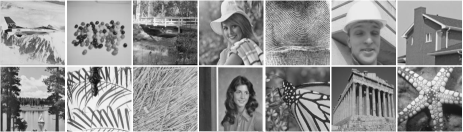
- The method achieves the highest PSNR on all tested noise levels, with consistent improvements across the 14 test images in the Kodak dataset.
- The use of external NSS prior via GMM learning significantly enhances the accuracy of group sparse coefficient estimation, leading to superior reconstruction quality.
- The method demonstrates robustness across a wide range of noise levels, with parameter settings adapted per noise level to maintain optimal performance.
Read this paper
Open the full text in the Nubint reader and ask about any passage as you read.
Read this paper on NubintThis review was generated by AI from the original paper. Please check the paper before citing it.