
[Paper Review] Implementing AI Ethics: Making Sense of the Ethical Requirements
This paper proposes an ethical risk requirements stack within an Agile portfolio management framework to help middle and higher-level software engineering (SE) executives practically implement AI ethics. It finds that while privacy and data governance are treated as legal compliance, ethical requirements like technical robustness, safety, and societal well-being are most effectively implemented as risk and sustainability requirements, significantly improving their visibility and integration in management practices.
Society's increasing dependence on Artificial Intelligence (AI) and AI-enabled systems require a more practical approach from software engineering (SE) executives in middle and higher-level management to improve their involvement in implementing AI ethics by making ethical requirements part of their management practices. However, research indicates that most work on implementing ethical requirements in SE management primarily focuses on technical development, with scarce findings for middle and higher-level management. We investigate this by interviewing ten Finnish SE executives in middle and higher-level management to examine how they consider and implement ethical requirements. We use ethical requirements from the European Union (EU) Trustworthy Ethics guidelines for Trustworthy AI as our reference for ethical requirements and an Agile portfolio management framework to analyze implementation. Our findings reveal a general consideration of privacy and data governance ethical requirements as legal requirements with no other consideration for ethical requirements identified. The findings also show practicable consideration of ethical requirements as technical robustness and safety for implementation as risk requirements and societal and environmental well-being for implementation as sustainability requirements. We examine a practical approach to implementing ethical requirements using the ethical risk requirements stack employing the Agile portfolio management framework.
Motivation & Objective
- To investigate how middle and higher-level SE executives understand and implement ethical requirements in AI systems.
- To address the gap in practical ethical requirement implementation at management levels, where most research focuses on technical development.
- To explore how ethical requirements can be made more visible and actionable in SE management by linking them to risk and sustainability frameworks.
- To develop a practical, scalable approach for embedding ethical requirements into management decision-making using existing Agile portfolio management tools.
Proposed method
- Conducted semi-structured interviews with ten Finnish SE executives in middle and higher-level management roles.
- Used the EU's Trustworthy AI Ethics Guidelines as a reference framework for ethical requirements.
- Applied an Agile portfolio management framework to analyze how ethical requirements are currently considered and implemented.
- Developed an 'ethical risk requirements stack' to operationalize ethical requirements as risk and sustainability concerns.
- Mapped ethical requirements to technical robustness, safety, societal well-being, and environmental sustainability for practical implementation.
- Evaluated the feasibility of integrating ethical requirements into existing management practices using simplified, already available tools and processes.
Experimental results
Research questions
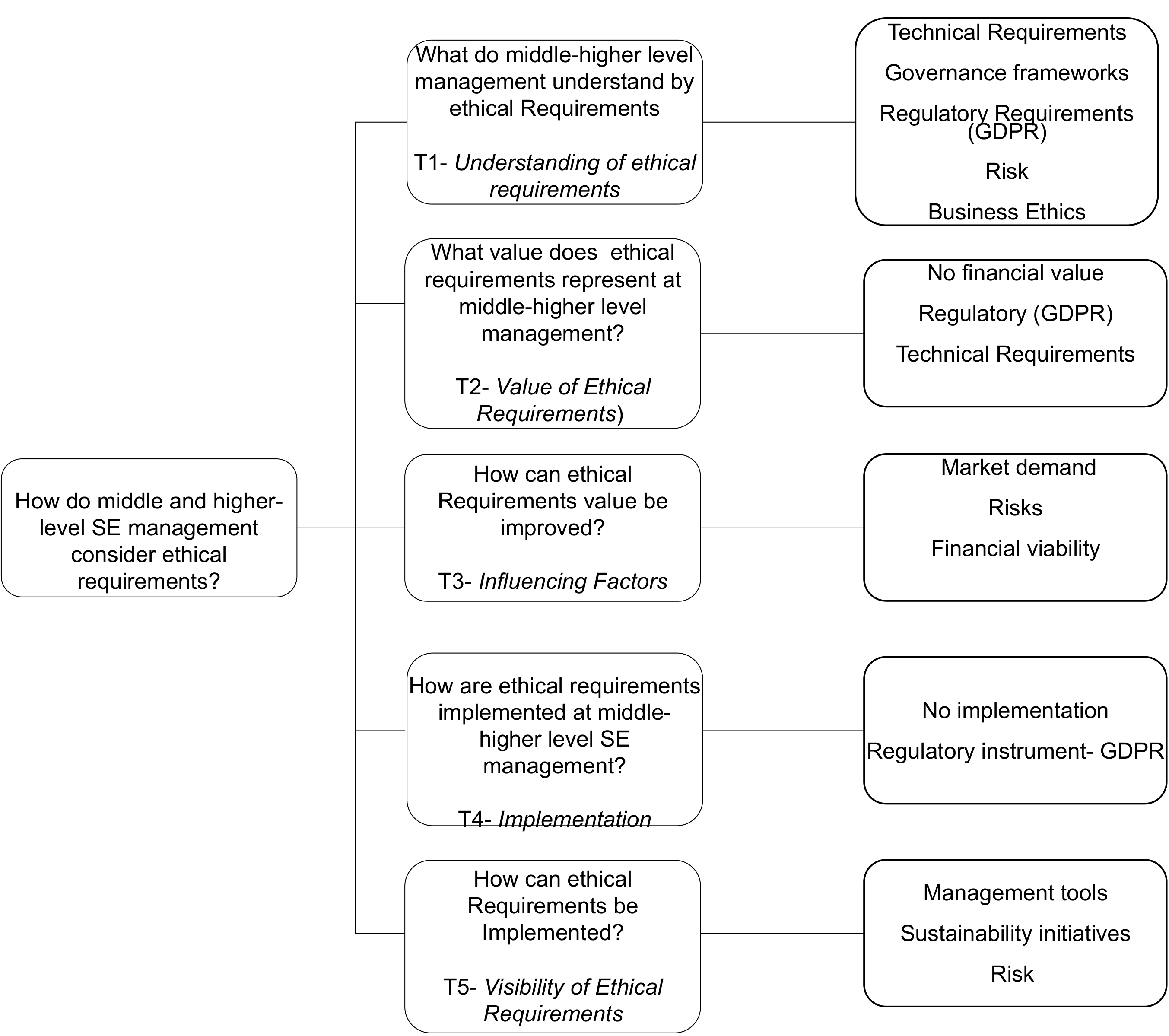
- RQ1How do middle and higher-level SE management understand ethical requirements?
- RQ2What value do ethical requirements represent at the middle and higher management levels?
- RQ3How can the value of ethical requirements be improved in management decision-making?
- RQ4How are ethical requirements currently implemented at the middle and higher SE management levels?
- RQ5How can ethical requirements be practically implemented using existing management frameworks?
Key findings
- Ethical requirements are primarily perceived by executives as legal or regulatory obligations, especially in privacy and data governance, with little consideration for broader ethical principles.
- Technical robustness and safety are treated as risk requirements, while societal and environmental well-being are framed as sustainability requirements, indicating a shift toward practical integration.
- The value of ethical requirements is not perceived as financially beneficial, but their integration as risk and sustainability requirements enhances their visibility and strategic relevance.
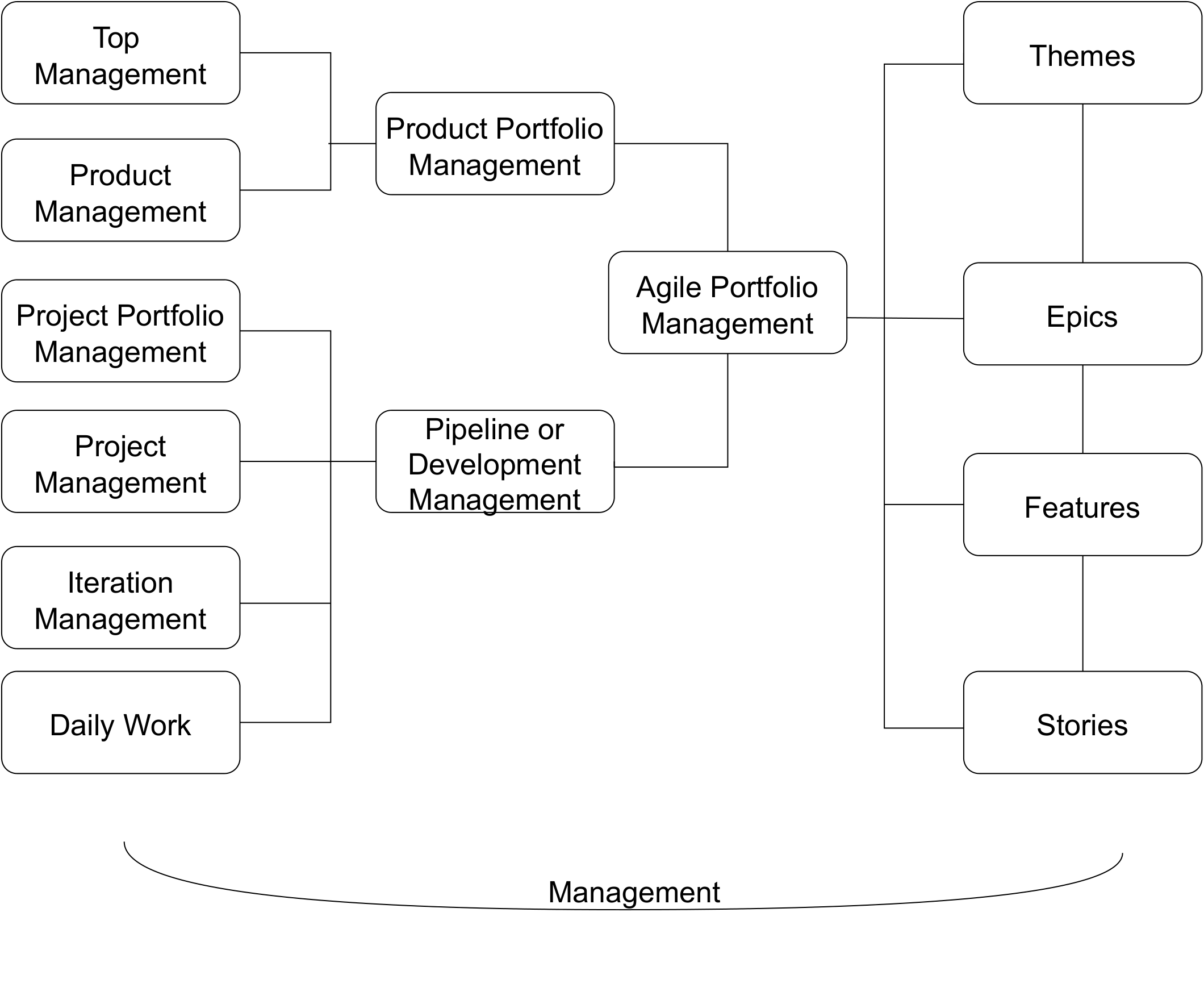
- A practical approach using an 'ethical risk requirements stack' enables executives to implement ethical requirements through existing Agile portfolio management tools and processes.
- The study reveals that ethical requirements are most effectively implemented when reframed as risk and sustainability concerns rather than abstract ethical principles.
- There is a lack of structured ethical requirement frameworks in risk management, leading to vulnerabilities and unmanaged ethical risks in AI systems.
Read this paper
Open the full text in the Nubint reader and ask about any passage as you read.
Read this paper on NubintThis review was generated by AI from the original paper. Please check the paper before citing it.