
[Paper Review] LAHM : Large Annotated Dataset for Multi-Domain and Multilingual Hate Speech Identification
This paper introduces LAHM, a large-scale multilingual and multi-domain hate speech dataset comprising ~300k tweets across six languages (English, Hindi, Arabic, French, German, Spanish) and five hate speech categories: Abuse, Sexism, Racism, Religious Hate, and Extremism. The dataset is constructed using a three-tier annotation pipeline combining monolingual, multilingual, and cross-lingual models, enabling state-of-the-art performance in multilingual, cross-lingual, and zero-shot hate speech detection tasks, with the multilingual few-shot classifier outperforming monolingual BERT models in most languages except Arabic and French.
Current research on hate speech analysis is typically oriented towards monolingual and single classification tasks. In this paper, we present a new multilingual hate speech analysis dataset for English, Hindi, Arabic, French, German and Spanish languages for multiple domains across hate speech - Abuse, Racism, Sexism, Religious Hate and Extremism. To the best of our knowledge, this paper is the first to address the problem of identifying various types of hate speech in these five wide domains in these six languages. In this work, we describe how we created the dataset, created annotations at high level and low level for different domains and how we use it to test the current state-of-the-art multilingual and multitask learning approaches. We evaluate our dataset in various monolingual, cross-lingual and machine translation classification settings and compare it against open source English datasets that we aggregated and merged for this task. Then we discuss how this approach can be used to create large scale hate-speech datasets and how to leverage our annotations in order to improve hate speech detection and classification in general.
Motivation & Objective
- To address the lack of large-scale, multilingual, and multi-domain hate speech datasets that cover diverse languages and hate speech types.
- To develop a scalable, semi-supervised annotation pipeline that combines monolingual, multilingual, and cross-lingual models for efficient data labeling.
- To evaluate the dataset using state-of-the-art transfer learning models across monolingual, multilingual, and cross-lingual settings.
- To enable zero-shot and few-shot learning for hate speech detection across low-resource languages and underrepresented domains.
- To provide a benchmark for evaluating cross-lingual transfer and domain generalization in abusive language detection.
Proposed method
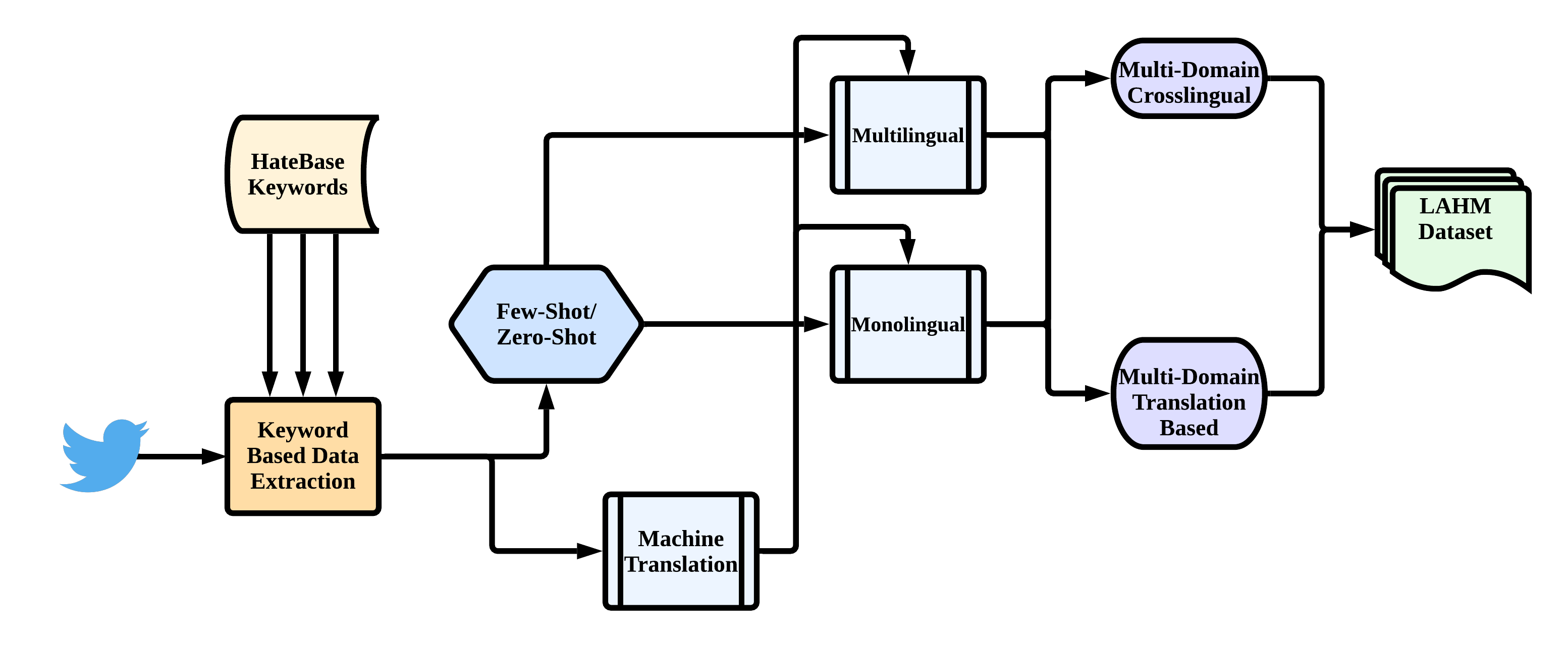
- A three-layer annotation pipeline was used: first, models were fine-tuned on monolingual data; second, multilingual models were trained on cross-lingual data; third, cross-lingual zero-shot models were applied to low-resource languages.
- The dataset was constructed using a combination of human-in-the-loop labeling and model-based voting, with at least two model predictions required for final labeling.
- High-level hate detection was performed using a multilingual binary classifier trained via few-shot learning, achieving better performance than monolingual BERT models in most languages.
- Cross-lingual multi-domain classification was evaluated using zero-shot transfer learning, leveraging the HSmerge dataset for fine-tuning.
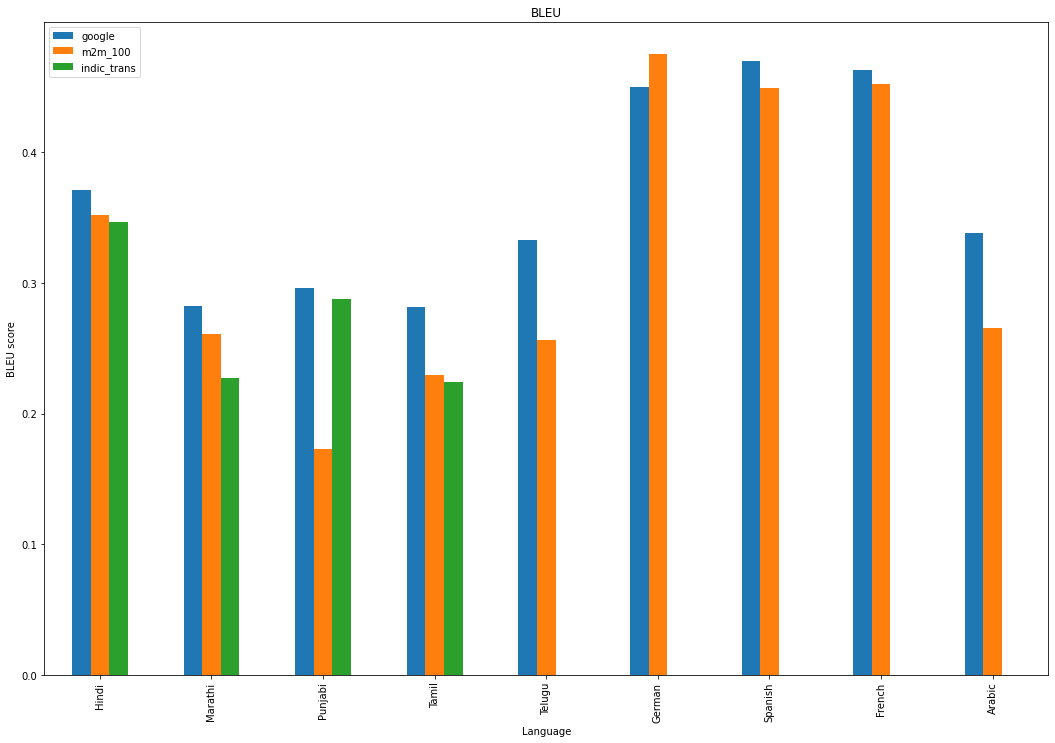
- Machine translation-based multi-domain classification was applied to translate non-English texts into English for model inference, followed by label aggregation.
- Model ensembling was used to improve prediction reliability, with voting across multiple models (e.g., BERT, Perspective API, multilingual classifier) to determine final labels.
Experimental results
Research questions
- RQ1Can a semi-supervised, multi-stage annotation pipeline effectively scale the creation of multilingual and multi-domain hate speech datasets?
- RQ2How does a multilingual few-shot classifier compare to monolingual BERT models in cross-lingual hate speech detection across diverse languages?
- RQ3To what extent can zero-shot cross-lingual transfer learning generalize across languages and hate speech domains?
- RQ4What is the label distribution of different hate speech types across low-resource languages like Hindi, Arabic, and German?
- RQ5Can machine translation-based multi-domain classification serve as a viable alternative for low-resource language hate speech detection?
Key findings
- The LAHM dataset contains approximately 300k tweets across six languages and five hate speech categories, making it the largest known dataset of its kind.
- The multilingual few-shot classifier outperformed monolingual BERT models in most languages, except Arabic and French, where the latter showed superior performance.
- For Hindi, the Perspective API predicted 31% of samples as hate, compared to 12% by the multilingual classifier, indicating model-specific bias in detection.
- In Arabic, the multilingual classifier predicted 73% of hate samples as Sexism or Extremism, highlighting language-specific distribution patterns.
- For French, 32% of samples were classified as Abuse, while Religious Hate had the lowest share at 8.3%.
- The machine translation-based multi-domain model predicted 12,312 samples as Abuse and 12,681 as Extremism, showing high model variance across languages.
Read this paper
Open the full text in the Nubint reader and ask about any passage as you read.
Read this paper on NubintThis review was generated by AI from the original paper. Please check the paper before citing it.