
[Paper Review] Large Language Models for Supply Chain Optimization
The paper presents OptiGuide, a framework that uses in-context learning with LLMs to translate human queries into optimization code, run a solver, and explain results for supply chain decisions without leaking proprietary data.
Supply chain operations traditionally involve a variety of complex decision making problems. Over the last few decades, supply chains greatly benefited from advances in computation, which allowed the transition from manual processing to automation and cost-effective optimization. Nonetheless, business operators still need to spend substantial efforts in explaining and interpreting the optimization outcomes to stakeholders. Motivated by the recent advances in Large Language Models (LLMs), we study how this disruptive technology can help bridge the gap between supply chain automation and human comprehension and trust thereof. We design OptiGuide -- a framework that accepts as input queries in plain text, and outputs insights about the underlying optimization outcomes. Our framework does not forgo the state-of-the-art combinatorial optimization technology, but rather leverages it to quantitatively answer what-if scenarios (e.g., how would the cost change if we used supplier B instead of supplier A for a given demand?). Importantly, our design does not require sending proprietary data over to LLMs, which can be a privacy concern in some circumstances. We demonstrate the effectiveness of our framework on a real server placement scenario within Microsoft's cloud supply chain. Along the way, we develop a general evaluation benchmark, which can be used to evaluate the accuracy of the LLM output in other scenarios.
Motivation & Objective
- Bridge the gap between supply chain optimization and human understanding and trust.
- Leverage LLMs to translate plain-text queries into optimization workflows without exposing proprietary data.
- Enable what-if analyses by integrating LLMs with traditional optimization solvers.
- Provide an evaluation benchmark for LLM-based explainability in supply chains.
- Demonstrate deployment in a real-world Microsoft Azure server-placement scenario.
Proposed method
- Use in-context learning to teach the LLM domain concepts via prompts without retraining.
- Have the LLM generate code that interfaces with an optimization solver (e.g., Gurobi) or database to obtain results.
- Incorporate a safeguard mechanism to detect and recover from output mistakes.
- Process query results through an interpreter to produce human-friendly explanations and visualizations.
- Iteratively refine queries (2-5) using logs to arrive at the final answer.
- Deploy a modular architecture with application-specific components to preserve data privacy.
Experimental results
Research questions
- RQ1Can an LLM provide accurate, human-readable explanations of optimization outcomes for supply chain problems?
- RQ2How effectively can an LLM perform what-if analyses by reformulating queries into optimization inputs?
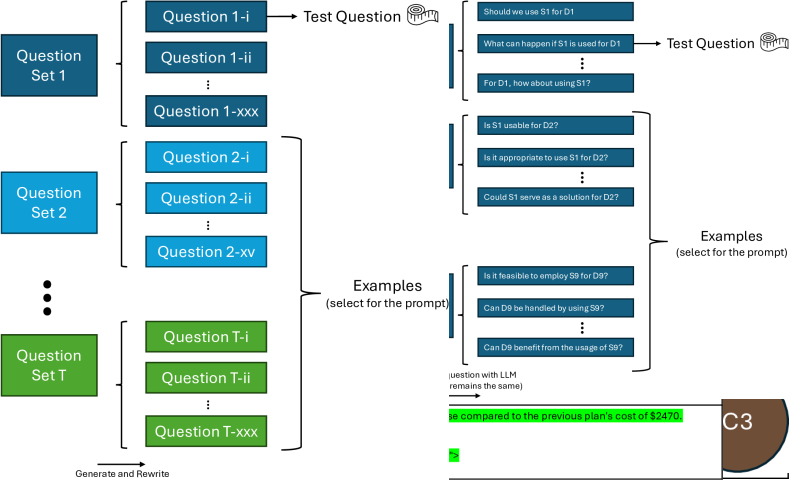
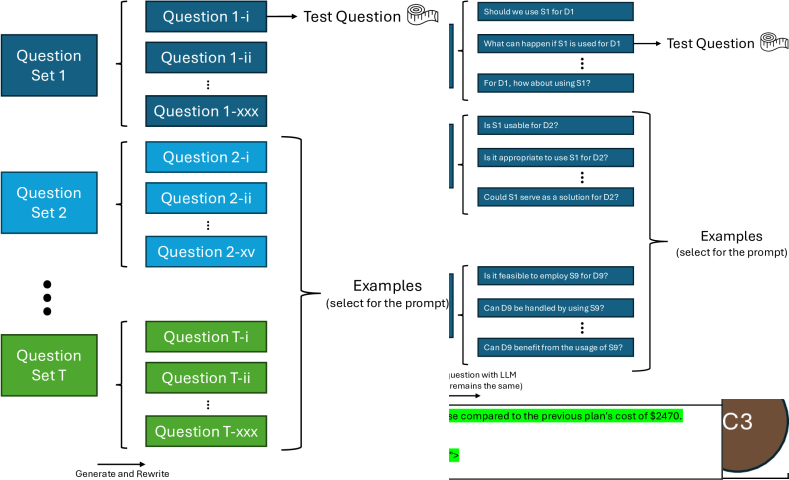
- RQ3What is the impact of prompt design, example selection, and model choice on explainability accuracy?
- RQ4How can OptiGuide preserve data privacy while leveraging external LLMs for interpretation?
- RQ5How does OptiGuide perform in a real-world Azure server placement deployment?
Key findings
- OptiGuide achieved 93% accuracy on average in an evaluation benchmark using GPT-4.
- The framework preserves privacy by keeping domain data in the solver or database, never sending it to the LLM.
- Evaluation includes in-distribution and out-of-distribution scenarios with multiple prompt strategies and example sizes.
- A real-world Azure deployment showed positive planner and engineer feedback and 90%+ in-distribution accuracy.
- The benchmark and methodology enable future evaluation of LLM-based explainability in supply chains.
Read this paper
Open the full text in the Nubint reader and ask about any passage as you read.
Read this paper on NubintThis review was generated by AI from the original paper. Please check the paper before citing it.