
[Paper Review] Large Language Models on Wikipedia-Style Survey Generation: an Evaluation in NLP Concepts
This paper evaluates large language models (LLMs) like GPT-4, PaLM2, LLaMA2, and GPT-3.5 in generating Wikipedia-style survey articles on 99 NLP topics. Using zero-shot, one-shot, and description prompt settings, it finds GPT-4 produces more contemporary, accessible, and often higher-quality content than human-written ground truth, though it occasionally introduces factual errors or vague phrasing. The study also reveals systematic bias in GPT-4’s own evaluation of generated texts.
Educational materials such as survey articles in specialized fields like computer science traditionally require tremendous expert inputs and are therefore expensive to create and update. Recently, Large Language Models (LLMs) have achieved significant success across various general tasks. However, their effectiveness and limitations in the education domain are yet to be fully explored. In this work, we examine the proficiency of LLMs in generating succinct survey articles specific to the niche field of NLP in computer science, focusing on a curated list of 99 topics. Automated benchmarks reveal that GPT-4 surpasses its predecessors, inluding GPT-3.5, PaLM2, and LLaMa2 by margins ranging from 2% to 20% in comparison to the established ground truth. We compare both human and GPT-based evaluation scores and provide in-depth analysis. While our findings suggest that GPT-created surveys are more contemporary and accessible than human-authored ones, certain limitations were observed. Notably, GPT-4, despite often delivering outstanding content, occasionally exhibited lapses like missing details or factual errors. At last, we compared the rating behavior between humans and GPT-4 and found systematic bias in using GPT evaluation.
Motivation & Objective
- To assess the proficiency of LLMs in generating structured, educational survey articles on niche NLP topics.
- To compare LLM-generated surveys against human-written ground truth in terms of quality, accuracy, and structure.
- To investigate whether LLMs can emulate human judgment when evaluating text quality.
- To identify systematic biases in LLM-based evaluation compared to human evaluation.
Proposed method
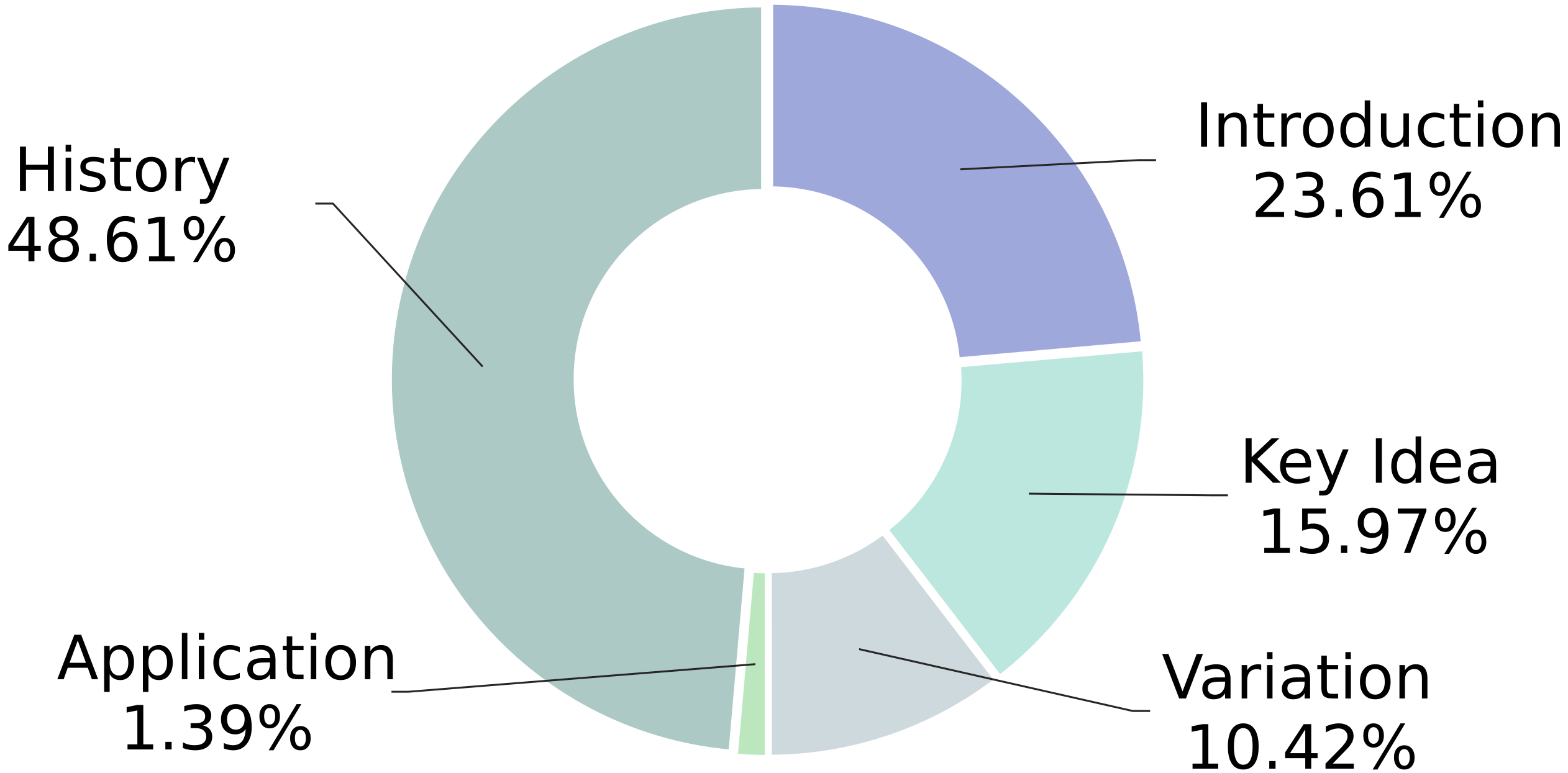
- Used the Surfer100 dataset containing 100 human-written NLP survey articles, each with five standardized sections: Introduction, History, Key Ideas, Applications, and Variations.
- Evaluated four LLMs—GPT-4, GPT-3.5, PaLM2, and LLaMA2—across four prompting settings: zero-shot (ZS), one-shot (OS), description prompt (DP), and one-shot with description (OSP).
- Incorporated a retrieval-augmented generation (RAG) setting (OS+IR) that links to Wikipedia and web data for improved factual grounding.
- Applied automated metrics including ROUGE, BERTScore, MoverScore, UniEval, and BARTScore to quantify generation quality.
- Conducted human evaluation with expert raters using Krippendorff’s and Kendall’s coefficients to assess inter-rater reliability and quality judgments.
- Compared GPT-4’s own evaluation scores against human scores to detect systematic bias in LLM-based assessment.
Experimental results
Research questions
- RQ1RQ1: How proficient are LLMs in generating survey articles on NLP concepts?
- RQ2RQ2: Can LLMs emulate human judgment when provided with specific criteria?
- RQ3RQ3: Do LLMs introduce a noticeable bias in evaluating machine-generated texts compared to human-written texts?
Key findings
- GPT-4 achieved the highest automatic evaluation scores across ROUGE, BERTScore, MoverScore, UniEval, and BARTScore, outperforming GPT-3.5, PaLM2, and LLaMA2.
- In human evaluation, GPT-4-generated surveys were rated as more contemporary and accessible than human-written ones, with higher clarity and structure.
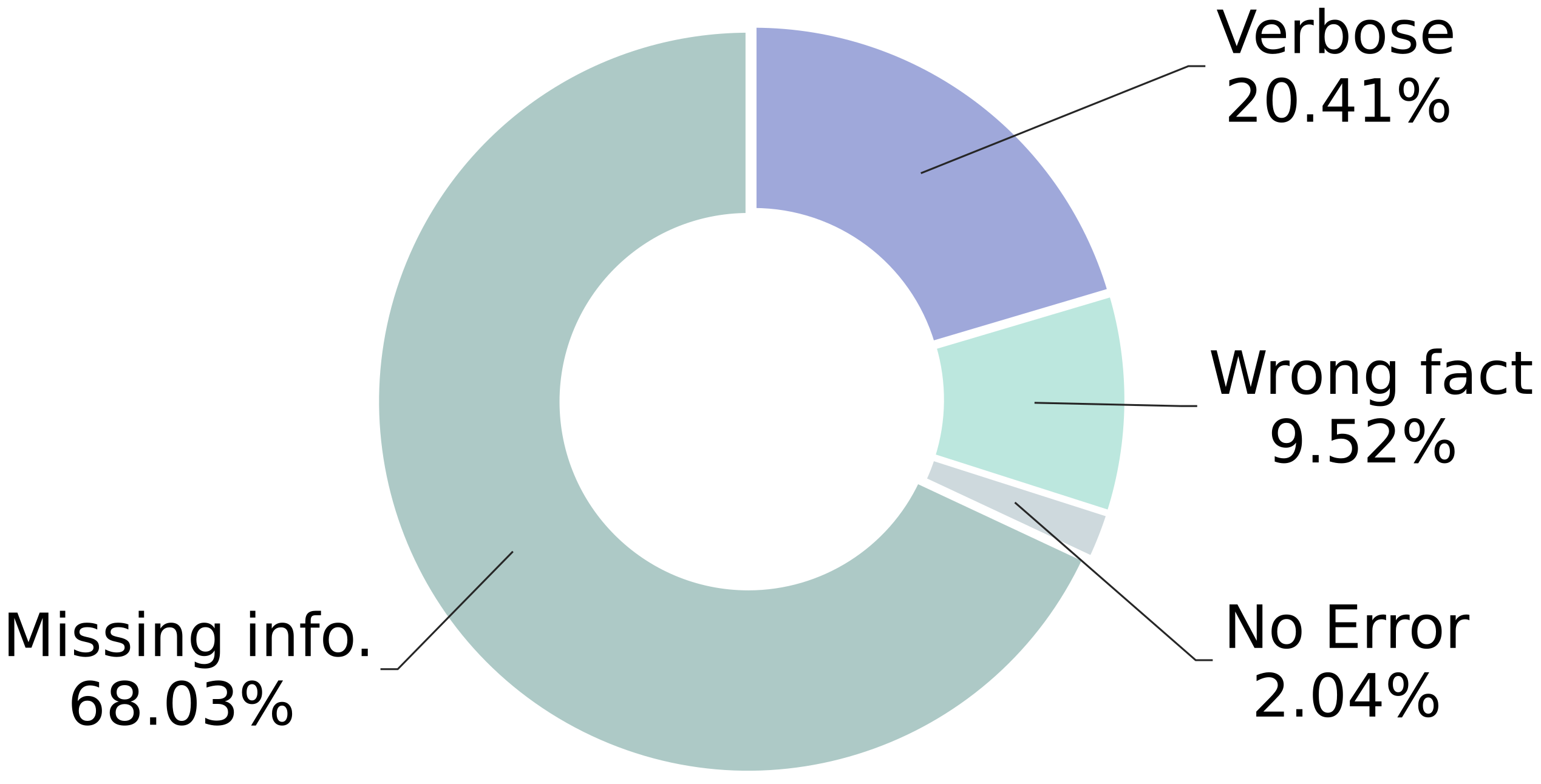
- Despite strong performance, GPT-4 occasionally produced factual errors or omitted key details, such as missing landmark events in surveys on Decision Trees.
- GPT-4-generated content sometimes surpassed the human-written ground truth in depth and precision, such as correctly identifying mBERT’s shared embedding space and HMMs’ algorithmic features.
- A systematic bias was detected in GPT-4’s evaluation: it consistently rated its own outputs more favorably than human-written texts, even when human experts judged the latter as superior.
- The study found that nebulous sentence structures—such as ‘The Topic plays a vital role in NLP’—were frequently reused across topics, indicating a lack of specificity in application sections.
Read this paper
Open the full text in the Nubint reader and ask about any passage as you read.
Read this paper on NubintThis review was generated by AI from the original paper. Please check the paper before citing it.