
[Paper Review] Last-Iterate Convergent Policy Gradient Primal-Dual Methods for Constrained MDPs
This paper proposes two single-time-scale policy gradient primal-dual algorithms—Regularized Policy Gradient Primal-Dual (RPG-PD) and Optimistic Policy Gradient Primal-Dual (OPG-PD)—for constrained Markov decision processes (CMDPs). By leveraging entropy and quadratic regularization, and optimistic gradient updates, the methods achieve non-asymptotic, sublinear last-iterate convergence of policy iterates to an optimal constrained policy, marking the first such result for single-time-scale algorithms in CMDPs.
We study the problem of computing an optimal policy of an infinite-horizon discounted constrained Markov decision process (constrained MDP). Despite the popularity of Lagrangian-based policy search methods used in practice, the oscillation of policy iterates in these methods has not been fully understood, bringing out issues such as violation of constraints and sensitivity to hyper-parameters. To fill this gap, we employ the Lagrangian method to cast a constrained MDP into a constrained saddle-point problem in which max/min players correspond to primal/dual variables, respectively, and develop two single-time-scale policy-based primal-dual algorithms with non-asymptotic convergence of their policy iterates to an optimal constrained policy. Specifically, we first propose a regularized policy gradient primal-dual (RPG-PD) method that updates the policy using an entropy-regularized policy gradient, and the dual variable via a quadratic-regularized gradient ascent, simultaneously. We prove that the policy primal-dual iterates of RPG-PD converge to a regularized saddle point with a sublinear rate, while the policy iterates converge sublinearly to an optimal constrained policy. We further instantiate RPG-PD in large state or action spaces by including function approximation in policy parametrization, and establish similar sublinear last-iterate policy convergence. Second, we propose an optimistic policy gradient primal-dual (OPG-PD) method that employs the optimistic gradient method to update primal/dual variables, simultaneously. We prove that the policy primal-dual iterates of OPG-PD converge to a saddle point that contains an optimal constrained policy, with a linear rate. To the best of our knowledge, this work appears to be the first non-asymptotic policy last-iterate convergence result for single-time-scale algorithms in constrained MDPs.
Motivation & Objective
- To address the lack of non-asymptotic, last-iterate convergence guarantees in single-time-scale policy-based primal-dual methods for constrained MDPs.
- To overcome oscillation and constraint violation issues in existing Lagrangian-based policy search methods due to two-time-scale or asymptotic convergence assumptions.
- To develop algorithms that converge to an optimal constrained policy with provable sublinear rates under a single-time-scale update scheme.
- To extend convergence guarantees to large state/action spaces using function approximation with bounded approximation error.
- To establish linear convergence for a novel optimistic gradient-based method under the same framework.
Proposed method
- Proposes RPG-PD, a single-time-scale algorithm using entropy-regularized policy gradient for primal updates and quadratic-regularized gradient ascent for dual updates.
- Employs a regularized saddle-point formulation of the constrained MDP via the Lagrangian method, transforming the problem into a minimax optimization task.
- Introduces OPG-PD, which applies optimistic gradient updates to both primal and dual variables to achieve linear convergence to a saddle point containing the optimal policy.
- Uses Bregman divergence and performance difference lemma to analyze policy value improvement and convergence rates.
- Incorporates function approximation in policy parametrization and proves convergence up to a function approximation error.
- Leverages properties of KL divergence and softmax parametrization to derive exact gradient expressions for policy updates.

Experimental results
Research questions
- RQ1Can single-time-scale policy-based primal-dual algorithms achieve non-asymptotic last-iterate convergence to an optimal constrained policy in CMDPs?
- RQ2Does regularization in both primal and dual updates stabilize policy iterates and prevent constraint violation?
- RQ3Can optimistic gradient updates in a single-time-scale scheme yield linear convergence rates in constrained MDPs?
- RQ4How does function approximation affect the convergence of policy iterates in large-scale CMDPs?
- RQ5What is the trade-off between convergence rate and approximation error when using function approximation in policy parametrization?
Key findings
- RPG-PD achieves sublinear last-iterate convergence of policy iterates to an optimal constrained policy at a rate of O(1/√T), with a corresponding sublinear convergence rate to a regularized saddle point.
- OPG-PD achieves linear convergence to a saddle point containing the optimal policy, with a convergence rate of O(ρ^T) for some ρ ∈ (0,1), under appropriate conditions.
- The convergence guarantees of RPG-PD extend to function approximation settings, with policy iterates converging sublinearly up to a function approximation error.
- The proposed methods are the first to establish non-asymptotic last-iterate convergence for single-time-scale primal-dual algorithms in constrained MDPs.
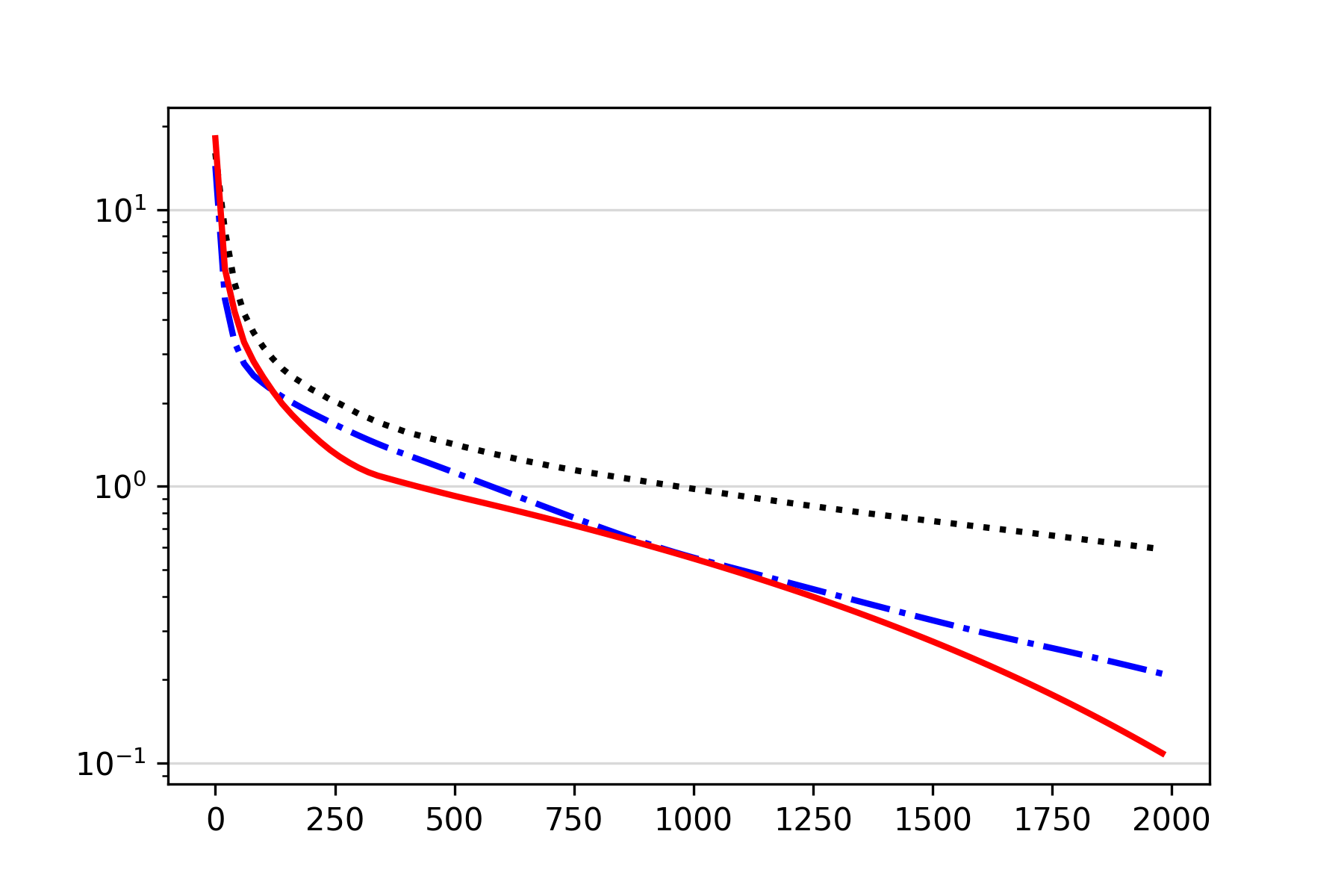
- Computational experiments validate the effectiveness of the proposed methods in reducing constraint violations and improving convergence stability compared to baseline approaches.
- Theoretical analysis confirms that the optimistic update mechanism in OPG-PD ensures stable iterates and faster convergence than standard gradient-based methods.
Read this paper
Open the full text in the Nubint reader and ask about any passage as you read.
Read this paper on NubintThis review was generated by AI from the original paper. Please check the paper before citing it.