
[Paper Review] Leaf-Based Plant Disease Detection and Explainable AI
This survey proposes a comprehensive framework for leaf-based plant disease detection using deep learning and Explainable AI (XAI) to improve model transparency. It evaluates CNN and Transformer models on benchmark datasets, integrates LIME, GradCAM, and GradCAM++ for visual interpretability, and demonstrates that XAI techniques effectively localize infected regions in leaf images, enhancing trust and decision-making in agricultural applications.
The agricultural sector plays an essential role in the economic growth of a country. Specifically, in an Indian context, it is the critical source of livelihood for millions of people living in rural areas. Plant Disease is one of the significant factors affecting the agricultural sector. Plants get infected with diseases for various reasons, including synthetic fertilizers, archaic practices, environmental conditions, etc., which impact the farm yield and subsequently hinder the economy. To address this issue, researchers have explored many applications based on AI and Machine Learning techniques to detect plant diseases. This research survey provides a comprehensive understanding of common plant leaf diseases, evaluates traditional and deep learning techniques for disease detection, and summarizes available datasets. It also explores Explainable AI (XAI) to enhance the interpretability of deep learning models' decisions for end-users. By consolidating this knowledge, the survey offers valuable insights to researchers, practitioners, and stakeholders in the agricultural sector, fostering the development of efficient and transparent solutions for combating plant diseases and promoting sustainable agricultural practices.
Motivation & Objective
- To provide a comprehensive review of common leaf diseases affecting major crops and their impact on agricultural productivity.
- To evaluate traditional and deep learning techniques for automated leaf disease detection, focusing on performance and limitations.
- To analyze existing public datasets for plant leaf disease detection and identify gaps in data diversity and quality.
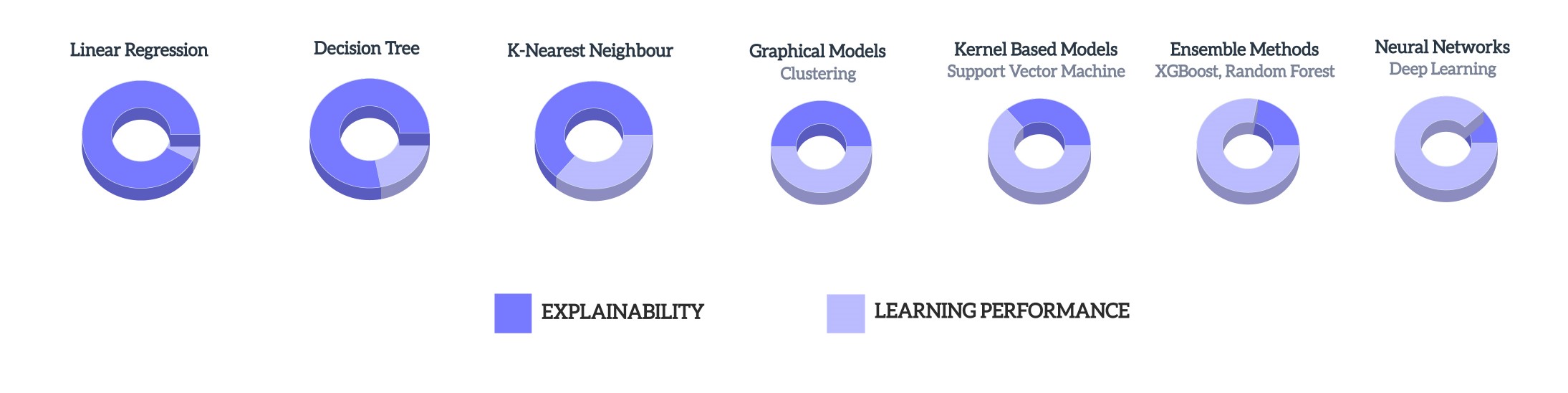
- To integrate Explainable AI (XAI) techniques such as LIME, GradCAM, and GradCAM++ to enhance interpretability of deep learning models in plant disease classification.
- To identify future research directions for improving disease detection systems, including disease stage identification, multiple infection detection, and disease quantification.
Proposed method
- Systematic review of 240+ studies on plant disease detection using computer vision and deep learning.
- Evaluation of state-of-the-art models including EfficientNet, DenseNet, and GoogleNet on standard benchmark datasets.
- Application of XAI techniques—LIME, GradCAM, and GradCAM++—to generate saliency maps that highlight disease-affected regions in leaf images.
- Use of heatmap overlays to visually explain model predictions, improving transparency and user trust.
- Analysis of datasets such as PlantVillage, CUB-200, and others to assess their utility and limitations in training robust models.
- Identification of research gaps through comparative analysis of model performance, interpretability, and real-world applicability.
Experimental results
Research questions
- RQ1Which deep learning architectures perform best in classifying leaf diseases across diverse plant species?
- RQ2How effective are XAI techniques like GradCAM and LIME in localizing disease-affected regions in leaf images?
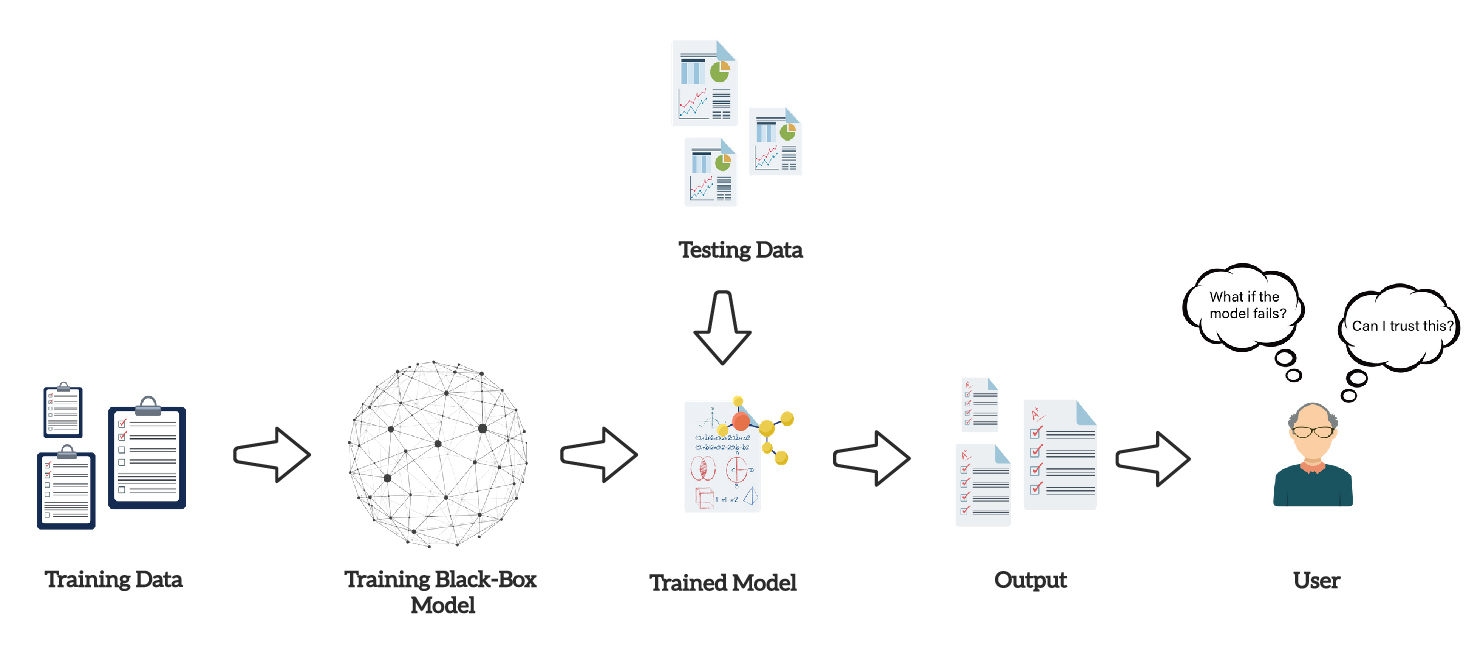
- RQ3What are the key limitations of current black-box deep learning models in agricultural applications, and how can XAI address them?
- RQ4How can disease stage identification (healthy, initial, middle, late) improve early intervention and reduce crop loss?
- RQ5What challenges exist in detecting multiple simultaneous infections on a single leaf, and how can models be adapted to address this?
Key findings
- EfficientNet, DenseNet, and GoogleNet demonstrate superior performance in leaf disease classification compared to earlier models, achieving high accuracy on benchmark datasets.
- XAI techniques such as GradCAM and GradCAM++ successfully localize infected regions in leaf images using heatmap overlays, improving model interpretability.
- LIME provides instance-specific explanations that help users understand individual predictions, although with lower spatial precision than gradient-based methods.
- The integration of XAI with deep learning models enhances trust and transparency, making AI-based systems more suitable for real-world agricultural deployment.
- Despite progress, current XAI methods are limited by human bias in interpretation and lack logical consistency, necessitating further development for reliable decision support.
- Future research should focus on disease stage classification, multiple infection detection, and quantitative disease burden estimation to enable precision agriculture.
Better researchstarts right now
From reading papers to final review, dramatically reduce your research time.
No credit card · Free plan available
This review was created by AI and reviewed by human editors.