
[Paper Review] Learn to Unlearn: A Survey on Machine Unlearning
A comprehensive survey of exact and approximate machine unlearning, covering methods, verification, attacks, experiments (DeltaGrad), and future challenges in ensuring privacy and robustness.
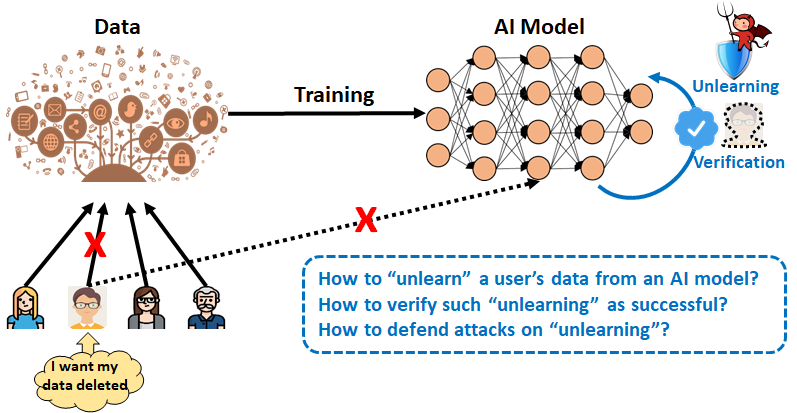
Machine Learning (ML) models have been shown to potentially leak sensitive information, thus raising privacy concerns in ML-driven applications. This inspired recent research on removing the influence of specific data samples from a trained ML model. Such efficient removal would enable ML to comply with the "right to be forgotten" in many legislation, and could also address performance bottlenecks from low-quality or poisonous samples. In that context, machine unlearning methods have been proposed to erase the contributions of designated data samples on models, as an alternative to the often impracticable approach of retraining models from scratch. This article presents a comprehensive review of recent machine unlearning techniques, verification mechanisms, and potential attacks. We further highlight emerging challenges and prospective research directions (e.g. resilience and fairness concerns). We aim for this paper to provide valuable resources for integrating privacy, equity, andresilience into ML systems and help them "learn to unlearn".
Motivation & Objective
- Motivate the need for machine unlearning due to privacy laws (e.g., GDPR, CCPA/CPRA) and data poisoning concerns.
- Survey and categorize exact and approximate unlearning approaches and their trade-offs.
- Examine verification mechanisms and potential attacks against unlearning processes.
- Provide experimental insights (DeltaGrad) on accuracy, efficiency, and non-IID data challenges.
- Highlight open challenges and directions for resilience, fairness, and policy-aligned unlearning.
Proposed method
- Classify unlearning into exact and approximate paradigms with corresponding techniques (e.g., summation form, SISA, DeltaGrad).
- Analyze mechanisms supporting unlearning such as model versioning, data sanitization, and checkpointing.
- Incorporate prior methods across diverse models (linear, tree-based, neural networks) and loss settings (convex/non-convex).
- Discuss verification approaches (backdoors, membership inference) and attack vectors on unlearning.
Experimental results
Research questions
- RQ1What are the existing exact and approximate machine unlearning methods and their operational trade-offs?
- RQ2How can unlearning be verified, and what attacks threaten unlearning integrity?
- RQ3What are the empirical performance and efficiency implications of unlearning methods under IID and non-IID data distributions?
- RQ4What challenges and future directions exist for ensuring privacy, fairness, and resilience in unlearning systems?
Key findings
- Exact unlearning can achieve complete data erasure but may degrade model performance and risk privacy leakage via detectable differences.
- Approximate unlearning preserves performance better but faces verification challenges and potential privacy risks; certified-removal methods exist for convex models.
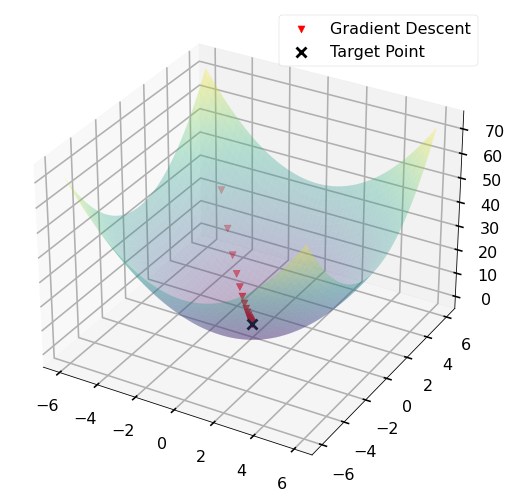
- DeltaGrad demonstrates faster unlearning by reversing loss (loss maximization) and shows specific IID vs non-IID performance dynamics.
- Experiments using DeltaGrad on MNIST indicate small accuracy degradation under IID and significant degradation under non-IID when deleting high-prevalence labels (e.g., label '4').
- Time-cost analysis shows retraining-from-scratch can be faster than DeltaGrad at higher deletion ratios in IID settings, with a crossover point around certain deletion levels.
- The literature reveals notable vulnerabilities to membership inference, backdoor verification risks, and poisoning attacks against unlearning methods.
Read this paper
Open the full text in the Nubint reader and ask about any passage as you read.
Read this paper on NubintThis review was generated by AI from the original paper. Please check the paper before citing it.