
[Paper Review] Learning from Similar Linear Representations: Adaptivity, Minimaxity, and Robustness
This paper proposes adaptive and robust algorithms for multi-task and transfer learning with similar but non-identical linear representations, under unknown intrinsic dimension and outlier tasks. It achieves nearly minimax optimal performance by leveraging similarity structure and robustness to outliers, outperforming single-task learning when representations are sufficiently similar and never underperforming it otherwise.
Representation multi-task learning (MTL) has achieved tremendous success in practice. However, the theoretical understanding of these methods is still lacking. Most existing theoretical works focus on cases where all tasks share the same representation, and claim that MTL almost always improves performance. Nevertheless, as the number of tasks grows, assuming all tasks share the same representation is unrealistic. Furthermore, empirical findings often indicate that a shared representation does not necessarily improve single-task learning performance. In this paper, we aim to understand how to learn from tasks with extit{similar but not exactly the same} linear representations, while dealing with outlier tasks. Assuming a known intrinsic dimension, we propose a penalized empirical risk minimization method and a spectral method that are extit{adaptive} to the similarity structure and extit{robust} to outlier tasks. Both algorithms outperform single-task learning when representations across tasks are sufficiently similar and the proportion of outlier tasks is small. Moreover, they always perform at least as well as single-task learning, even when the representations are dissimilar. We provide information-theoretic lower bounds to demonstrate that both methods are nearly extit{minimax} optimal in a large regime, with the spectral method being optimal in the absence of outlier tasks. Additionally, we introduce a thresholding algorithm to adapt to an unknown intrinsic dimension. We conduct extensive numerical experiments to validate our theoretical findings.
Motivation & Objective
- To address the lack of theoretical understanding in multi-task and transfer learning when tasks share similar but not identical linear representations.
- To develop algorithms that are adaptive to the similarity structure among tasks and robust to outlier tasks or adversarial data.
- To ensure performance no worse than single-task learning even when representations are dissimilar, while outperforming it when representations are similar.
- To establish information-theoretic lower bounds showing near-minimax optimality of the proposed methods.
- To extend the framework to unknown intrinsic dimension through an adaptive algorithm.
Proposed method
- Proposes two algorithms under known intrinsic dimension: one for multi-task learning (MTL) and one for transfer learning (TL), both designed to exploit similarity among task representations.
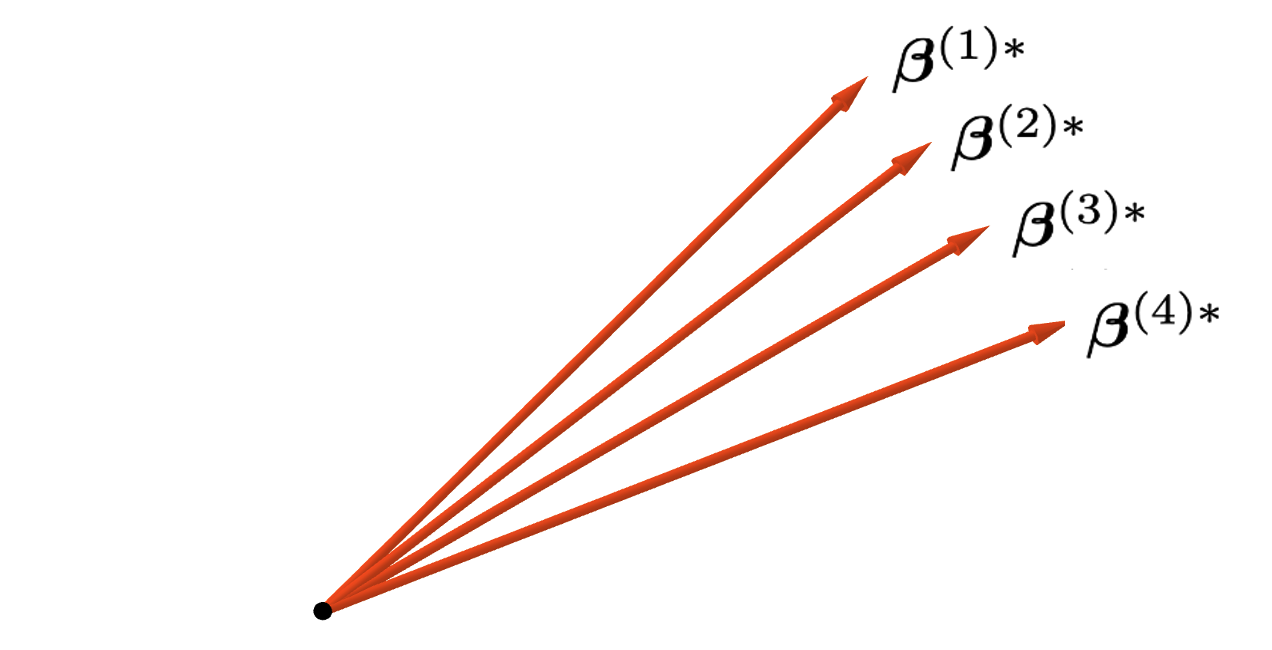
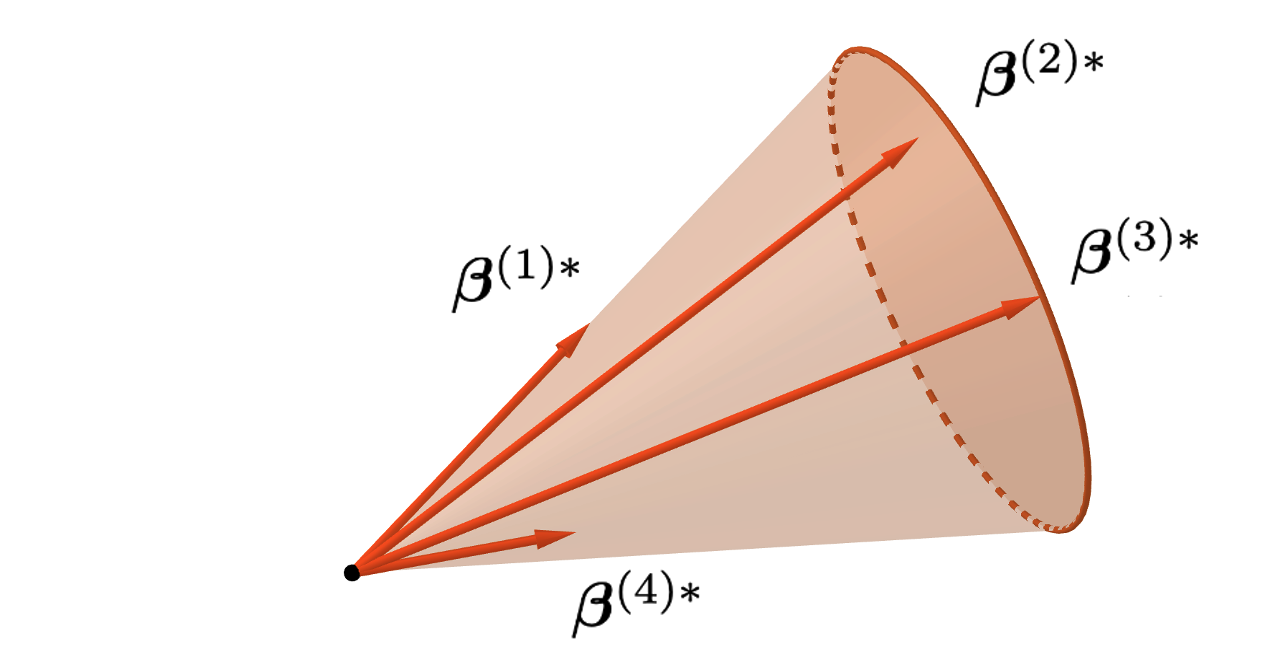
- Uses a center representation to model similarity, with a bound on the maximum deviation of task-specific representations from this center.
- Employs a regularized estimation procedure that balances fitting the main tasks and resisting contamination from outlier tasks.
- Derives theoretical guarantees via information-theoretic lower bounds to show near-minimax optimality in a large regime.
- Introduces an adaptive algorithm for unknown intrinsic dimension by estimating the rank of the representation matrix from data.
- Applies concentration inequalities and spectral norm bounds to control estimation error under model misspecification and noise.
Experimental results
Research questions
- RQ1Can we design algorithms that adapt to the similarity structure among tasks with similar linear representations in multi-task and transfer learning?
- RQ2How can we ensure robustness to outlier tasks that deviate significantly from the main group of similar tasks?
- RQ3What is the fundamental limit (minimax rate) of estimation under such representation similarity and outlier contamination?
- RQ4Can we achieve performance that is always no worse than single-task learning, even when representations are not shared?
- RQ5How can we extend the method to the case where the intrinsic dimension is unknown?
Key findings
- The proposed algorithms outperform single-task or target-only learning when representations across tasks are sufficiently similar and the fraction of outlier tasks is small.
- The algorithms always perform no worse than single-task learning, even when representations are dissimilar, ensuring safety in model selection.
- Information-theoretic lower bounds confirm that the proposed algorithms are nearly minimax optimal in a large regime of the problem.
- The method achieves robustness to outlier tasks by constraining the deviation of task-specific representations from a shared center representation.
- An adaptive algorithm for unknown intrinsic dimension is proposed and shown to be effective through simulation studies.
- Theoretical analysis confirms that the estimation error scales with the similarity measure $ h $, and the method maintains low error when $ h $ is small.
Read this paper
Open the full text in the Nubint reader and ask about any passage as you read.
Read this paper on NubintThis review was generated by AI from the original paper. Please check the paper before citing it.