
[Paper Review] LLMSat: A Large Language Model-Based Goal-Oriented Agent for Autonomous Space Exploration
This paper proposes LLMSat, an LLM-based agentic controller for autonomous spacecraft exploration, using prompt-engineered reasoning in Kerbal Space Program simulations to evaluate goal-directed decision-making. Despite LLMs' limited scalability with mission complexity, strategic prompting and controlled authority levels enable reliable mission execution, demonstrating LLMs' viability for future deep-space autonomy with human-in-the-loop oversight.
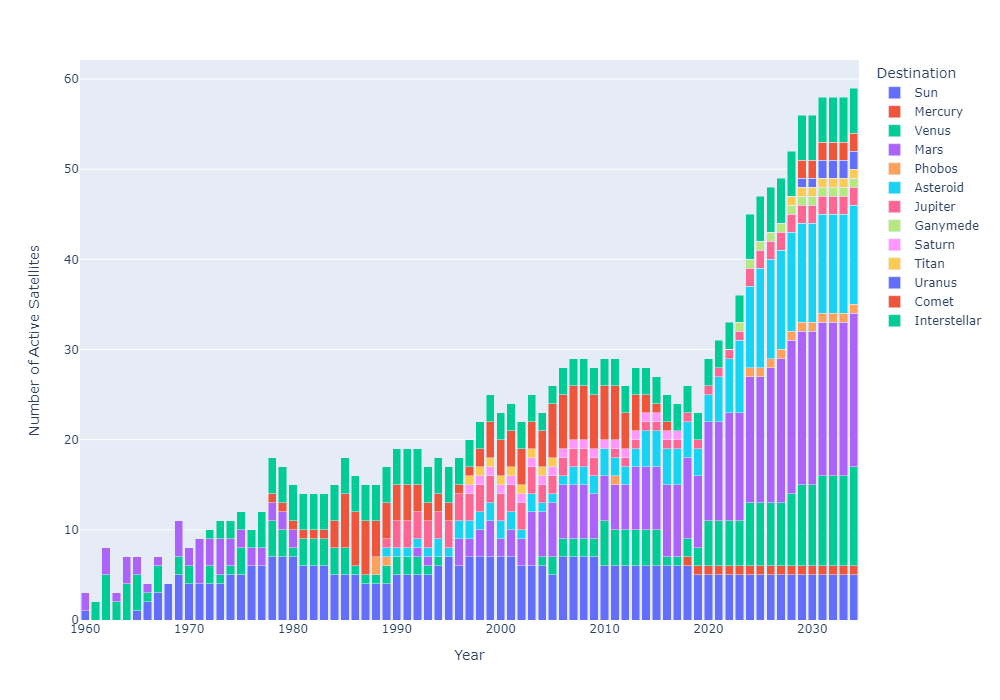
As spacecraft journey further from Earth with more complex missions, systems of greater autonomy and onboard intelligence are called for. Reducing reliance on human-based mission control becomes increasingly critical if we are to increase our rate of solar-system-wide exploration. Recent work has explored AI-based goal-oriented systems to increase the level of autonomy in mission execution. These systems make use of symbolic reasoning managers to make inferences from the state of a spacecraft and a handcrafted knowledge base, enabling autonomous generation of tasks and re-planning. Such systems have proven to be successful in controlled cases, but they are difficult to implement as they require human-crafted ontological models to allow the spacecraft to understand the world. Reinforcement learning has been applied to train robotic agents to pursue a goal. A new architecture for autonomy is called for. This work explores the application of Large Language Models (LLMs) as the high-level control system of a spacecraft. Using a systems engineering approach, this work presents the design and development of an agentic spacecraft controller by leveraging an LLM as a reasoning engine, to evaluate the utility of such an architecture in achieving higher levels of spacecraft autonomy. A series of deep space mission scenarios simulated within the popular game engine Kerbal Space Program (KSP) are used as case studies to evaluate the implementation against the requirements. It is shown the reasoning and planning abilities of present-day LLMs do not scale well as the complexity of a mission increases, but this can be alleviated with adequate prompting frameworks and strategic selection of the agent's level of authority over the host spacecraft. This research evaluates the potential of LLMs in augmenting autonomous decision-making systems for future robotic space applications.
Motivation & Objective
- To explore the feasibility of using Large Language Models (LLMs) as high-level reasoning engines for autonomous spacecraft control.
- To reduce reliance on human mission control by enabling onboard goal-oriented decision-making in deep space missions.
- To evaluate LLM performance in complex, dynamic space mission scenarios under realistic constraints.
- To identify limitations in LLM reasoning scalability and propose mitigation strategies through prompting and authority control.
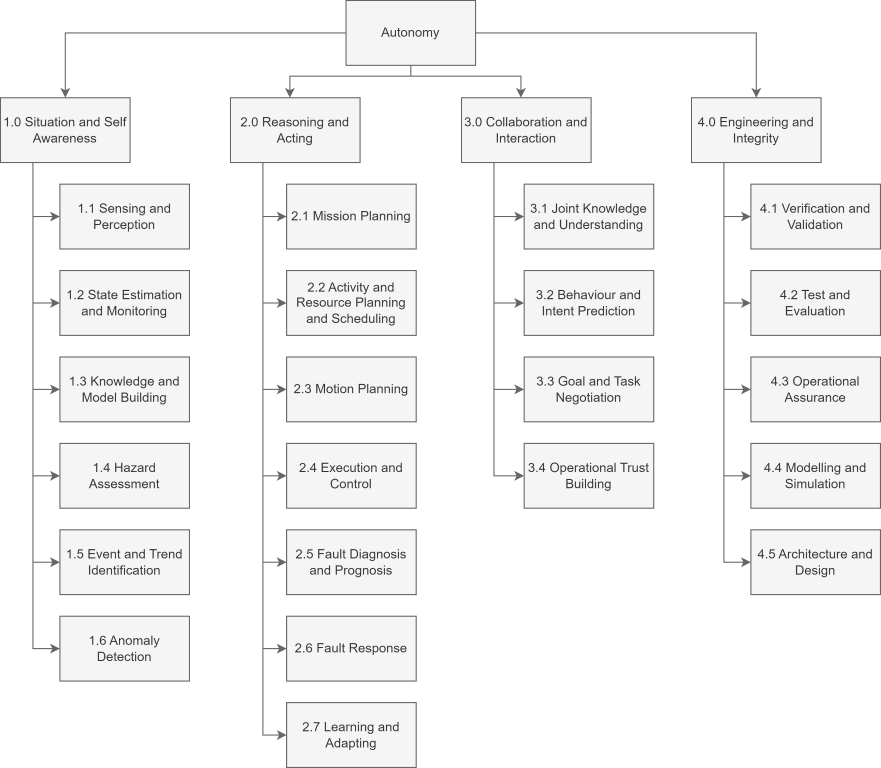
- To establish a framework for integrating LLMs into spacecraft autonomy architectures using a systems engineering approach.
Proposed method
- Design and implement an agentic spacecraft controller using a Large Language Model (LLM) as the central reasoning engine.
- Develop a custom prompt template to guide the LLM in generating mission actions, interpreting spacecraft state, and reasoning through mission goals.
- Simulate three mission scenarios—basic operations, advanced operations, and an unachievable goal—in Kerbal Space Program (KSP) using the kRPC API for real-time spacecraft interaction.
- Implement a risk-aware architecture with defined agent roles, memory management, and command execution protocols to ensure system safety and traceability.
- Use a chain-of-thought (CoT) and ReAct (Reason + Act) prompting framework to enhance LLM reasoning and action selection.
- Integrate a message-sending function to enable communication with ground control when the LLM detects system failures or unresolvable states.
Experimental results
Research questions
- RQ1Can an LLM-based agent successfully plan and execute complex deep-space mission objectives with minimal human intervention?
- RQ2How does the performance of LLMs in autonomous spacecraft control degrade as mission complexity increases, and what mitigations exist?
- RQ3What role does strategic prompting and authority level assignment play in improving LLM reliability and mission success?
- RQ4How effective is the LLM in detecting and responding to system failures, such as incorrect maneuver node generation?
- RQ5To what extent can LLMs replace symbolic reasoning systems in space mission autonomy without requiring handcrafted ontologies?
Key findings
- The LLM successfully executed basic and advanced mission operations in KSP, including orbital insertion and descent planning, demonstrating functional goal-oriented reasoning.
- In complex scenarios, the LLM exhibited reasoning failures—such as generating negative periapsis altitudes—indicating limitations in state interpretation and action planning.
- Strategic prompting and a controlled authority level significantly improved mission success rates by reducing unsafe or illogical actions.
- The LLM correctly identified system failures and initiated communication with mission control, showcasing its ability to escalate issues when necessary.
- The system achieved a measurable success rate in mission execution, though performance degraded with increasing complexity, highlighting the need for robust prompting frameworks.
- The research confirms that LLMs can serve as viable high-level controllers for spacecraft autonomy, especially when combined with human oversight and structured prompting.
Read this paper
Open the full text in the Nubint reader and ask about any passage as you read.
Read this paper on NubintThis review was generated by AI from the original paper. Please check the paper before citing it.