
[Paper Review] Loss Functions and Metrics in Deep Learning
A comprehensive survey of loss functions and performance metrics across common deep learning tasks, detailing their properties, advantages, limits, and typical use cases for regression, classification, object detection, segmentation, face recognition, and image generation.
This paper presents a comprehensive review of loss functions and performance metrics in deep learning, highlighting key developments and practical insights across diverse application areas. We begin by outlining fundamental considerations in classic tasks such as regression and classification, then extend our analysis to specialized domains like computer vision and natural language processing including retrieval-augmented generation. In each setting, we systematically examine how different loss functions and evaluation metrics can be paired to address task-specific challenges such as class imbalance, outliers, and sequence-level optimization. Key contributions of this work include: (1) a unified framework for understanding how losses and metrics align with different learning objectives, (2) an in-depth discussion of multi-loss setups that balance competing goals, and (3) new insights into specialized metrics used to evaluate modern applications like retrieval-augmented generation, where faithfulness and context relevance are pivotal. Along the way, we highlight best practices for selecting or combining losses and metrics based on empirical behaviors and domain constraints. Finally, we identify open problems and promising directions, including the automation of loss-function search and the development of robust, interpretable evaluation measures for increasingly complex deep learning tasks. Our review aims to equip researchers and practitioners with clearer guidance in designing effective training pipelines and reliable model assessments for a wide spectrum of real-world applications.
Motivation & Objective
- Explain the roles of loss functions and performance metrics in training and evaluating deep learning models.
- Catalogue and compare common loss functions and metrics across major tasks.
- Highlight the strengths, limitations, and practical considerations for choosing appropriate losses and metrics.
Proposed method
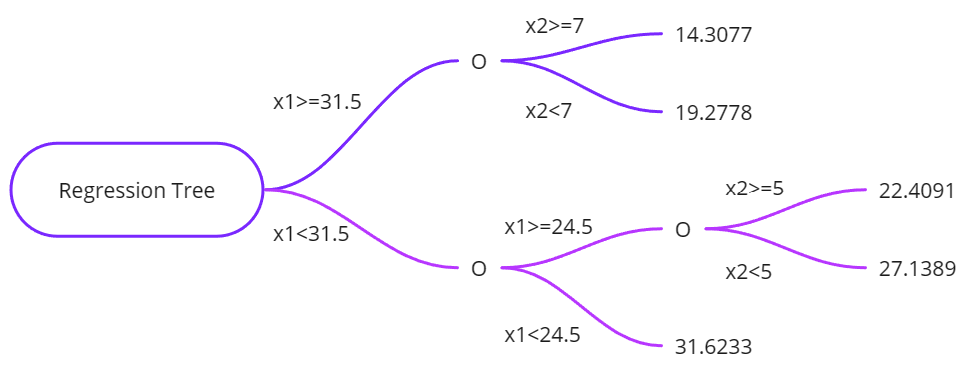
- Systematically review widely used loss functions across regression, classification, object detection, segmentation, face recognition, and image generation.
- Summarize mathematical definitions, properties (convexity, differentiability, robustness, etc.), and typical use cases.
- Provide comparative guidance on when to use each loss function and metric in practice.
Experimental results
Research questions
- RQ1What are the most prevalent loss functions and performance metrics used in core deep learning tasks?
- RQ2How do the properties of loss functions (e.g., convexity, differentiability, robustness) influence their suitability for different problems?
- RQ3What guidance can be given to practitioners for selecting appropriate losses and metrics for regression, classification, object detection, segmentation, and generation tasks?
- RQ4What are the limitations and trade-offs associated with common loss functions and evaluation metrics?
- RQ5How do loss functions and metrics differ between training objectives and model evaluation?
Key findings
- Provides a comprehensive taxonomy of regression, classification, object detection, segmentation, face recognition, and image generation losses and metrics.
- Clarifies the distinction between loss functions used for training and metrics used for evaluation.
- Outlines key properties and trade-offs of major losses (e.g., MSE, MAE, Huber, cross-entropy, focal loss, IoU-based losses, Dice/Tversky, PSNR/SSIM/FID/etc.).
- Includes discussions of specialized losses for tasks like Poisson regression, quantile regression, and Poisson loss for count data.
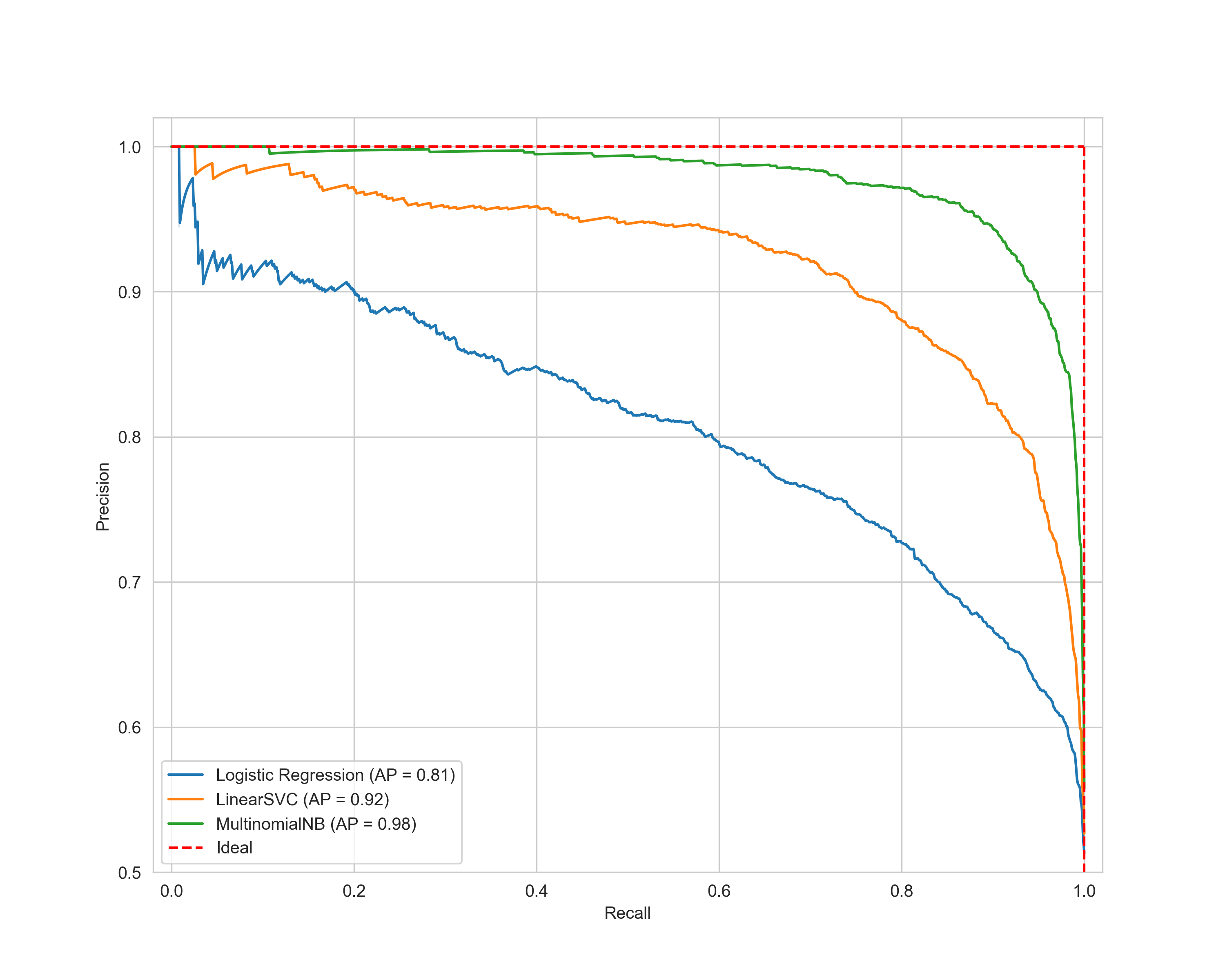
- Summarizes widely used evaluation metrics (RMSE, MAPE, SMAPE, R², accuracy, precision, recall, AUC-ROC, AP, AR, PQ, etc.) and their applicability and limitations.
Read this paper
Open the full text in the Nubint reader and ask about any passage as you read.
Read this paper on NubintThis review was generated by AI from the original paper. Please check the paper before citing it.