
[Paper Review] Machine Learning in Digital Forensics: A Systematic Literature Review
This paper systematically reviews the use of machine learning in digital forensics from 2010–2021, finding CNN-based deep learning dominates image forensics and that the field has grown substantially with 608 primary studies.
Development and exploitation of technology have led to the further expansion and complexity of digital crimes. On the other hand, the growing volume of data and, subsequently, evidence is a severe challenge in digital forensics. In recent years, the application of machine learning techniques to identify and analyze evidence has been on the rise in different digital forensics domains. This paper offers a systematic literature review of the research published in major academic databases from January 2010 to December 2021 on the application of machine learning in digital forensics, which was not presented yet to the best of our knowledge as comprehensive as this. The review also identifies the domains of digital forensics and machine learning methods that have received the most attention in the previous papers and finally introduces remaining research gaps. Our findings demonstrate that image forensics has obtained the greatest benefit from using machine learning methods, compared to other forensic domains. Moreover, CNN-based models are the most important machine learning methods that are increasingly being used in digital forensics. We present a comprehensive mind map to provide a proper perspective for valuable analytical results. Furthermore, visual analysis has been conducted based on the keywords of the papers, providing different thematic relevance topics. This research will give digital forensics investigators, machine learning developers, security researchers, and enthusiasts a broad view of the application of machine learning in digital forensics.
Motivation & Objective
- Identify how ML applications in digital forensics have evolved over time.
- Determine geographic distribution of ML-for-DF research.
- Explore publication venues and databases hosting ML in DF research.
- Analyze commonly used keywords and topics to map thematic trends.
- Identify ML methods and DF domains most affected by ML applications.
Proposed method
- Perform a structured systematic literature review following Kitchenham and Charters guidelines.
- Search ACM DL, IEEE Xplore, ScienceDirect, and SpringerLink with specified ML and DF keywords.
- Apply inclusion/exclusion criteria (peer-reviewed, empirical ML in DF, 2010–2021).
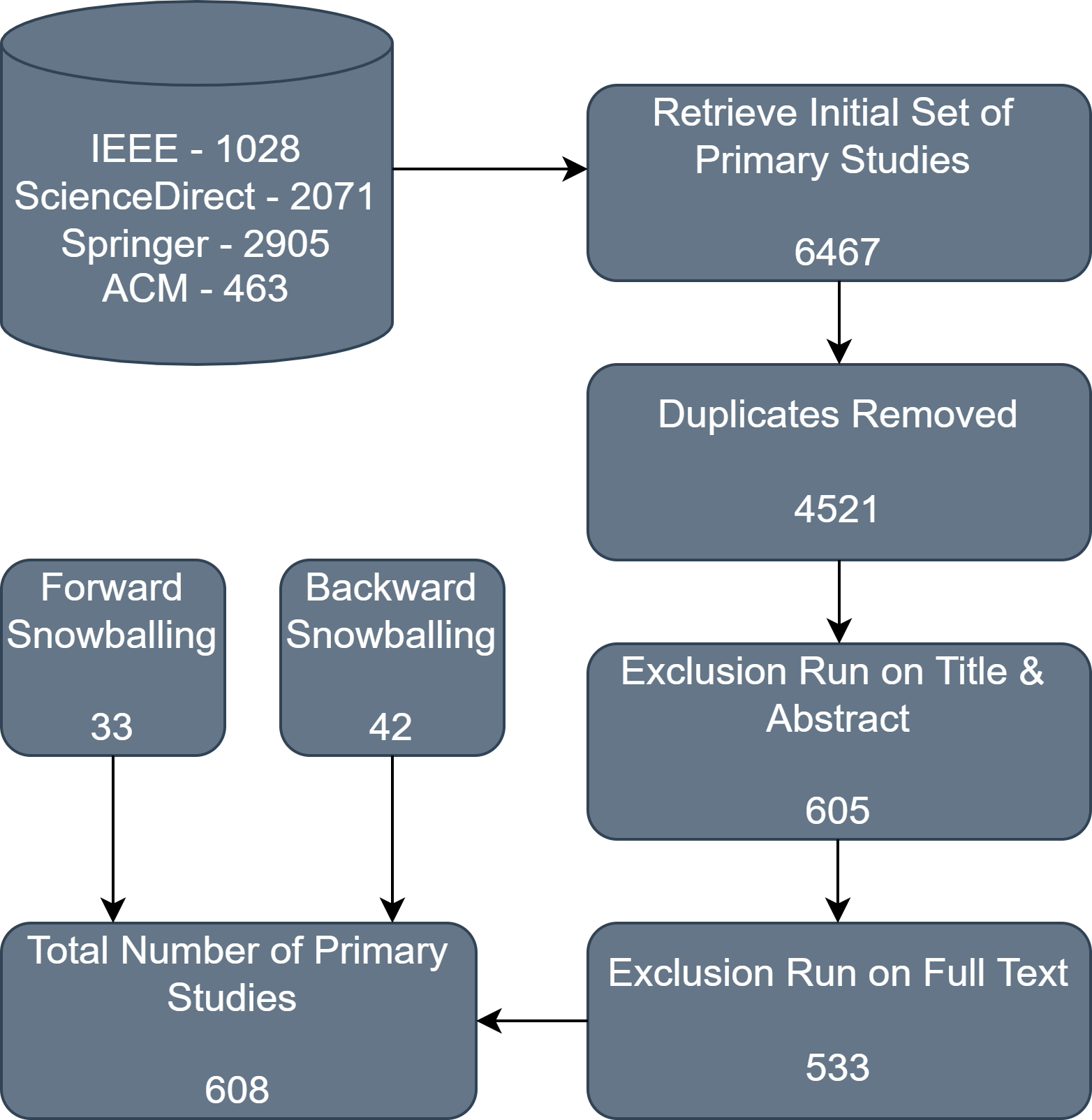
- Use forward and backward snowballing to reach 608 primary studies.
- Extract context, qualitative, and quantitative data from included studies for analysis.
- Produce a mind map and keyword network analysis to summarize relationships between ML methods and DF domains.
Experimental results
Research questions
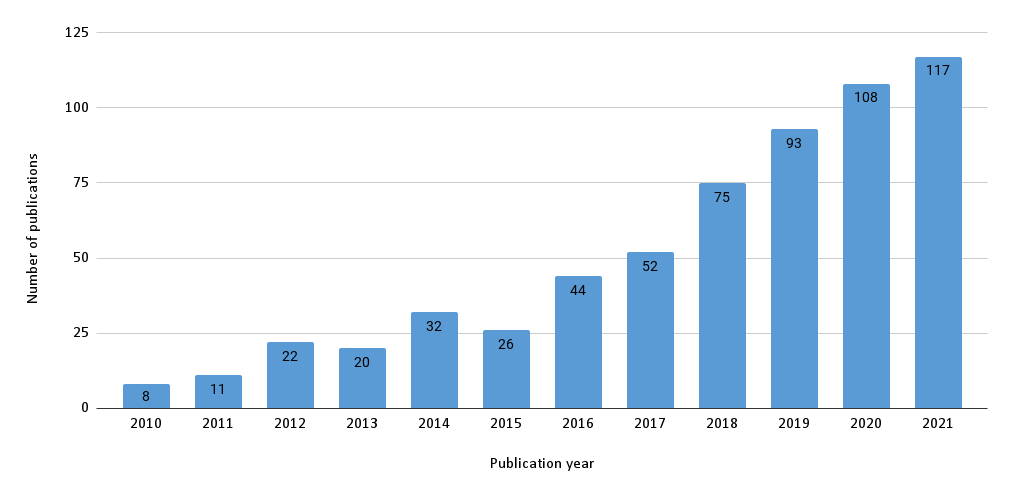
- RQ1RQ1: How have ML-for-DF publications spread across years from 2010 to 2021?
- RQ2RQ2: How is ML-for-DF research distributed geographically by country of the first author?
- RQ3RQ3: What are the most popular publication venues and databases for ML in digital forensics?
- RQ4RQ4: What are the most commonly used keywords and how are they related across studies?
- RQ5RQ5: Which ML methods are used in digital forensics and in which DF domains?
Key findings
- A total of 608 primary studies were identified up to December 2021.
- Publication activity rose sharply after 2016, with ML in DF gaining substantial attention.
- China, India, and the USA are the top contributing countries; Europe accounts for about 18%.
- Conference venues dominate publication output, and Elsevier journals account for roughly 47% of journal papers.
- Image forensics is the most investigated DF domain (about 62% of works).
- CNN-based and deep learning methods are the most frequently used ML techniques, especially in image forensics, with CNN-related terms prevalent in keywords.
Read this paper
Open the full text in the Nubint reader and ask about any passage as you read.
Read this paper on NubintThis review was generated by AI from the original paper. Please check the paper before citing it.