
[Paper Review] Many-Body Open Quantum Systems
These lecture notes survey theoretical advances in open quantum many-body systems where both dissipation and coherent dynamics are tunable, covering frameworks, dissipative state engineering, dissipative phase transitions, dynamics to steady state, and monitored quantum trajectories.
These Lecture Notes discuss the recent theoretical advances in the understanding of open quantum many-body physics in platforms where both dissipative and coherent processes can be tuned and controlled to a high degree. We start by reviewing the theoretical frameworks and methods used to describe and tackle open quantum many-body systems. We then discuss the use of dissipative processes to engineer many-body stationary states with desired properties and the emergence of dissipative phase transitions arising out of the competition between coherent evolution and dissipation. We review the dynamics of open quantum many body systems in the presence of correlated many-body dissipative processes, such as heating and many-body losses. Finally we provide a different perspective on open quantum many-body systems by looking at stochastic quantum trajectories, relevant for the case in which the environment represents a monitoring device, and the associated measurement-induced phase transitions.
Motivation & Objective
- Introduce theoretical frameworks for open quantum many-body systems (Lindblad, Schwinger–Keldysh, quantum trajectories).
- Explain how engineered dissipation can create desired many-body stationary states.
- Discuss dissipative phase transitions from competition between coherent dynamics and dissipation.
- Examine dynamics toward steady states under heating and many-body losses.
- Present the role of monitored dynamics and measurement-induced phenomena in open quantum systems.
Proposed method
- Present Lindblad master equation formalism with discussion of symmetries and steady states.
- Describe Schwinger–Keldysh path-integral formalism for driven-dissipative dynamics.
- Outline quantum trajectories as unravellings of the Lindblad equation.
- Survey additional frameworks: phase-space approaches, Heisenberg–Langevin equations, third quantisation, effective non-Hermitian Hamiltonians.
- Summarize numerical and analytic methods: MF, DMFT, cluster methods, MPS, neural network ansatz, corner-space renormalisation, cumulant expansions, MCTDH, and Schwinger–Keldysh techniques.
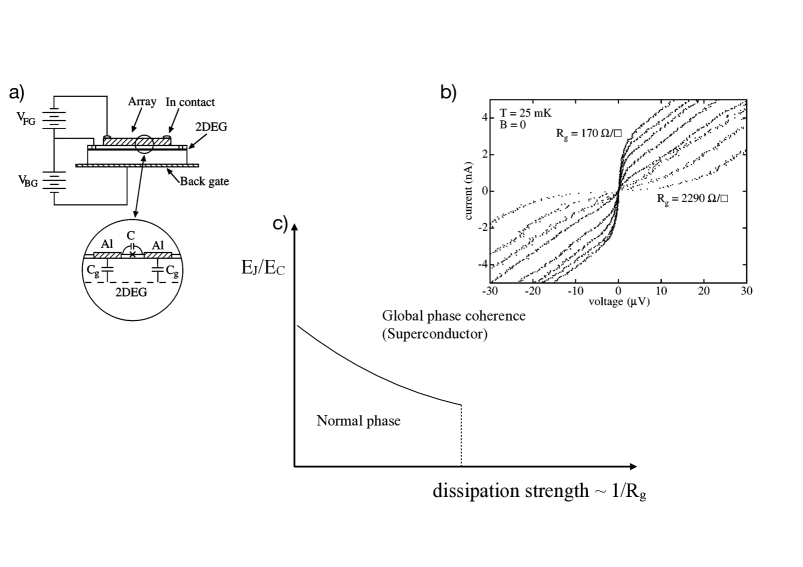
Experimental results
Research questions
- RQ1How can dissipation be engineered to stabilize particular many-body stationary states?
- RQ2What are the characteristics and classifications of dissipative phase transitions in open quantum many-body systems?
- RQ3How do correlated many-body dissipative processes (like heating and losses) influence dynamics and steady states?
- RQ4What insights do quantum trajectories and measurement-induced transitions provide beyond the averaged density matrix dynamics?
- RQ5How do various experimental platforms realize and probe driven-dissipative open-system physics?
Key findings
- Dissipative processes can be engineered to stabilize nontrivial many-body states and enable quantum computation via dissipation.
- Dissipative phase transitions arise from competition between coherent evolution and dissipation, with classifications tied to spectral theory and Schwinger–Keldysh field theory.
- Correlation between driving, dissipation, and symmetry breaking leads to phenomena such as boundary time crystals and absorbing-state transitions.
- Monitored quantum systems reveal measurement-induced phase transitions not visible in the average density matrix.
- A variety of platform-specific approaches (e.g., DMFT for driven-dissipative lattices, MPS, neural networks) enable tractable analysis of open many-body dynamics.
Read this paper
Open the full text in the Nubint reader and ask about any passage as you read.
Read this paper on NubintThis review was generated by AI from the original paper. Please check the paper before citing it.