
[Paper Review] Maritime Communications: A Survey on Enabling Technologies, Opportunities, and Challenges
This survey provides a comprehensive analysis of maritime communication technologies, covering RF and optical bands, channel modeling, modulation, resource management, and emerging applications like the Internet of Ships and underwater IoT. It identifies key challenges such as deep-sea broadband access and inter-medium communication, and proposes future research directions including terahertz and visible light communications, and machine learning-driven propagation modeling.
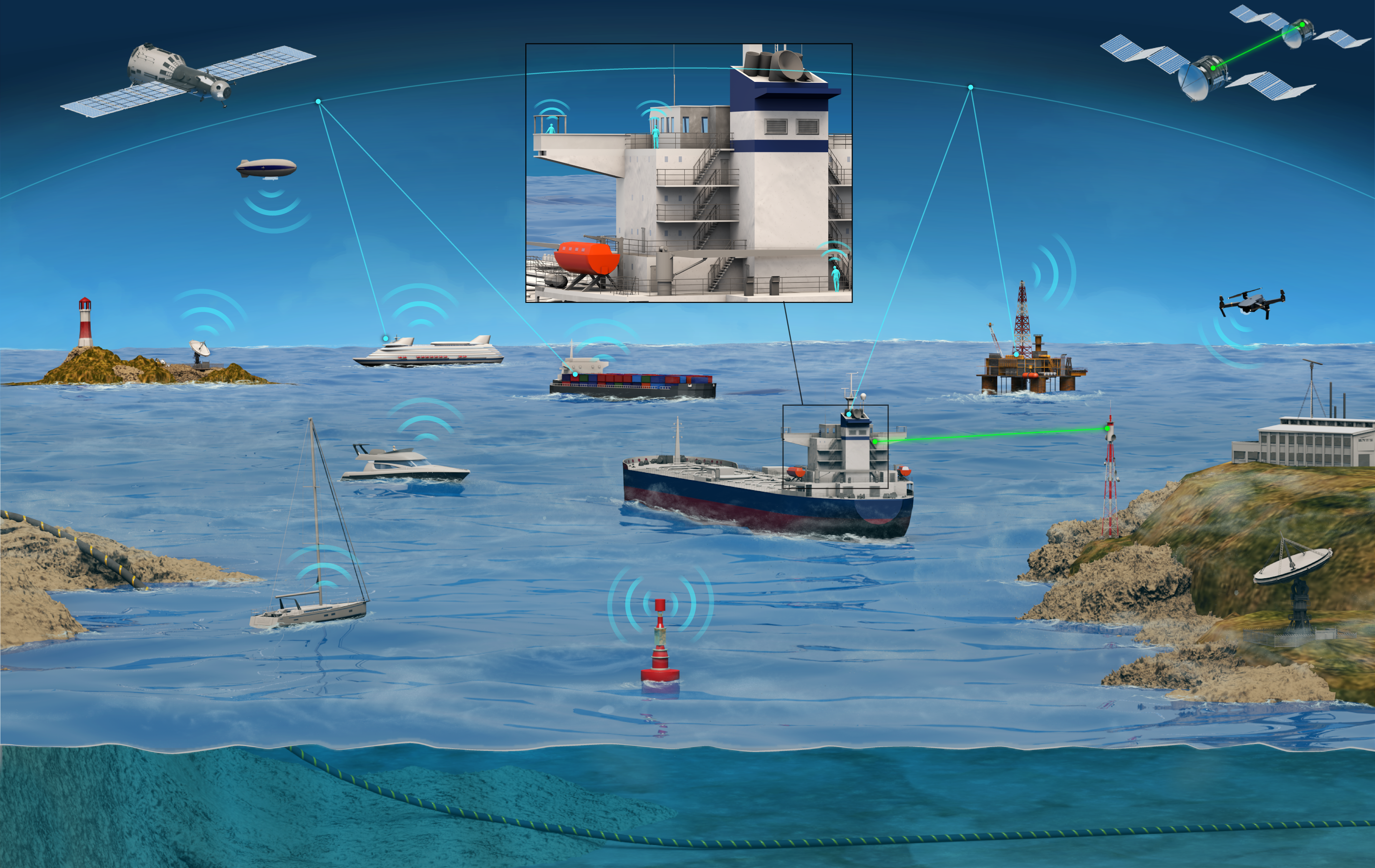
Water covers 71% of the Earth's surface, where the steady increase in oceanic activities has promoted the need for reliable maritime communication technologies. The existing maritime communication systems involve terrestrial, aerial, and satellite networks. This paper presents a holistic overview of the different forms of maritime communications and provides the latest advances in various marine technologies. The paper first introduces the different techniques used for maritime communications over the RF and optical bands. Then, we present the channel models for RF and optical bands, modulation and coding schemes, coverage and capacity, and radio resource management in maritime communications. After that, the paper presents some emerging use cases of maritime networks, such as the Internet of Ships (IoS) and the ship-to-underwater Internet of things (IoT). Finally, we highlight a few exciting open challenges and identify a set of future research directions for maritime communication, including bringing broadband connectivity to the deep sea, using THz and visible light signals for on-board applications, and data-driven modeling for radio and optical marine propagation.
Motivation & Objective
- Address the growing need for reliable, high-speed maritime communication due to rising oceanic activities such as shipping, offshore energy, and tourism.
- Identify limitations of existing systems—especially 4G/5G and satellite networks—regarding coverage, cost, bandwidth, and deep-sea connectivity.
- Explore emerging technologies such as free space optics (FSO), UAVs, and hybrid RF-FSO systems to enhance data rates and reliability.
- Investigate novel use cases including the Internet of Ships (IoS) and ship-to-underwater IoT (IoUT) for environmental and operational monitoring.
- Highlight open challenges and propose future research directions, including terahertz and visible light communications, and data-driven modeling of marine propagation channels.
Proposed method
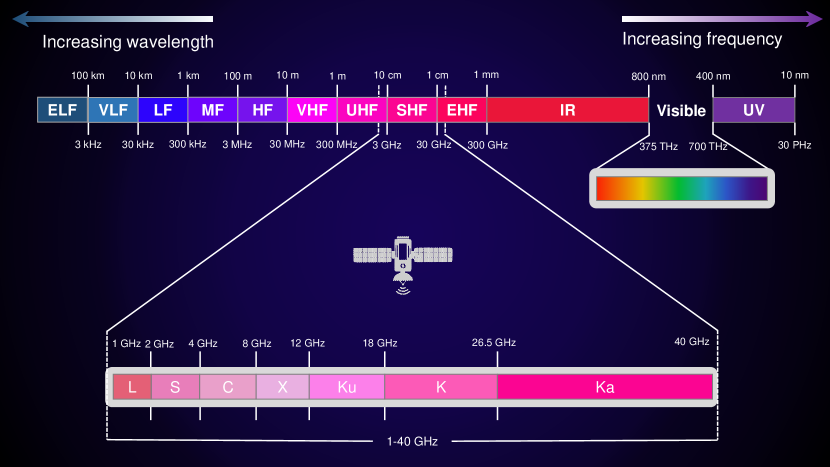
- Survey and categorize existing maritime communication technologies across RF (VHF, UHF, HF) and optical (FSO) bands, analyzing their propagation characteristics and limitations.
- Review and compare channel models for RF and FSO links, accounting for weather conditions, sea surface reflections, and atmospheric turbulence.
- Analyze modulation and coding schemes (e.g., QAM, OOK, DPSK), radio resource management (RRM), and energy efficiency in maritime networks.
- Examine hybrid communication architectures combining RF and FSO to mitigate fading and improve reliability in dynamic marine environments.
- Investigate inter-medium communication techniques (e.g., laser-based vibration detection) for ship-to-underwater links, focusing on air-water interface challenges.
- Propose the use of machine learning and AI for modeling radio and optical propagation in marine environments, including FSO scintillation and pointing errors.
Experimental results
Research questions
- RQ1What are the key enabling technologies and system architectures for high-capacity maritime communications across RF and optical bands?
- RQ2How do environmental factors such as weather, sea waves, and atmospheric turbulence affect RF and FSO propagation in maritime environments?
- RQ3What are the performance limits and design challenges of hybrid RF-FSO systems in maritime applications?
- RQ4How can machine learning improve the modeling of radio and optical wave propagation in complex marine environments?
- RQ5What are the open challenges and future research directions for achieving broadband connectivity in deep-sea and undersea communication networks?
Key findings
- Existing maritime communication systems based on VHF/UHF and satellite links are limited in data rate and coverage, especially beyond coastal regions.
- Free space optics (FSO) offers high data rates but suffers from pointing errors due to sea motion and signal degradation in fog and atmospheric turbulence.
- Hybrid RF-FSO systems can improve reliability and capacity by combining the diversity gain of RF and the high bandwidth of FSO.
- Inter-medium communication across air-water interfaces remains largely unexplored, with significant challenges due to signal reflection, refraction, and fading.
- Machine learning-based modeling of marine radio and optical propagation shows promise in predicting signal degradation and optimizing link performance.
- Future research should focus on terahertz and visible light communications for on-board applications, and on developing robust, scalable solutions for deep-sea broadband connectivity.
Read this paper
Open the full text in the Nubint reader and ask about any passage as you read.
Read this paper on NubintThis review was generated by AI from the original paper. Please check the paper before citing it.