
[Paper Review] Minimize Web Applications vulnerabilities through the early Detection of CRLF Injection
This paper proposes an automated framework for early detection of CRLF injection vulnerabilities in web applications by analyzing HTTP header responses for malicious CR/LF sequences. The method reduces false positives by validating input in headers and outperforms existing tools like Acunetix and Metasploit Pro in identifying vulnerable sites, with 3 out of 40 tested websites found to be susceptible to CRLF attacks.
Carriage return (CR) and line feed (LF), also known as CRLF injection is a type of vulnerability that allows a hacker to enter special characters into a web application, altering its operation or confusing the administrator. Log poisoning and HTTP response splitting are two prominent harmful uses of this technique. Additionally, CRLF injection can be used by an attacker to exploit other vulnerabilities, such as cross-site scripting (XSS). According to Open Web Application Security Project (OWASP), CRLF vulnerabilities are among the top 10 vulnerabilities and are a type of injection attack. Automated testing can help to quickly identify CRLF vulnerabilities, and is particularly useful for companies to test their applications before releasing them. However, CRLF vulnerabilities foster a better approach to mitigate CRLF vulnerabilities in the early stage and help secure applications against high-risk known vulnerabilities. There has been less research on CRLF vulnerabilities and how to detect them with automated testing. There is room for further research to be done on this subject matter in order to develop creative solutions to problems. It will also help to reduce false positive alerts by checking the header response of each request. Security automation is an important issue for companies trying to protect themselves against security threats. Automated alerts from security systems can provide a quicker and more accurate understanding of potential vulnerabilities and can help to reduce false positive alerts. Despite the extensive research on various types of vulnerabilities in web applications, CRLF vulnerabilities have only recently been included in the research. Utilizing automated testing as a recurring task can assist companies in receiving consistent updates about their systems and enhance their security.
Motivation & Objective
- To address the under-researched problem of CRLF injection vulnerabilities in web applications, which are often overlooked despite their high risk.
- To develop an automated, efficient method for detecting CRLF vulnerabilities during the software development lifecycle to prevent exploitation.
- To reduce false positive alerts in vulnerability detection by focusing on HTTP header responses and input validation patterns.
- To improve early detection of CRLF vulnerabilities to prevent chain attacks such as XSS, log poisoning, and HTTP response splitting.
- To provide a practical, scalable solution that enhances web application security with minimal performance overhead.
Proposed method
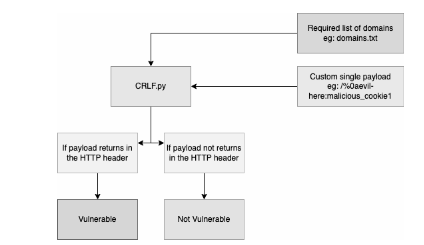
- The framework takes a list of URLs as input and performs automated HTTP GET requests to analyze response headers.
- It detects CRLF injection by scanning for ASCII 13 (CR) and ASCII 10 (LF) characters in header fields.
- The system validates whether CR and LF sequences are improperly handled in user input within HTTP headers.
- It uses header response analysis to distinguish between legitimate line breaks and malicious injection attempts.
- The approach is designed to minimize false positives by focusing on header-level behavior rather than syntactic patterns alone.
- The framework was evaluated against three tools (Acunetix, Metasploit Pro, and the proposed method) on 40 real-world websites.
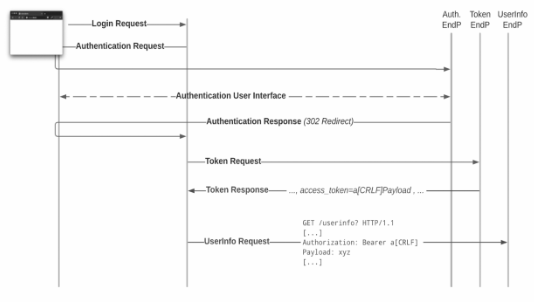
Experimental results
Research questions
- RQ1How prevalent are CRLF injection vulnerabilities in real-world web applications?
- RQ2Can automated detection of CRLF vulnerabilities be achieved with reduced false positive rates through header response analysis?
- RQ3How does the proposed framework compare in effectiveness to existing tools like Acunetix and Metasploit Pro?
- RQ4To what extent can CRLF vulnerabilities lead to more severe attacks such as XSS or log poisoning?
- RQ5What role does early detection of CRLF injection play in mitigating broader application-level threats?
Key findings
- Out of 40 real-world websites tested, three were confirmed vulnerable to CRLF injection attacks.
- The proposed framework detected more vulnerable websites than the combined detection rate of Acunetix and Metasploit Pro.
- The framework achieved lower false positive rates by focusing on HTTP header responses rather than general input patterns.
- CRLF vulnerabilities were found to be a significant threat vector, capable of enabling log poisoning, HTTP response splitting, and privilege escalation.
- The study confirms that CRLF injection is a widespread yet under-investigated vulnerability, often overlooked in favor of more common attacks like SQLi or XSS.
- Input validation and sanitization of user input in headers are critical for preventing CRLF-based exploits.
Read this paper
Open the full text in the Nubint reader and ask about any passage as you read.
Read this paper on NubintThis review was generated by AI from the original paper. Please check the paper before citing it.