
[Paper Review] Mitigating Interference of Microservices with a Scoring Mechanism in Large-scale Clusters
This paper proposes PISM, a data-driven framework that mitigates performance interference in large-scale microservice clusters by scoring and scheduling best-effort jobs (BEJs) based on their composition and interference impact on latency-critical services (LCSs). By modeling BEJ compositions and predicting their effect on LCS response times, PISM reduces interference by up to 41.5% and improves long-tail LCS throughput by 76.4%.
Co-locating latency-critical services (LCSs) and best-effort jobs (BEJs) constitute the principal approach for enhancing resource utilization in production. Nevertheless, the co-location practice hurts the performance of LCSs due to resource competition, even when employing isolation technology. Through an extensive analysis of voluminous real trace data derived from two production clusters, we observe that BEJs typically exhibit periodic execution patterns and serve as the primary sources of interference to LCSs. Furthermore, despite occupying the same level of resource consumption, the diverse compositions of BEJs can result in varying degrees of interference on LCSs. Subsequently, we propose PISM, a proactive Performance Interference Scoring and Mitigating framework for LCSs through the optimization of BEJ scheduling. Firstly, PISM adopts a data-driven approach to establish a characterization and classification methodology for BEJs. Secondly, PISM models the relationship between the composition of BEJs on servers and the response time (RT) of LCSs. Thirdly, PISM establishes an interference scoring mechanism in terms of RT, which serves as the foundation for BEJ scheduling. We assess the effectiveness of PISM on a small-scale cluster and through extensive data-driven simulations. The experiment results demonstrate that PISM can reduce cluster interference by up to 41.5%, and improve the throughput of long-tail LCSs by 76.4%.
Motivation & Objective
- Address the challenge of performance interference caused by co-located best-effort jobs (BEJs) on latency-critical services (LCSs) in large-scale production clusters.
- Overcome the limitations of existing methods that rely on real-time resource monitoring or feedback-based adjustments with high latency.
- Develop a scalable, proactive interference mitigation framework suitable for highly dynamic, large-scale clusters.
- Enable efficient scheduling of BEJs by characterizing their interference potential through collective composition patterns rather than per-instance metrics.
- Improve both LCS reliability and overall cluster efficiency by minimizing interference while maintaining high resource utilization.
Proposed method
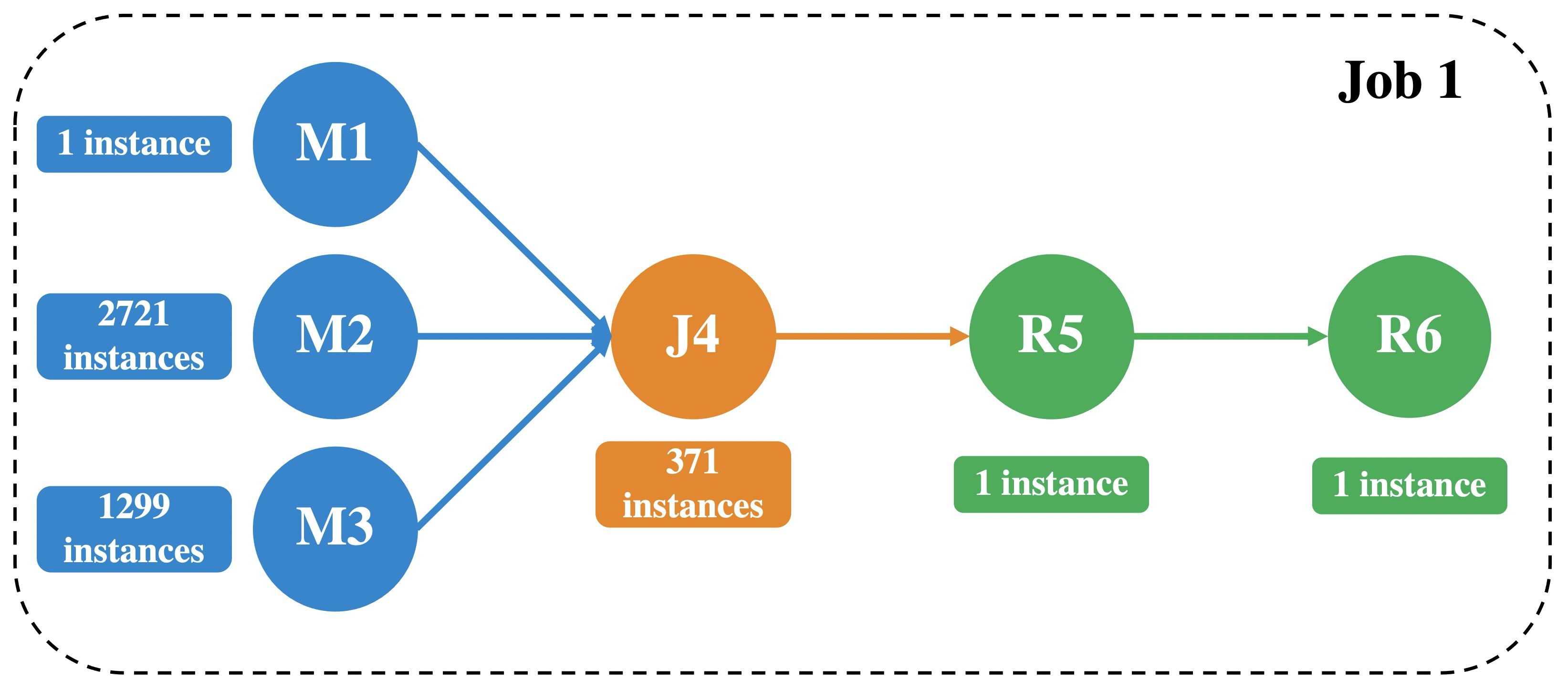
- Propose a data-driven characterization and classification method for BEJs based on real trace data from 10,000-server and 12,000-server production clusters.
- Model the relationship between server-level BEJ compositions and LCS response time (RT) using historical performance data.
- Design an interference scoring mechanism that quantifies the impact of BEJ compositions on LCS RT, enabling proactive scheduling decisions.
- Use correlation-based weighting (e.g., Corr, Fair, CPU-Quota) to optimize interference score prediction accuracy across diverse server workloads.
- Integrate the scoring model into a scheduler to prioritize or delay BEJ scheduling based on predicted interference levels.
- Validate the framework using small-scale cluster experiments and large-scale data-driven simulations on real cluster traces.
Experimental results
Research questions
- RQ1How do BEJ compositions influence the response time of latency-critical services (LCSs) in large-scale co-located clusters?
- RQ2Can a data-driven interference scoring mechanism based on BEJ composition outperform traditional methods relying on real-time resource utilization?
- RQ3To what extent can proactive scheduling based on interference scores reduce overall cluster interference and improve LCS performance?
- RQ4How does the proposed framework perform in terms of prediction accuracy and scalability across diverse server workloads and interference levels?
- RQ5What is the impact of interference mitigation on long-tail LCSs and overall cluster efficiency?
Key findings
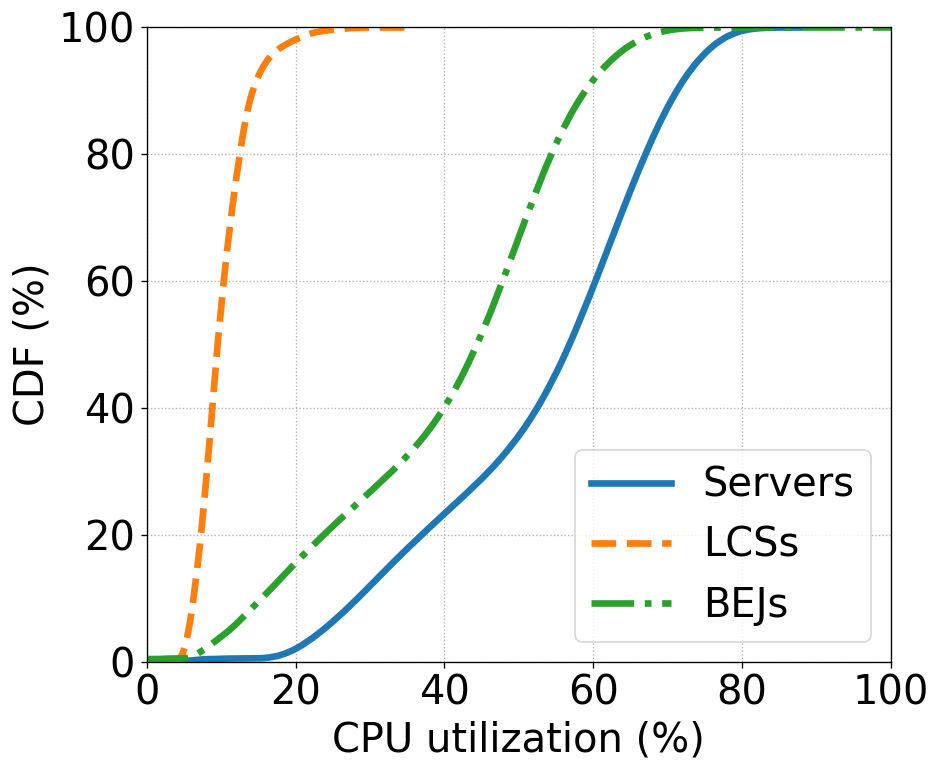
- BEJs are the primary source of interference for LCSs, despite their best-effort nature, due to high repetition and resource contention.
- Even with identical resource consumption, different BEJ compositions cause significantly varying levels of interference on LCSs, highlighting the need for composition-aware scheduling.
- The BEJ composition-based interference prediction method achieves 75.2% accuracy, outperforming the BEJ utilization-based method (58.3% accuracy).
- PISM reduces cluster-wide interference by up to 41.5% in simulation, demonstrating strong mitigation potential.
- PISM improves the throughput of long-tail LCSs by 76.4% by reducing interference and preventing performance degradation.
- The framework reduces the probability of long-tail LCS performance issues by 82.1%, indicating strong reliability gains for latency-sensitive workloads.
Read this paper
Open the full text in the Nubint reader and ask about any passage as you read.
Read this paper on NubintThis review was generated by AI from the original paper. Please check the paper before citing it.