
[Paper Review] Mixture of Quantized Experts (MoQE): Complementary Effect of Low-bit Quantization and Robustness
This paper proposes Mixture of Quantized Experts (MoQE), a weight-only quantization method that applies ultra-low-bit (2-bit) quantization exclusively to expert weights in Mixture-of-Experts (MoE) models. By exploiting the inherent robustness of MoE expert layers to quantization, MoQE reduces model size by 79.6% and achieves 1.24× inference speedup on A100 GPUs without significant accuracy loss, outperforming dense models when quantized at 2-bit with Quantization Aware Training (QAT).
Large Mixture of Experts (MoE) models could achieve state-of-the-art quality on various language tasks, including machine translation task, thanks to the efficient model scaling capability with expert parallelism. However, it has brought a fundamental issue of larger memory consumption and increased memory bandwidth bottleneck at deployment time. In this paper, we propose Mixture of Quantized Experts (MoQE) which is a simple weight-only quantization method applying ultra low-bit down to 2-bit quantizations only to expert weights for mitigating the increased memory and latency issues of MoE models. We show that low-bit quantization together with the MoE architecture delivers a reliable model performance while reducing the memory size significantly even without any additional training in most cases. In particular, expert layers in MoE models are much more robust to the quantization than conventional feedforward networks (FFN) layers. In our comprehensive analysis, we show that MoE models with 2-bit expert weights can deliver better model performance than the dense model trained on the same dataset. As a result of low-bit quantization, we show the model size can be reduced by 79.6% of the original half precision floating point (fp16) MoE model. Combined with an optimized GPU runtime implementation, it also achieves 1.24X speed-up on A100 GPUs.
Motivation & Objective
- Address the high memory bandwidth and latency overhead in MoE model inference, which limits deployment efficiency despite sub-linear FLOP growth.
- Investigate whether expert layers in MoE models are more robust to low-bit quantization than standard feedforward networks (FFN) or attention layers.
- Develop a lightweight, weight-only quantization method that preserves model quality while drastically reducing memory footprint and improving inference speed.
- Demonstrate that MoE models with 2-bit quantized experts can outperform full-precision dense models on machine translation tasks.
- Optimize inference performance through runtime engineering to achieve measurable speedups on modern GPU hardware.
Proposed method
- Apply weight-only quantization to only the expert FFN layers in MoE models, leaving attention and dense FFN layers in full precision.
- Use 2-bit quantization with Quantization Aware Training (QAT) for expert weights to maintain model accuracy, while 3-bit quantization is applied without QAT.
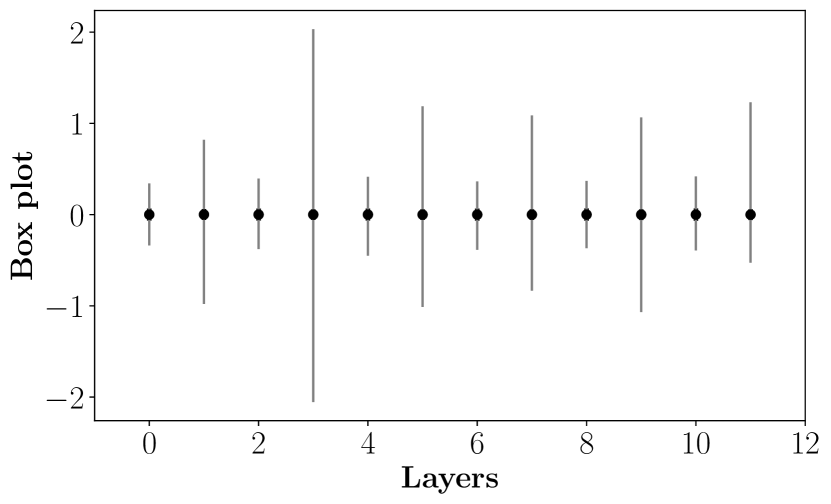
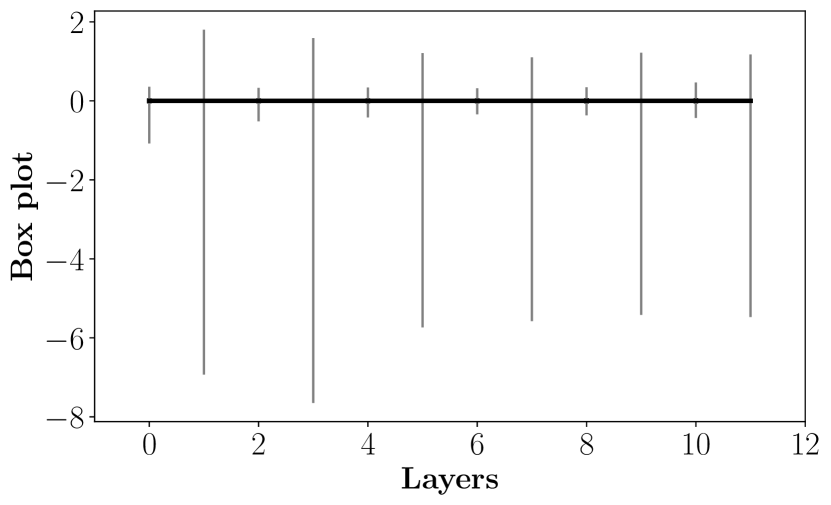
- Leverage the observation that expert layer weights have a narrower, more stable distribution with fewer outliers, enabling robust low-bit quantization.
- Implement a GPU-optimized inference runtime that accelerates the inference of quantized MoE models, achieving higher throughput.
- Compare quantization effects across different model components (expert FFN, dense FFN, attention) to isolate the robustness of expert layers.
- Use BLEU scores on WMT and internal validation datasets to evaluate quantization impact across multiple language pairs and model sizes.
Experimental results
Research questions
- RQ1How does low-bit quantization affect the performance of different components in MoE models, particularly expert FFN layers versus dense FFN and attention layers?
- RQ2Can 2-bit quantization of expert weights be applied without additional training or calibration data, and what is the resulting accuracy impact?
- RQ3To what extent do MoE models with 2-bit quantized experts outperform full-precision dense models in terms of model quality and efficiency?
- RQ4What is the combined effect of expert weight quantization and optimized GPU inference on model throughput and memory consumption?
- RQ5How does the robustness of expert layers to quantization compare to that of standard FFN layers in dense models?
Key findings
- Expert FFN layers in MoE models are significantly more robust to low-bit quantization than dense FFN or attention layers, with 2-bit quantization causing only minor performance degradation when using QAT.
- MoE models with 2-bit quantized expert weights achieve a 79.6% reduction in model size compared to the original fp16 MoE model.
- With optimized GPU runtime, MoQE achieves a 1.24× speedup on A100 GPUs compared to the original fp16 MoE model.
- MoE models with 2-bit quantized experts outperform full-precision dense models on the same dataset, as measured by BLEU scores.
- Quantizing dense FFN layers to 2-bit results in near-zero BLEU scores, confirming that expert layers are uniquely robust to low-bit quantization.
- Even 3-bit quantization of expert weights causes only a 1.01-point average BLEU drop on the WMT dataset, while 2-bit quantization results in a 11.54-point average drop—still significantly better than dense models at the same bitwidth.
Read this paper
Open the full text in the Nubint reader and ask about any passage as you read.
Read this paper on NubintThis review was generated by AI from the original paper. Please check the paper before citing it.