
[Paper Review] Model evaluation for extreme risks
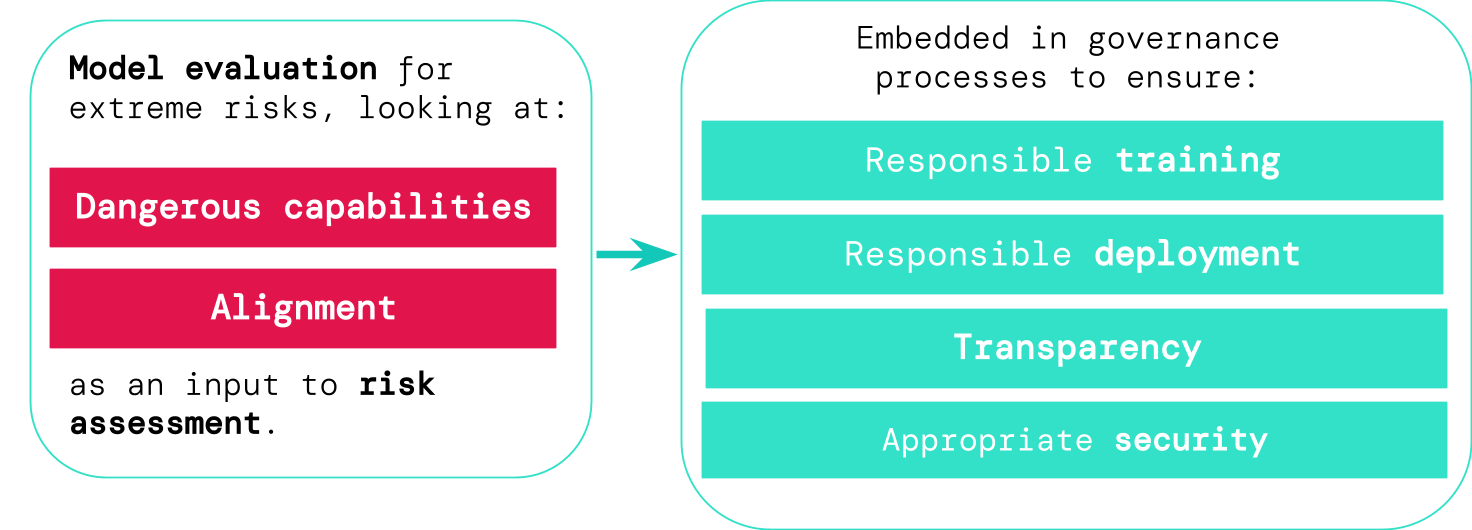
The paper argues for a two‑pillar evaluation framework—dangerous capabilities and alignment—to assess extreme risks from general‑purpose models, and outlines how these evaluations should be embedded in governance, training, deployment, transparency, and security.
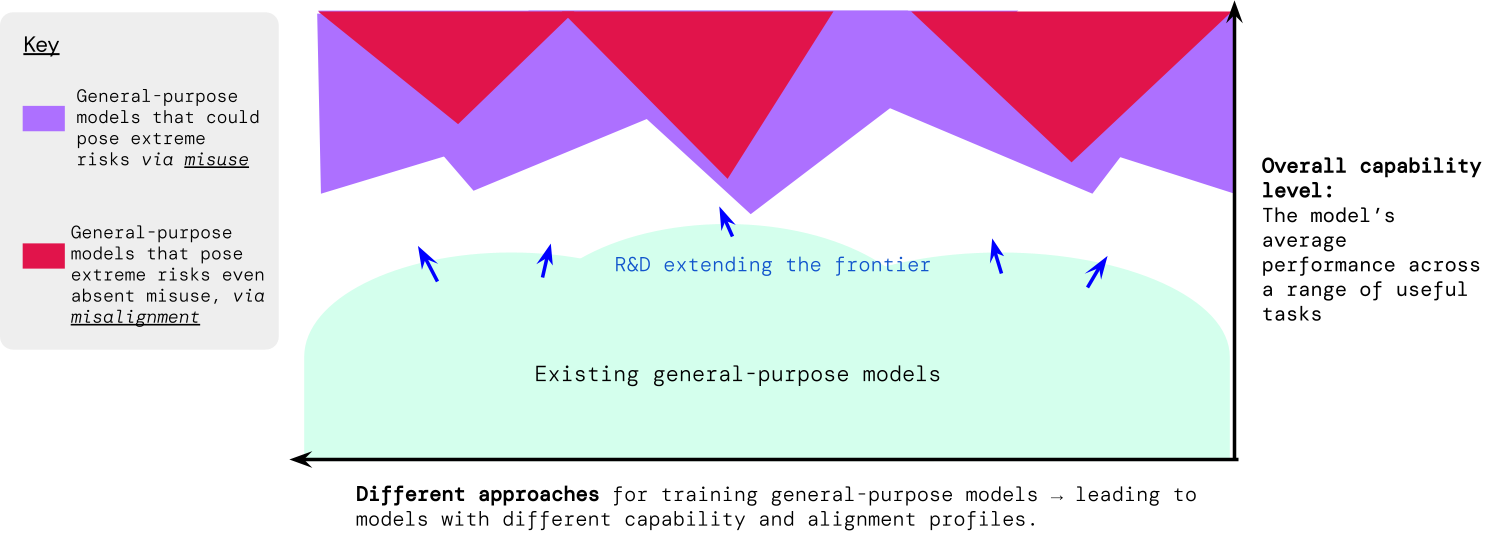
Current approaches to building general-purpose AI systems tend to produce systems with both beneficial and harmful capabilities. Further progress in AI development could lead to capabilities that pose extreme risks, such as offensive cyber capabilities or strong manipulation skills. We explain why model evaluation is critical for addressing extreme risks. Developers must be able to identify dangerous capabilities (through "dangerous capability evaluations") and the propensity of models to apply their capabilities for harm (through "alignment evaluations"). These evaluations will become critical for keeping policymakers and other stakeholders informed, and for making responsible decisions about model training, deployment, and security.
Motivation & Objective
- Motivate the focus on extreme risks from frontier/general-purpose AI models and define the scope of dangerous capabilities and misalignment risk.
- Propose a governance‑oriented framework that embeds model evaluations into training, deployment, transparency, and security processes.
- Outline early work, design criteria, and limitations to guide future development of extreme risk evaluations.
- Recommend how developers and policymakers use evaluations to manage training, deployment, and risk mitigation.
Proposed method
- Define two core evaluation goals: (a) detect dangerous capabilities a model could possess, and (b) assess its propensity to apply those capabilities harmfully (alignment).
- Describe an end‑to‑end governance workflow where internal evaluations, external research access, and independent audits inform training risk assessments, deployment risk assessments, and incident reporting.
- Present design criteria for extreme risk evaluations, including comprehensiveness, automation, behavioral and mechanistic analysis, fault‑finding, latent capability surfacing, lifecycle coverage, and interpretability.
- Advocate for responsible training and deployment practices that pause or adjust training/deployment based on evaluation results, with gradual deployment and post‑deployment monitoring.
- Highlight transparency mechanisms (incident reporting, predeployment risk assessments, scientific reporting, educational demonstrations) and security practices (red teaming, isolation, rapid response, system integrity).
- Reference early initiatives (ARC Evals, OpenAI, Google DeepMind) as examples of dangerous capability and alignment evaluations in practice.
Experimental results
Research questions
- RQ1What dangerous capabilities might frontier general‑purpose models possess, and how can we reliably detect them?
- RQ2How can we evaluate the propensity of a model to misapply its capabilities (alignment) across diverse settings?
- RQ3How should extreme risk evaluations be integrated into training, deployment, and governance to reduce extreme risk exposure?
- RQ4What are the limitations and hazards of model evaluations for extreme risks, and how can they be mitigated?
Key findings
- Proposes a two‑category evaluation framework: dangerous capabilities and alignment to assess extreme risks.
- Outlines a governance workflow embedding evaluations into risk assessments, training, deployment, and security decisions.
- Identifies a non‑exhaustive set of dangerous capabilities and discusses how combinations increase risk.
- Describes desirable qualities for evaluation portfolios, including breadth, automation, fault‑finding, and model lifecycle considerations.
- Emphasizes ongoing evaluation and monitoring post‑deployment due to unanticipated behaviours and model updates.
- Acknowledges limitations and potential hazards of evaluations, such as unknown threat models, emergence, and information leakage risks.
Read this paper
Open the full text in the Nubint reader and ask about any passage as you read.
Read this paper on NubintThis review was generated by AI from the original paper. Please check the paper before citing it.