
[Paper Review] Modeling Interpersonal Linguistic Coordination in Conversations using Word Mover's Distance
This paper proposes a novel measure of interpersonal linguistic coordination in conversations using Word Mover's Distance (WMD) with word2vec embeddings to jointly capture lexical, semantic, and syntactic coordination. The method normalizes local coordination distances globally to account for individual differences, and evaluates it in clinical psychology settings, showing higher correlation with therapist empathy in Motivational Interviewing and affective behaviors in Couples Therapy than prior measures.
Linguistic coordination is a well-established phenomenon in spoken conversations and often associated with positive social behaviors and outcomes. While there have been many attempts to measure lexical coordination or entrainment in literature, only a few have explored coordination in syntactic or semantic space. In this work, we attempt to combine these different aspects of coordination into a single measure by leveraging distances in a neural word representation space. In particular, we adopt the recently proposed Word Mover's Distance with word2vec embeddings and extend it to measure the dissimilarity in language used in multiple consecutive speaker turns. To validate our approach, we apply this measure for two case studies in the clinical psychology domain. We find that our proposed measure is correlated with the therapist's empathy towards their patient in Motivational Interviewing and with affective behaviors in Couples Therapy. In both case studies, our proposed metric exhibits higher correlation than previously proposed measures. When applied to the couples with relationship improvement, we also notice a significant decrease in the proposed measure over the course of therapy, indicating higher linguistic coordination.
Motivation & Objective
- To develop a unified measure of linguistic coordination that integrates lexical, semantic, and syntactic alignment in dyadic conversations.
- To address the limitation of prior methods that focus only on lexical similarity or synonymy, by leveraging dense word embeddings to capture semantic and contextual similarity.
- To validate the proposed measure in clinical psychology domains, particularly in relation to therapist empathy and therapeutic outcomes.
- To normalize local coordination distances globally to account for individual speaker tendencies, improving sensitivity to interpersonal coordination.
- To demonstrate the utility of WMD with word2vec for capturing interpersonal behavioral dynamics in therapy sessions.
Proposed method
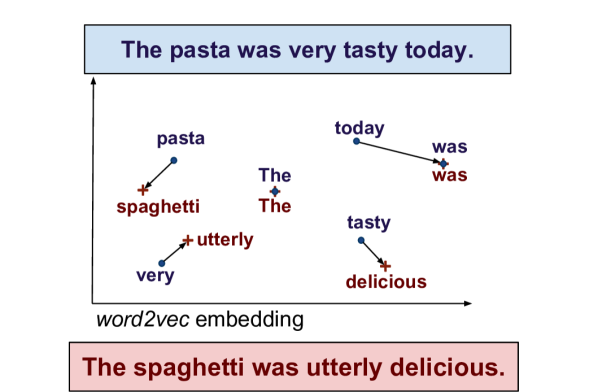
- Adopt Word Mover’s Distance (WMD) on word2vec embeddings to compute dissimilarity between consecutive speaker turns in a conversation.
- Include stop words in the WMD computation to capture lexical entrainment patterns in high-frequency and style words.
- Compute local coordination distance over a sliding window of k consecutive turns for each speaker pair.
- Normalize the local coordination distance by the global average distance of the speaker to account for individual coordination tendencies.
- Use the normalized measure (nCLiD) and unnormalized (uCLiD) as primary metrics for evaluation.
- Apply the measure to clinical transcripts from Motivational Interviewing and Couples Therapy for comparative analysis.
Experimental results
Research questions
- RQ1Can a WMD-based measure that leverages word2vec embeddings effectively capture multidimensional linguistic coordination (lexical, semantic, syntactic) in dyadic conversations?
- RQ2How does the proposed coordination measure correlate with therapist empathy in Motivational Interviewing?
- RQ3To what extent does linguistic coordination, as measured by the proposed method, correlate with positive and negative affective behaviors in Couples Therapy?
- RQ4Does linguistic coordination, as measured by the proposed method, decrease over time in couples who show clinical improvement?
- RQ5Does the proposed measure outperform existing baselines such as TF-IDF, WordNet-based similarity, and global WMD in capturing interpersonal coordination in therapy?
Key findings
- In Motivational Interviewing, the normalized coordination measure (nCLiD) achieved a Spearman correlation of -0.2639 with therapist empathy, which was statistically significant (p = 0.0026) and higher than all baselines.
- In Couples Therapy, nCLiD showed a correlation of -0.3068 with positive affect and 0.3371 with negative affect, both highly significant (p < 10^-7), outperforming all baselines.
- The unnormalized measure (uCLiD) also showed strong correlation with empathy (ρ = -0.2283, p = 0.0103), confirming the robustness of the approach.
- For couples who fully recovered (outcome rating 4), a paired Wilcoxon signed-rank test showed a statistically significant decrease in coordination distance (p = 0.0125 for uCLiD, p = 0.0181 for nCLiD), indicating increased linguistic coordination post-therapy.
- The normalized measure (nCLiD) consistently outperformed all baselines across both case studies, demonstrating the importance of global normalization to account for individual differences.
- The results validate that WMD with word2vec embeddings effectively captures interpersonal coordination beyond lexical similarity, including semantic and contextual alignment.
Better researchstarts right now
From reading papers to final review, dramatically reduce your research time.
No credit card · Free plan available
This review was created by AI and reviewed by human editors.