
[Paper Review] Multi-Criteria Virtual Machine Placement in Cloud Computing Environments: A literature Review
This paper presents a comprehensive literature review on multi-criteria virtual machine placement (VMP) in cloud computing, classifying existing solutions by five objective functions: energy consumption, cost, network traffic, resource utilization, and quality of service. It analyzes heuristic, meta-heuristic, deterministic, and approximation algorithms, and discusses VNF placement in 5G networks using NFV and SDN to enable network slicing for diverse service requirements.
Cloud computing is a revolutionary process that has impacted the manner of using networks. It allows a high level of flexibility as Virtual Machines (VMs) run elastically workloads on physical machines in data centers. The issue of placing virtual machines (VMP) in cloud environments is an important challenge that has been thoroughly addressed, although not yet completely resolved. This article discusses the different problems that may disrupt the placement of VMs and Virtual Network Functions (VNFs), and classifies the existing solutions into five major objective functions based on multiple performance metrics such as energy consumption, Quality of Service, Service Level Agreement, and incurred cost. The existing solutions are also classified based on whether they adopt heuristic, deterministic, meta-heuristic or approximation algorithms. The VNF placement in 5G network is also discussed to highlight the convergence toward optimal usage of mobile services by including NFV/Software-Defined-Network technologies.
Motivation & Objective
- To identify and categorize key challenges in virtual machine placement (VMP) within cloud computing environments.
- To classify existing VMP solutions based on their primary optimization objectives, including energy, cost, performance, and resource utilization.
- To analyze the algorithmic approaches used in VMP, distinguishing between heuristic, meta-heuristic, deterministic, and approximation methods.
- To explore the integration of VMP with Network Function Virtualization (NFV) and network slicing in 5G networks for improved service flexibility and performance.
- To highlight open research problems and future directions, particularly in achieving optimal placement under dynamic, multi-objective constraints in 5G-enabled cloud infrastructures.
Proposed method
- Systematically reviewed 180+ research papers and surveys on VMP and VNF placement in cloud and 5G environments.
- Classified VMP solutions into five objective functions: energy minimization, cost optimization, network traffic reduction, resource balancing, and QoS maximization.
- Categorized solution techniques into four algorithmic families: heuristic, meta-heuristic, deterministic, and approximation algorithms.
- Analyzed the role of virtualization and dynamic migration in enabling flexible VM placement with minimal performance impact.
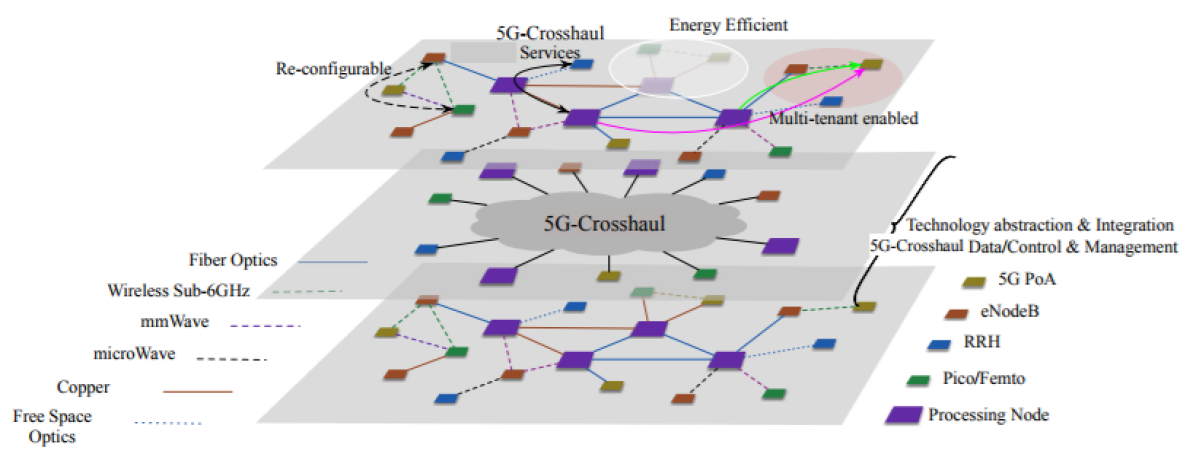
- Explored the convergence of NFV and SDN in 5G networks, particularly how network slicing enables customized, isolated virtual networks for diverse service demands.
- Evaluated the impact of stateful vs. stateless workloads and SLA compliance on placement decisions and system stability.
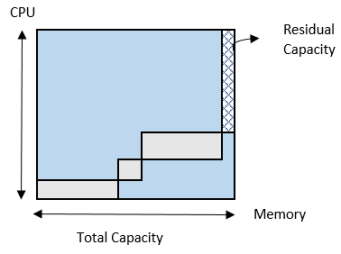
Experimental results
Research questions
- RQ1What are the primary challenges affecting virtual machine placement in cloud and 5G network environments?
- RQ2How do different optimization objectives—such as energy efficiency, cost, and QoS—influence VMP solution design?
- RQ3What are the strengths and limitations of heuristic, meta-heuristic, deterministic, and approximation algorithms in solving multi-criteria VMP problems?
- RQ4How does Network Function Virtualization (NFV) and network slicing enhance VMP in 5G mobile networks?
- RQ5What are the open research challenges in achieving optimal, stable, and scalable VM and VNF placement under dynamic workloads and multi-objective constraints?
Key findings
- The majority of existing VMP solutions rely on heuristic and meta-heuristic algorithms due to their ability to deliver high-quality solutions within acceptable timeframes.
- Energy consumption minimization is the most widely studied objective, driven by the high carbon footprint of data centers and the need for sustainable cloud operations.
- Cost optimization and SLA compliance are critical for commercial cloud providers, with many solutions incorporating financial and performance constraints into their models.
- Resource utilization balancing and network traffic minimization are increasingly important for reducing resource contention and improving overall system efficiency.
- Network slicing in 5G enables the coexistence of multiple isolated, customized virtual networks on a single physical infrastructure, each tailored to specific service requirements such as low latency or high bandwidth.
- Despite progress, dynamic workloads and the co-placement of stateful and stateless services remain significant challenges, often leading to sub-optimal or unstable configurations if not properly modeled.
Read this paper
Open the full text in the Nubint reader and ask about any passage as you read.
Read this paper on NubintThis review was generated by AI from the original paper. Please check the paper before citing it.