
[Paper Review] Multisample Flow Matching: Straightening Flows with Minibatch Couplings
This paper introduces Multisample Flow Matching, a simulation-free framework that improves continuous-time normalizing flows by coupling multiple data and noise samples within minibatches to reduce gradient variance and produce straighter, more efficient probability paths. By leveraging optimal transport-inspired couplings, the method achieves 30–60% lower sampling cost with no performance drop, enabling faster, higher-quality generation using fewer function evaluations.
Simulation-free methods for training continuous-time generative models construct probability paths that go between noise distributions and individual data samples. Recent works, such as Flow Matching, derived paths that are optimal for each data sample. However, these algorithms rely on independent data and noise samples, and do not exploit underlying structure in the data distribution for constructing probability paths. We propose Multisample Flow Matching, a more general framework that uses non-trivial couplings between data and noise samples while satisfying the correct marginal constraints. At very small overhead costs, this generalization allows us to (i) reduce gradient variance during training, (ii) obtain straighter flows for the learned vector field, which allows us to generate high-quality samples using fewer function evaluations, and (iii) obtain transport maps with lower cost in high dimensions, which has applications beyond generative modeling. Importantly, we do so in a completely simulation-free manner with a simple minimization objective. We show that our proposed methods improve sample consistency on downsampled ImageNet data sets, and lead to better low-cost sample generation.
Motivation & Objective
- To address high gradient variance and inefficient sampling in simulation-free continuous normalizing flows by exploiting structured couplings between data and noise samples.
- To construct probability paths that are closer to optimal transport geodesics by using joint distributions across minibatches rather than independent samples.
- To enable faster, higher-quality generation with fewer function evaluations by learning straighter vector fields through coupled training.
- To provide a simulation-free method that regularizes toward the optimal vector field without adversarial training or costly simulations.
- To extend the applicability of optimal transport to settings where only minibatch solutions are available, enabling efficient transport map estimation.
Proposed method
- The method generalizes Flow Matching by introducing joint distributions over k data samples and k noise samples within a minibatch, replacing independent sampling with structured couplings.
- It uses a minimization objective that enforces correct marginal constraints while allowing non-trivial couplings between data and noise pairs.
- The framework employs optimal transport-inspired couplings—specifically, batch-optimal transport—to align data and noise samples such that paths become increasingly straight as batch size increases.
- The training objective is simulation-free and directly minimizes a loss that ensures the flow maps noise to data while preserving the correct marginal distribution.
- The method is compatible with standard ODE solvers and can be applied with both adaptive and explicit solvers, including Euler discretization.
- It enables efficient inference by learning vector fields that produce straighter flows, reducing the number of function evaluations needed for high-quality sampling.
Experimental results
Research questions
- RQ1Can structured couplings between data and noise samples in minibatches reduce gradient variance during training of continuous normalizing flows?
- RQ2Does using optimal transport-inspired couplings lead to straighter probability paths, thereby improving sampling efficiency?
- RQ3Can multisample flow matching achieve lower sampling cost (fewer function evaluations) while maintaining or improving sample quality compared to standard Flow Matching?
- RQ4To what extent can this method regularize the vector field toward the optimal transport path without simulation or adversarial training?
- RQ5Can this framework be used to compute approximately optimal transport maps between arbitrary distributions when only minibatch solutions are available?
Key findings
- On ImageNet-32 and ImageNet-64, Multisample Flow Matching reduces the required number of function evaluations by 30–60% to achieve a low Fréchet Inception Distance (FID), compared to standard Flow Matching.
- The method achieves better sample quality at low sampling cost, with no degradation in log-likelihood or sample fidelity.
- Training time increases by only 4% compared to baseline Flow Matching, while enabling significantly more efficient inference.
- Theoretical analysis shows that with optimal couplings, sample paths become straighter as the batch size increases, approaching the optimal transport geodesic in the limit.
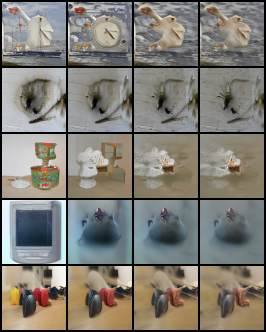
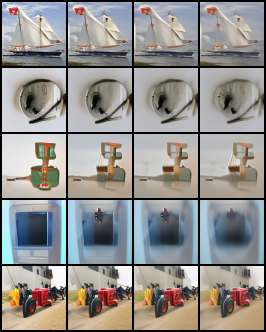
- Empirical results confirm that the method improves sample consistency across varying numbers of function evaluations, especially at low budgets.
- The approach enables simulation-free regularization toward the optimal vector field, outperforming prior methods that rely on barycentric averaging or adversarial training.
Read this paper
Open the full text in the Nubint reader and ask about any passage as you read.
Read this paper on NubintThis review was generated by AI from the original paper. Please check the paper before citing it.