
[Paper Review] Network Analytics for Anti-Money Laundering -- A Systematic Literature Review and Experimental Evaluation
A systematic literature review of network analytics (NA) for AML across 97 papers, plus an experimental framework benchmarking prominent NA methods on the Elliptic data set, showing graph neural networks yield the best performance.
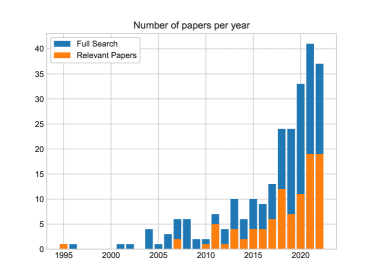
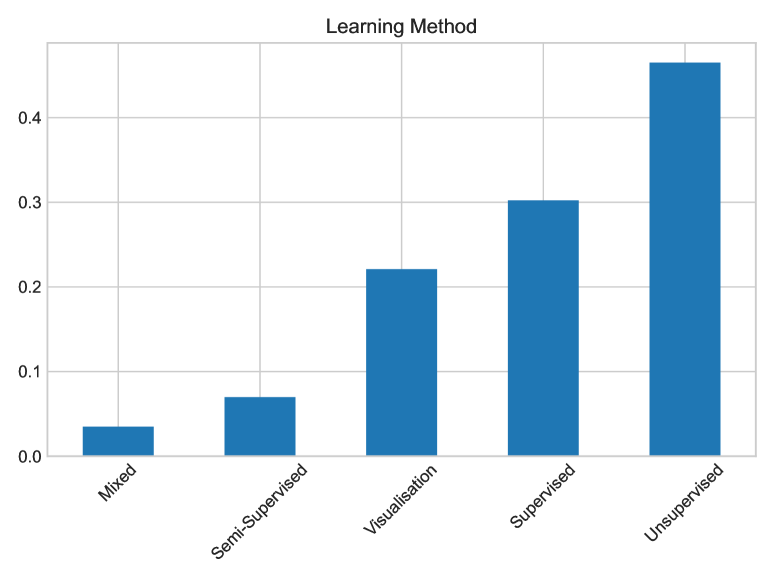
Money laundering presents a pervasive challenge, burdening society by financing illegal activities. The use of network information is increasingly being explored to effectively combat money laundering, given it involves connected parties. This led to a surge in research on network analytics for anti-money laundering (AML). The literature is, however, fragmented and a comprehensive overview of existing work is missing. This results in limited understanding of the methods to apply and their comparative detection power. This paper presents an extensive and unique literature review, based on 97 papers from Web of Science and Scopus, resulting in a taxonomy following a recently proposed fraud analytics framework. We conclude that most research relies on expert-based rules and manual features, while deep learning methods have been gaining traction. This paper also presents a comprehensive framework to evaluate and compare the performance of prominent methods in a standardized setup. We compare manual feature engineering, random walk-based, and deep learning methods on two publicly available data sets. We conclude that (1) network analytics increases the predictive power, but caution is needed when applying GNNs in the face of class imbalance and network topology, and that (2) care should be taken with synthetic data as this can give overly optimistic results. The open-source implementation facilitates researchers and practitioners to extend this work on proprietary data, promoting a standardised approach for the analysis and evaluation of network analytics for AML.
Motivation & Objective
- Provide an extensive systematic review of network analytics for AML across both fiat and crypto contexts.
- Develop and publish a uniform experimental framework to compare NA methods on AML tasks.
- Evaluate traditional feature-based, random-walk, and graph neural network approaches under a common setup.
- Promote reproducibility by providing open-source code for replication and extension.
Proposed method
- Systematic literature review on Web of Science and Scopus identifying 97 papers.
- Taxonomy of papers using five dimensions: publication data, learning method, evaluation metrics, objective, data type.
- Construction of a unified experimental framework applied to the Elliptic dataset.
- Implementation of manual feature engineering, random walk-based methods, and deep learning GNNs in a uniform setup.
- Open-source code repository to enable replication and extension.
Experimental results
Research questions
- RQ1What are the predominant network analytics methods used for AML across the literature (supervised, unsupervised, and visualisation)?
- RQ2How do different NA methods perform under a uniform experimental setup on real AML data (Elliptic dataset)?
- RQ3What data and evaluation practices affect the comparability and reproducibility of NA for AML?
Key findings
- Network analytics increases the predictive power of AML models compared to non-NA baselines.
- Graph neural networks achieve the best results among evaluated NA methods on the Elliptic dataset.
- Open-source data (crypto) dominates between-data evaluation, while proprietary data is common for non-crypto AML studies.
- Most studies rely on centrality-based features; fewer works apply state-of-the-art deep learning in AML NA contexts.
- The evaluation highlights issues of data availability, label imbalance, and the need for standardized benchmarks.
Read this paper
Open the full text in the Nubint reader and ask about any passage as you read.
Read this paper on NubintThis review was generated by AI from the original paper. Please check the paper before citing it.