
[Paper Review] Open Problems in Applied Deep Learning
The paper frames the ML development loop as a bi-level optimization problem, surveys where it applies across learning paradigms, and outlines numerous open problems and directions for automating the iteration step to reduce compute and carbon footprint.
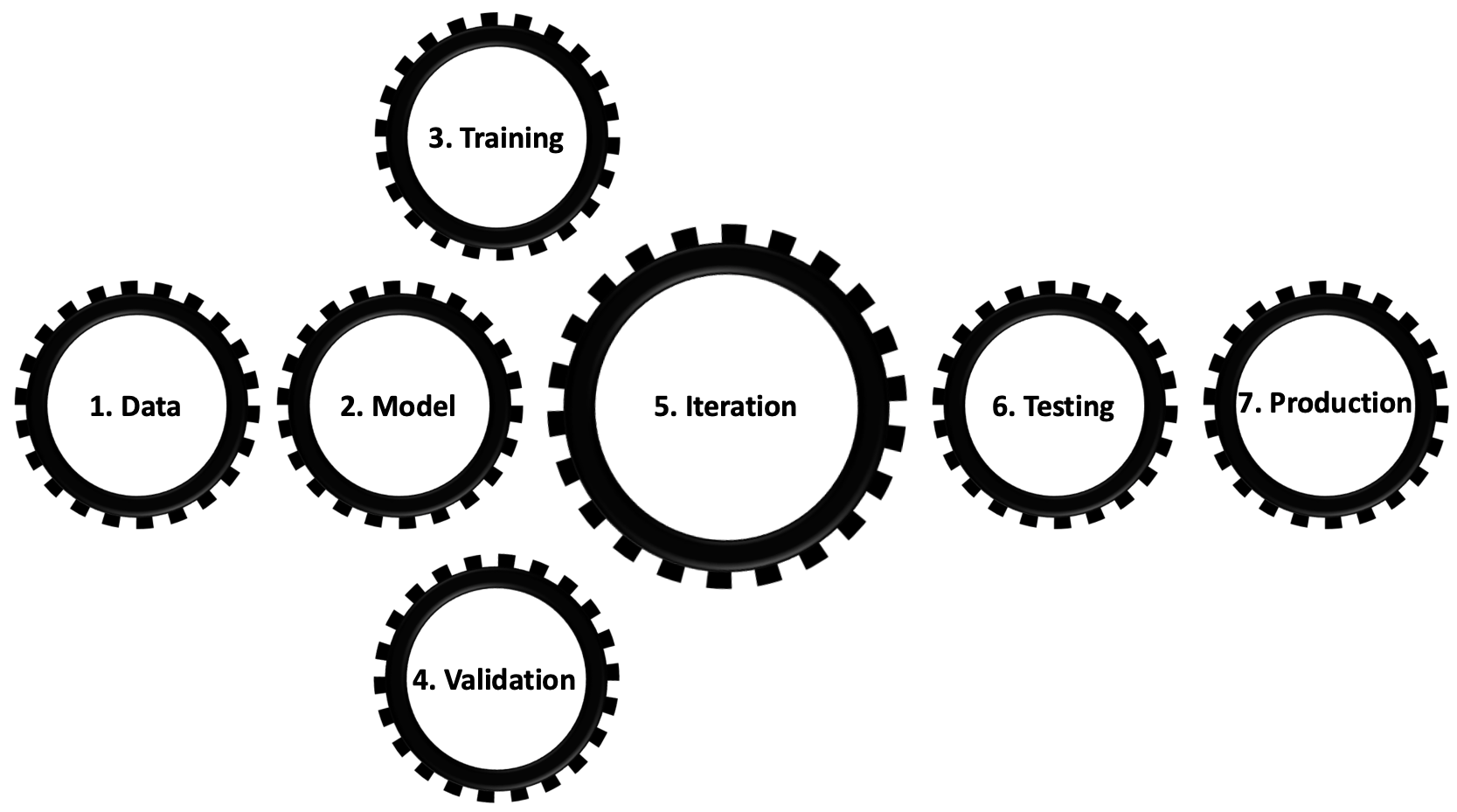
This work formulates the machine learning mechanism as a bi-level optimization problem. The inner level optimization loop entails minimizing a properly chosen loss function evaluated on the training data. This is nothing but the well-studied training process in pursuit of optimal model parameters. The outer level optimization loop is less well-studied and involves maximizing a properly chosen performance metric evaluated on the validation data. This is what we call the "iteration process", pursuing optimal model hyper-parameters. Among many other degrees of freedom, this process entails model engineering (e.g., neural network architecture design) and management, experiment tracking, dataset versioning and augmentation. The iteration process could be automated via Automatic Machine Learning (AutoML) or left to the intuitions of machine learning students, engineers, and researchers. Regardless of the route we take, there is a need to reduce the computational cost of the iteration step and as a direct consequence reduce the carbon footprint of developing artificial intelligence algorithms. Despite the clean and unified mathematical formulation of the iteration step as a bi-level optimization problem, its solutions are case specific and complex. This work will consider such cases while increasing the level of complexity from supervised learning to semi-supervised, self-supervised, unsupervised, few-shot, federated, reinforcement, and physics-informed learning. As a consequence of this exercise, this proposal surfaces a plethora of open problems in the field, many of which can be addressed in parallel.
Motivation & Objective
- Formulate the machine learning pipeline as a bi-level optimization problem separating inner model training from outer hyper-parameter optimization.
- Highlight the iteration step as the key bottleneck and explore approaches to automate or accelerate it (AutoML, MLOps, parameter sharing).
- Assess open problems across diverse learning paradigms (supervised, semi-supervised, unsupervised, few-shot, federated, reinforcement, physics-informed) and architectures (CNNs, transformers, vision tasks).
- Discuss multi-objective trade-offs, data/augmentation strategies, and the carbon footprint of model development.
Proposed method
- Present a unified bi-level optimization framework: min_alpha M_val(w*(alpha), alpha) subject to w*(alpha)=argmin_w L_train(w, alpha).
- Survey solution strategies when M_val is discrete, non-differentiable, or ill-defined, including grid/random/Bayesian search, RL, evolutionary algorithms, and parameter sharing.
- Propose memory-computation trade-offs via parameter sharing to speed inner optimization; consider differentiable surrogates of M_val to enable joint optimization over w and alpha.
- Discuss multi-objective outer optimization and hyper-hyper-parameters for balancing performance with efficiency and deployment constraints.
- Outline data augmentation and policy search considerations as part of the hyper-parameter space.
Experimental results
Research questions
- RQ1How can the outer iteration step be automated or accelerated across different learning paradigms?
- RQ2Can differentiable surrogates of validation metrics enable efficient bi-level optimization for hyper-parameter search?
- RQ3What are effective strategies to balance accuracy with efficiency (FLOPs, latency, memory) in a multi-objective bi-level setting?
- RQ4How do data augmentation policies and architectural choices influence the iteration process across supervised and non-supervised settings?
- RQ5What open problems emerge when extending bi-level optimization to semi-supervised, federated, reinforcement, and physics-informed learning?
Key findings
- The inner training loop is the primary computational bottleneck in the bi-level formulation.
- Memory-heavy parameter sharing and warm-starting can dramatically speed up iteration compared to training from scratch.
- Differentiable surrogates of validation metrics can enable gradient-based bi-level optimization without solving the inner problem to completion.
- There is a need to develop differentiable approximations for non-differentiable metrics (e.g., accuracy, mAP) to facilitate AutoML-like processes.
- Multiple open problems are identified across supervised to physics-informed learning, including robustness, explainability, transfer, and multimodal settings.
Read this paper
Open the full text in the Nubint reader and ask about any passage as you read.
Read this paper on NubintThis review was generated by AI from the original paper. Please check the paper before citing it.