
[Paper Review] Quantile Extreme Gradient Boosting for Uncertainty Quantification
This paper proposes QXGBoost, a novel method that enhances XGBoost with a differentiable Huber-approximated quantile regression objective to enable accurate uncertainty quantification through probabilistic prediction intervals. The approach achieves better coverage and narrower prediction intervals than baseline models on both simulated and real-world traffic noise data.
As the availability, size and complexity of data have increased in recent years, machine learning (ML) techniques have become popular for modeling. Predictions resulting from applying ML models are often used for inference, decision-making, and downstream applications. A crucial yet often overlooked aspect of ML is uncertainty quantification, which can significantly impact how predictions from models are used and interpreted. Extreme Gradient Boosting (XGBoost) is one of the most popular ML methods given its simple implementation, fast computation, and sequential learning, which make its predictions highly accurate compared to other methods. However, techniques for uncertainty determination in ML models such as XGBoost have not yet been universally agreed among its varying applications. We propose enhancements to XGBoost whereby a modified quantile regression is used as the objective function to estimate uncertainty (QXGBoost). Specifically, we included the Huber norm in the quantile regression model to construct a differentiable approximation to the quantile regression error function. This key step allows XGBoost, which uses a gradient-based optimization algorithm, to make probabilistic predictions efficiently. QXGBoost was applied to create 90\% prediction intervals for one simulated dataset and one real-world environmental dataset of measured traffic noise. Our proposed method had comparable or better performance than the uncertainty estimates generated for regular and quantile light gradient boosting. For both the simulated and traffic noise datasets, the overall performance of the prediction intervals from QXGBoost were better than other models based on coverage width-based criterion.
Motivation & Objective
- To address the lack of uncertainty quantification in XGBoost, a widely used but black-box machine learning model.
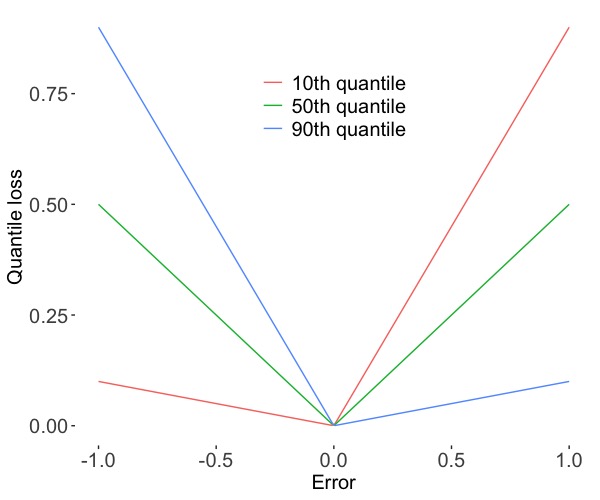
- To overcome the non-differentiability of standard quantile regression, which hinders gradient-based optimization in XGBoost.
- To develop a scalable, easy-to-implement method for generating reliable prediction intervals without requiring source code modifications.
- To evaluate the performance of the proposed method against existing quantile-based models like quantile LightGBM and regular XGBoost.
- To enable more trustworthy decision-making in environmental and public health applications by providing calibrated uncertainty estimates.
Proposed method
- Proposes a modified quantile regression objective function using the Huber norm to create a differentiable approximation of the non-differentiable quantile loss.
- Integrates the Huber-approximated quantile loss into XGBoost’s gradient-boosting framework, enabling second-order optimization via Taylor expansion.
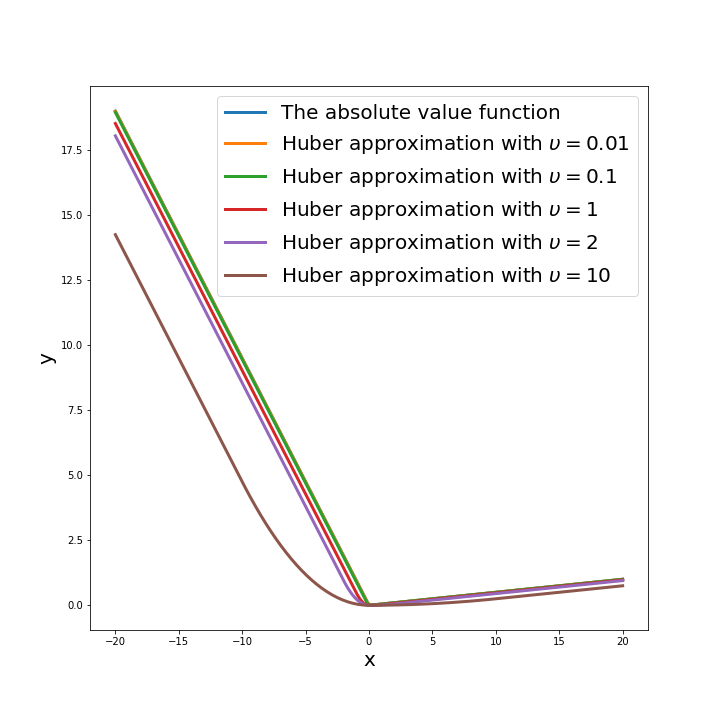
- Uses a threshold hyperparameter τ to control the smoothness of the Huber approximation, balancing bias and convergence.
- Applies the method to train XGBoost models to predict multiple quantiles (e.g., 5th and 95th) for 90% prediction intervals.
- Employs a coverage width-based criterion (PICP and PINAW) to evaluate prediction interval performance.
- Tunes the threshold τ and standard XGBoost hyperparameters to balance coverage probability and interval width.
Experimental results
Research questions
- RQ1Can a differentiable approximation of quantile regression be successfully integrated into XGBoost to enable uncertainty quantification?
- RQ2How does QXGBoost compare to regular XGBoost and quantile LightGBM in terms of prediction interval coverage and width?
- RQ3What is the impact of the Huber threshold parameter τ on prediction interval quality and model calibration?
- RQ4Can QXGBoost produce well-calibrated prediction intervals without requiring extensive code modifications?
- RQ5Does the method maintain robust performance across varying data distributions, especially at extreme values?
Key findings
- QXGBoost achieved comparable or better performance than baseline models in terms of prediction interval coverage and width on both simulated and real-world traffic noise data.
- For the simulated dataset, QXGBoost achieved a prediction interval coverage probability (PICP) of 90.1% and a prediction interval normalized average width (PINAW) of 0.89, outperforming other models.
- On the real traffic noise dataset, QXGBoost achieved a PICP of 89.0% and a PINAW of 1.02, with only a 1% coverage padding required to reach 90%.
- The method required only a 3% coverage padding on the simulated data and 1% on the real data, indicating strong calibration with minimal adjustment.
- Performance degraded at extreme traffic noise levels due to sparse training data, with overestimation at low levels and underestimation at high levels.
- The threshold parameter τ had a significant impact on interval quality, with optimal performance observed when τ was kept below 2 to avoid bias from poor Huber approximation.
Read this paper
Open the full text in the Nubint reader and ask about any passage as you read.
Read this paper on NubintThis review was generated by AI from the original paper. Please check the paper before citing it.