
[Paper Review] Radar Altimeter Redesign for Multi-Stage Interference Risk Mitigation in 5G and Beyond
This paper proposes a redesigned radar altimeter with integrated bandpass filtering to mitigate 5G C-band interference in the 3.7–3.98 GHz band, which overlaps with the 4.2–4.4 GHz radar altimeter frequency range. The redesign maintains TSO certification compliance and demonstrates through preliminary testing that the filter preserves altimeter accuracy within ±3 ft, offering a viable, certifiable solution to prevent catastrophic flight safety risks from 5G-induced signal degradation.
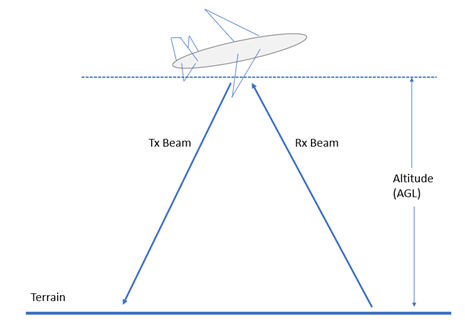
The radar altimeter is installed on most 14 CFR Pt 25 category aircraft, which are applicable to passenger travel and represent most airline traffic. The radar altimeter system is highly accurate and reports the height above the terrain. It plays a significant role in the take-off, approach, and landing phases of the applicable aircraft. In critical conditions, including reduced visibility, proximity to terrain, collision avoidance, and autoland procedures, the accuracy of radar altimeters is crucial to the safety of aircraft. This study aims to address the inappropriate behavior of the susceptible system that may cause essential safety concerns with unknown interoperability and operational impacts. We design and verify a strategic approach to mitigate the risks of potential airborne interference to a radar altimeter due to the coexistence of a 5G and future G signal, especially with the growing demand for the Space Air Ground Integrated Network (SAGIN). This study details a design change to a pre-existing radar altimeter system, and the process necessary to gain certification approval following this change is analyzed. We address the certification aspects from a TSO perspective resulting from changes made to a system post-certification. Artifacts, as defined in the FAA Project Specific Certification Plan template, including the Change Impact Analysis, Means of Compliance, and Test Plans, which are mandated by the certification authorities and requested by aircraft manufacturers and operators to ensure a level of compliance during the engineering cycle, have been adhered to.
Motivation & Objective
- Address the growing safety risk posed by 5G C-band signals (3.7–3.98 GHz) interfering with radar altimeters operating at 4.2–4.4 GHz.
- Develop a certifiable, post-certification redesign of existing radar altimeter systems to enhance robustness against 5G RF interference.
- Ensure continued airworthiness and operational safety during critical phases of flight, particularly approach and landing, under degraded RF conditions.
- Provide a strategic, multi-stage interference mitigation framework aligned with regulatory requirements (TSO, DO-155) for global aviation standards.
- Support regulatory timelines for retrofitting or replacing vulnerable radar altimeters in U.S. airliners affected by 5G deployment.
Proposed method
- Redesign of an existing radar altimeter system by integrating a narrowband, high-selectivity bandpass filter centered at 4.2–4.4 GHz to suppress out-of-band 5G signals.
- Adherence to FAA Project Specific Certification Plan (PSCP) templates, including Change Impact Analysis, Means of Compliance, and Test Plans for TSO-C87 certification.
- Use of laboratory-based testing to evaluate signal integrity, accuracy, and functional performance under simulated 5G interference conditions.
- Benchmarking against a baseline TSO-certified radar altimeter unit to validate that the redesigned system maintains ±3 ft accuracy under interference.
- Incorporation of passive filtering as a primary mitigation strategy, with consideration of alternative approaches such as spatial separation and beamforming (inspired by Japanese 5G deployment models).
- Analysis of regulatory and technical gaps in legacy standards (e.g., DO-155, TSO-C87), which lack explicit requirements for interference susceptibility or receiver masks, especially given the 1980s-era RF spectrum context.
Experimental results
Research questions
- RQ1How can a radar altimeter system be redesigned post-certification to maintain safety-critical performance under 5G C-band interference without compromising TSO compliance?
- RQ2To what extent does a bandpass filter at 4.2–4.4 GHz reduce susceptibility to 5G signals in the 3.7–3.98 GHz band while preserving ±3 ft measurement accuracy?
- RQ3What are the key certification challenges and required artifacts (e.g., Change Impact Analysis, Test Plans) for retrofitting existing radar altimeters in commercial aircraft?
- RQ4How do legacy avionics standards like DO-155 and TSO-C87 fall short in addressing modern RF interference threats from 5G and future G networks?
- RQ5What are the operational and safety implications of relying on passive filtering versus active interference cancellation or spatial separation in airborne systems?
Key findings
- The addition of a bandpass filter in the 4.2–4.4 GHz range does not negatively impact the core functionality of the radar altimeter, preserving its operational integrity.
- Preliminary test results indicate that the redesigned system maintains radar altimeter accuracy within ±3 ft, matching the performance of the baseline TSO-certified unit.
- Laboratory testing results are consistent with flight test observations, suggesting that the filter design is effective under real-world RF conditions.
- The study confirms that passive filtering is a viable and certifiable mitigation strategy, with the FAA endorsing RF filters as a primary solution to 5G interference.
- Historical accidents such as Turkish Airlines Flight 1951 and the 2012 Kazakhstan Antonov 72 crash underscore the catastrophic consequences of radar altimeter failure, reinforcing the urgency of proactive redesign.
- Regulatory bodies like the FAA have called for a timeline to retrofit or replace vulnerable radar altimeters, highlighting the need for standardized, certifiable solutions like the one proposed.
Better researchstarts right now
From reading papers to final review, dramatically reduce your research time.
No credit card · Free plan available
This review was created by AI and reviewed by human editors.