
[Paper Review] Real roots of real cubics and optimization
This paper presents a streamlined, optimization-focused derivation of real roots for cubic polynomials, emphasizing practical computation of Fenchel conjugates, proximal mappings, and projections. It provides explicit formulas for real roots using trigonometric and radical forms, enabling efficient computation in convex and nonconvex optimization problems.
The solution of the cubic equation has a century-long history; however, the usual presentation is geared towards applications in algebra and is somewhat inconvenient to use in optimization where frequently the main interest lies in real roots. In this note, we present the roots of the cubic in a form that makes them convenient to use and we also focus on information on the location of the real roots. Armed with this, we provide several applications in optimization where we compute Fenchel conjugates, proximal mappings and projections.
Motivation & Objective
- Address the gap in existing cubic solution methods by focusing on real roots relevant to optimization, rather than general complex solutions.
- Provide a self-contained, practitioner-friendly derivation of real roots of cubic equations, especially for convex and nonconvex optimization.
- Enable explicit computation of key optimization constructs—Fenchel conjugates, proximal mappings, and projections—using real cubic roots.
- Extend known results by completing unresolved cases in proximal mapping computation for perspective functions and convex quartics.
Proposed method
- Derive the roots of the depressed cubic $ g(z) = z^3 + pz + q $ using discriminant analysis based on $ \Delta = (p/3)^3 + (q/2)^2 $, distinguishing cases by sign of $ \Delta $.
- Use trigonometric form for three real roots when $ \Delta < 0 $, with $ \lambda = 2(-p/3)^{1/2} \cos\left(\frac{1}{3}\arccos\left(\frac{-q/2}{(-p/3)^{3/2}}\right)\right) $.
- Apply radical forms for one real root when $ \Delta \geq 0 $, using $ \lambda = \sqrt[3]{-q/2 + \sqrt{\Delta}} + \sqrt[3]{-q/2 - \sqrt{\Delta}} $.
- Transform general cubic equations into depressed form via substitution $ x = z - b/(3a) $, enabling unified treatment.
- Apply the derived root formulas to compute proximal mappings, Fenchel conjugates, and projections onto convex and nonconvex sets.
- Provide closed-form solutions for proximal mappings of convex reciprocal functions and projections onto epigraphs of parabolas and hyperbolic paraboloids.
Experimental results
Research questions
- RQ1How can the real roots of a cubic polynomial be computed efficiently and explicitly in optimization contexts?
- RQ2What is the optimal form of the cubic root solution that facilitates computation of Fenchel conjugates and proximal mappings?
- RQ3How can the trigonometric and radical forms of cubic roots be unified and applied to convex and nonconvex sets?
- RQ4What are the closed-form expressions for proximal mappings of convex functions involving cubic equations?
- RQ5Can the unresolved cubic in the proximal mapping of a perspective function be fully solved using real root analysis?
Key findings
- For $ \Delta < 0 $, the cubic has three distinct real roots given by $ z_k = 2(-p/3)^{1/2} \cos\left(\frac{\theta + 2k\pi}{3}\right) $, $ k=0,1,2 $, with $ \theta = \arccos\left(\frac{-q/2}{(-p/3)^{3/2}}\right) $.
- When $ \Delta \geq 0 $, the unique real root is $ \lambda = \sqrt[3]{-q/2 + \sqrt{\Delta}} + \sqrt[3]{-q/2 - \sqrt{\Delta}} $, valid for one real root case.
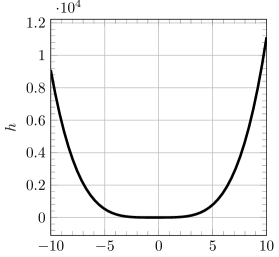
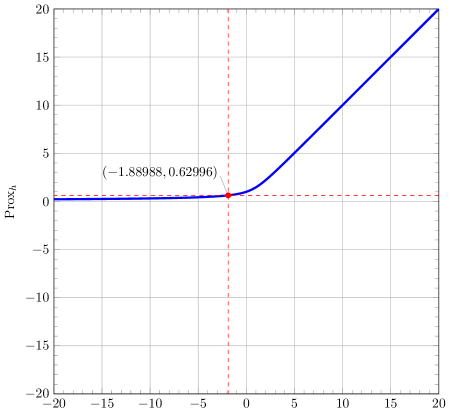
- The proximal mapping of the convex reciprocal function is explicitly computed using the derived cubic root formulas.
- A closed-form projection onto the epigraph of a parabola is derived using the real root solution of a cubic equation.
- The paper completes Example 24.57 from Bauschke and Combettes by solving the cubic equation in the proximal mapping of the closure of a perspective function.
- For the proximal mapping of $ \gamma h $, the solution is expressed via $ \lambda $, where $ \lambda $ is computed using either the radical or trigonometric form depending on the sign of $ \Delta $.
Read this paper
Open the full text in the Nubint reader and ask about any passage as you read.
Read this paper on NubintThis review was generated by AI from the original paper. Please check the paper before citing it.