
[Paper Review] Recent Advances in Natural Language Processing via Large Pre-Trained Language Models: A Survey
A comprehensive survey of how large pre-trained language models (PLMs) enable NLP via pre-train/fine-tune, prompting, and text generation, plus data generation for augmentation and future directions.
Large, pre-trained transformer-based language models such as BERT have drastically changed the Natural Language Processing (NLP) field. We present a survey of recent work that uses these large language models to solve NLP tasks via pre-training then fine-tuning, prompting, or text generation approaches. We also present approaches that use pre-trained language models to generate data for training augmentation or other purposes. We conclude with discussions on limitations and suggested directions for future research.
Motivation & Objective
- Explain the shift to large pre-trained transformer models in NLP and the three main paradigms (pre-train then fine-tune, prompt-based learning, NLP as text generation).
- Summarize how PLMs are used for tasks like parsing, IE, QA, TE, and sentiment analysis beyond generative tasks.
- Discuss data generation approaches and limitations, and outline future research directions.
Proposed method
- Describe three PLM-based paradigms: pre-train then fine-tune, prompting, and text generation, and a data-generation complement.
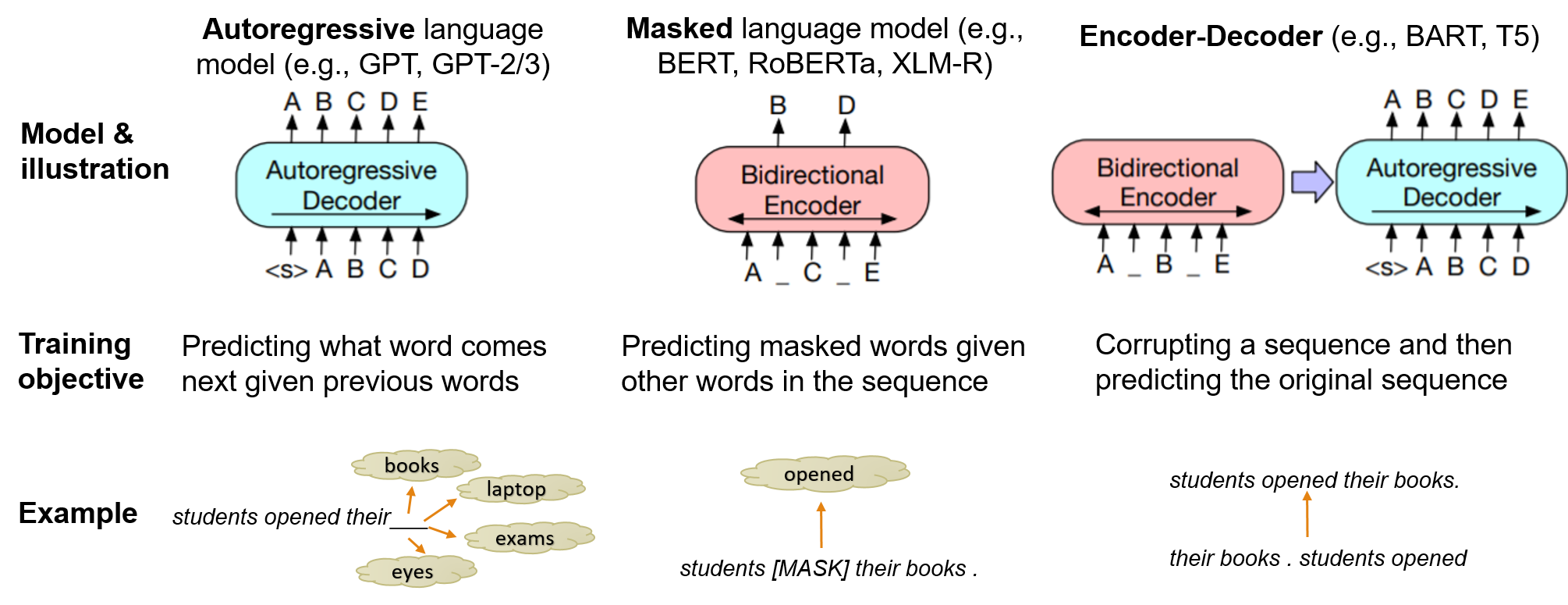
- Detail model classes (autoregressive, masked language models, encoder-decoder) and typical pre-training objectives.
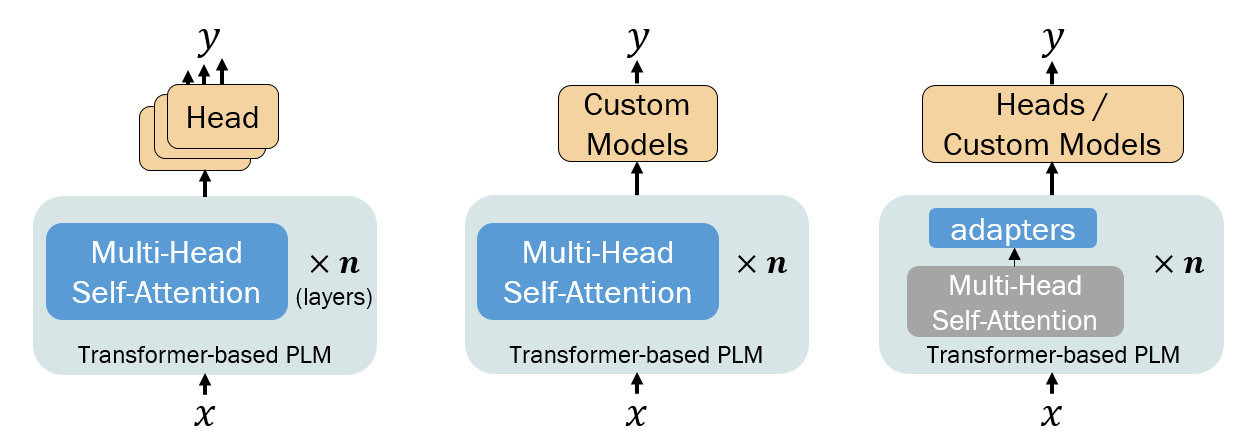
- Summarize fine-tuning strategies including full fine-tuning, adapter-based, and efficient fine-tuning methods.
- Discuss data sources, scale effects, and domain-specific pre-training.
- Review prompt design methodologies and their benefits for few-shot learning and task probing.
Experimental results
Research questions
- RQ1What are the dominant PLM-based paradigms for solving NLP tasks and how do they differ in approach and optimization?
- RQ2How do model architecture, pre-training data, and fine-tuning strategies affect performance across NLP tasks?
- RQ3What role does prompting play in leveraging PLMs for few-shot learning and task alignment?
- RQ4How can PLMs be used to generate data or augment training for NLP tasks, and what are the limitations?
- RQ5What are the current limitations and future directions for PLMs in NLP?
Key findings
- PLMs enable state-of-the-art performance across diverse NLP tasks through three main paradigms: pre-train then fine-tune, prompt-based learning, and NLP as text generation.
- Autoregressive, masked, and encoder-decoder PLMs differ in training objectives and suitability for different task types.
- Fine-tuning strategies range from full model tuning to adapters and parameter-efficient methods that mitigate forgetting and reduce training costs.
- Data scale and quality significantly influence gains, with model size and dataset size often driving performance improvements; data cleaning is crucial.
- Prompting enables few-shot learning and better alignment with pre-training objectives, while instruction-driven or demonstration-based prompts improve task performance without heavy fine-tuning.
- Data generation via PLMs is a complementary approach for creating silver data or auxiliary context to support target tasks.
- Limitations include domain mismatch, scalability, and potential inaccuracies reflecting training data biases; future directions include improving efficiency, adaptability, and robustness.
Better researchstarts right now
From reading papers to final review, dramatically reduce your research time.
No credit card · Free plan available
This review was created by AI and reviewed by human editors.