
[Paper Review] Remote detectability from entanglement bootstrap I: Kirby's torus trick
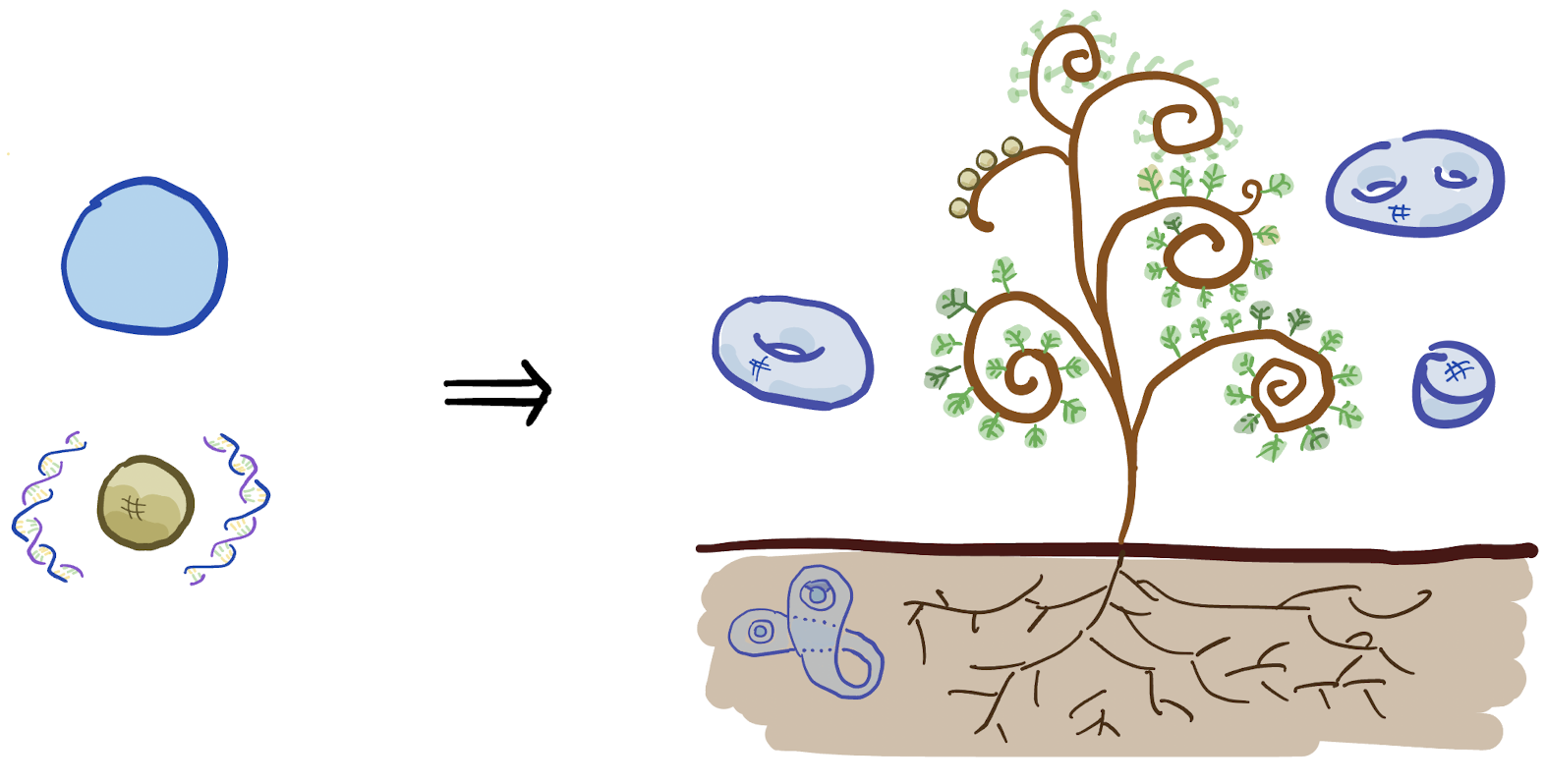
This paper derives remote detectability—a foundational principle in topological order—as a theorem within the entanglement bootstrap framework. By immersing a punctured closed manifold into a topologically trivial region and using a 'healing' procedure inspired by Kirby’s torus trick, the authors construct quantum states on closed manifolds and identify pairing manifolds whose unitary pairing matrices imply remote detectability between distinct anyon types.
Remote detectability is often taken as a physical assumption in the study of topologically ordered systems, and it is a central axiom of mathematical frameworks of topological quantum field theories. We show under the entanglement bootstrap approach that remote detectability is a necessary property; that is, we derive it as a theorem. Starting from a single wave function on a topologically-trivial region satisfying the entanglement bootstrap axioms, we can construct states on closed manifolds. The crucial technique is to immerse the punctured manifold into the topologically trivial region and then heal the puncture. This is analogous to Kirby's torus trick. We then analyze a special class of such manifolds, which we call pairing manifolds. For each pairing manifold, which pairs two classes of excitations, we identify an analog of the topological $S$-matrix. This pairing matrix is unitary, which implies remote detectability between two classes of excitations. These matrices are in general not associated with the mapping class group of the manifold. As a by-product, we can count excitation types (e.g., graph excitations in 3+1d). The pairing phenomenon occurs in many physical contexts, including systems in different dimensions, with or without gapped boundaries. We provide a variety of examples to illustrate its scope.
Motivation & Objective
- To establish remote detectability as a derived property rather than an assumed axiom in topological quantum systems.
- To develop a state-construction method for closed manifolds from a reference state on a topologically trivial region (e.g., a ball or sphere).
- To identify a special class of manifolds—pairing manifolds—that encode duality between two excitation types via a unitary matrix.
- To generalize the notion of the topological S-matrix to higher dimensions and systems with gapped boundaries.
- To provide a systematic way to count excitation types and derive consistency relations using immersed regions and quantum state healing.
Proposed method
- Immerse a punctured closed manifold 𝒲 = 𝒪 ∖ Bⁿ into a reference topologically trivial region (ℬⁿ or 𝕊ⁿ) via a local embedding.
- Use a 'healing' procedure to complete the state on the full closed manifold 𝒪 by extending the reference state from the immersed region.
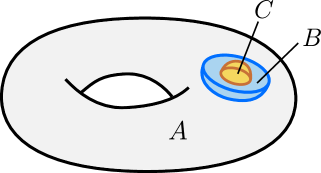
- Define pairing manifolds as manifolds 𝒪 = X X̄ = Y Ȳ that dualize two distinct excitation types via their information convex sets.
- Construct a finite-dimensional unitary matrix (the pairing matrix) from the fusion and entanglement structure of regions X and Y.
- Apply the entanglement bootstrap axioms to derive consistency relations between quantum dimensions, fusion probabilities, and excitation capacities.
- Verify results in quantum double models using character orthogonality and group-theoretic identities to confirm pairing matrix unitarity and counting formulas.
Experimental results
Research questions
- RQ1Can remote detectability be derived from first principles within the entanglement bootstrap framework, rather than assumed?
- RQ2What structural conditions on a manifold allow for a consistent state construction from a reference state on a trivial region?
- RQ3How can a unitary pairing matrix be constructed from the entanglement structure of two complementary regions on a closed manifold?
- RQ4What is the physical and mathematical significance of pairing manifolds in encoding duality between excitation types?
- RQ5How do the derived consistency relations and pairing matrices generalize the topological S-matrix beyond 2+1D anyon theories?
Key findings
- Remote detectability is proven as a theorem in the entanglement bootstrap framework, derived from the unitarity of the pairing matrix on pairing manifolds.
- The pairing matrix, analogous to the topological S-matrix, is unitary and encodes the mutual detectability between two classes of anyons.
- For quantum double models with gauge group G, the number of genus-two graph excitations is given by ∑_C_g |E_g|² / |G|, which matches the derived count from the pairing matrix.
- The consistency relation ∑_ℓ ∑_a (N_ℓ^a)² = 𝒞_genus~2 holds for quantum double models, verified via character orthogonality and group representation theory.
- The capacity relation ∑_ℓ ∑_a d_a d_ℓ N_ℓ^a = |G|⁴ is derived and confirmed in quantum double models, showing consistency with the entanglement bootstrap framework.
- The method generalizes beyond anyons to higher-dimensional topological orders and systems with gapped boundaries, with the pairing matrix not necessarily tied to the mapping class group.
Read this paper
Open the full text in the Nubint reader and ask about any passage as you read.
Read this paper on NubintThis review was generated by AI from the original paper. Please check the paper before citing it.