
[Paper Review] Renewable energy communities: do they have a business case in Flanders?
This study evaluates the economic viability of renewable energy communities (RECs) in Flanders, Belgium, using a mixed-integer linear programming (MILP) model to optimize energy costs across 156 scenarios. Results show RECs reduce electricity costs by 10–26% compared to business-as-usual, but only by 4–6% versus individual smart homes, with capacity-based tariffs and system flexibility significantly enhancing cost savings and storage adoption.
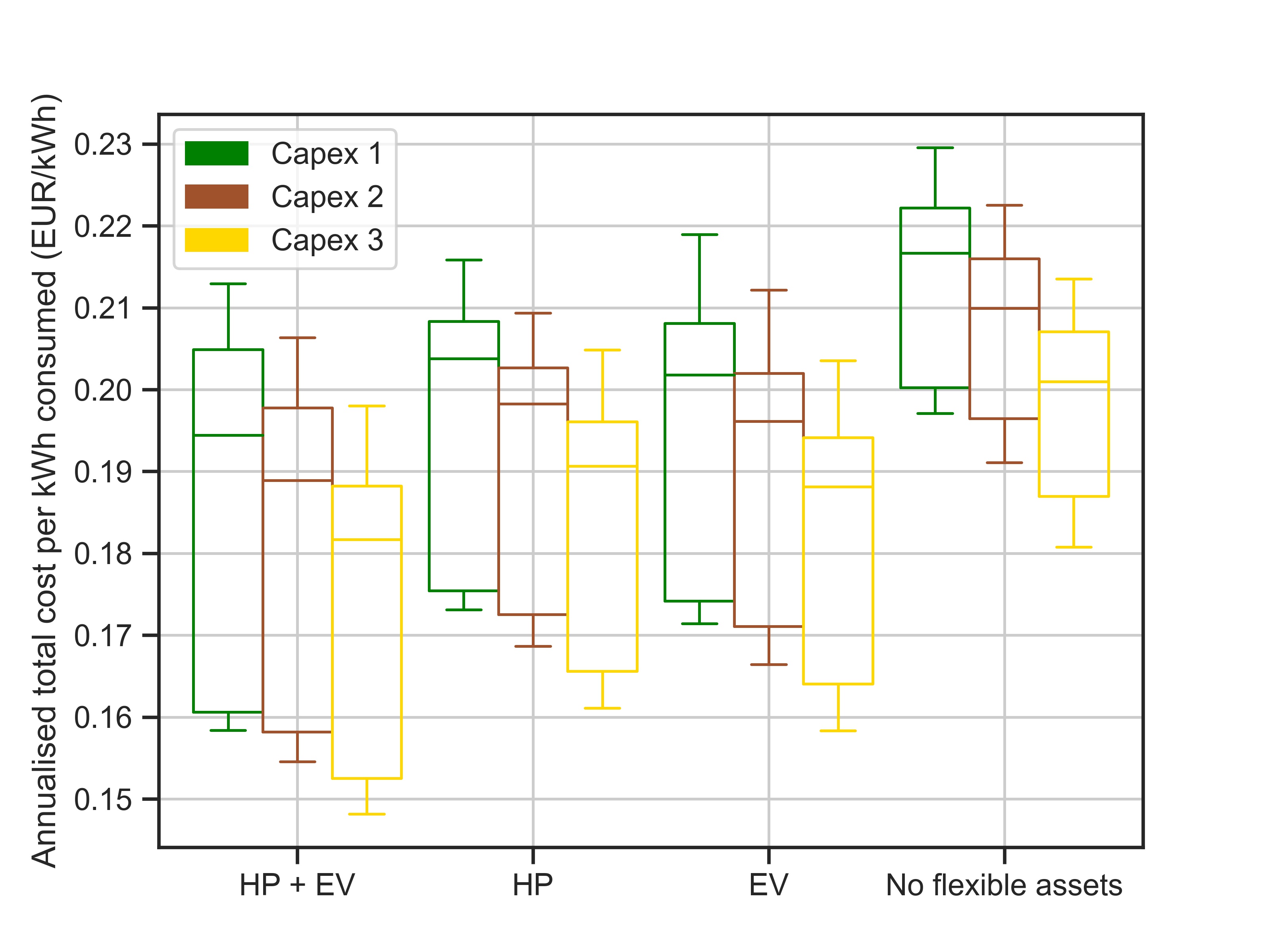
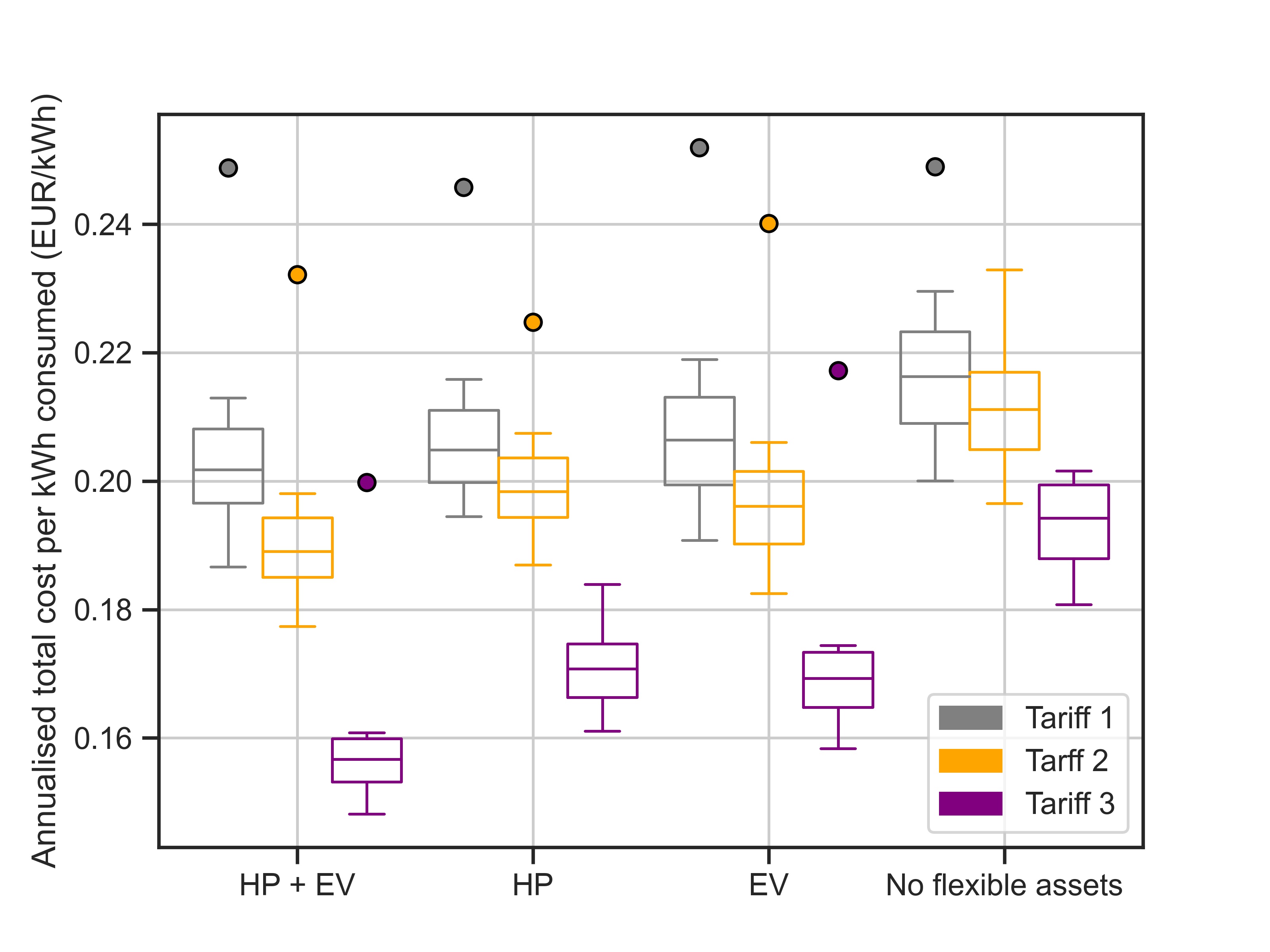
Renewable energy communities (RECs) are prominent initiatives to provide end consumers an active role in the energy sector, raise awareness on the importance of renewable energy (RE) technologies and increase their share in the energy system thus reducing greenhouse gas emissions. The economic viability of RECs though, depends on multiple interdependent factors that require careful examination for each individual context. This study aims at investigating the impact of electricity tariffs, ratio of electrification of heating and transportation sectors, prices of RE technologies and storage systems, and internal electricity exchange prices on the annual cost for electricity provision of a REC. A mixed-integer linear model is developed to minimize energy provision costs for a representative REC in Flanders, Belgium. The results indicate that RECs have the potential to reduce these costs by 10 to 26% compared to business-as-usual. This cost reduction depends on the type of electricity tariffs and the level of uptake of flexible assets such as heat pumps and electric vehicles. The shift towards a higher power component in the electricity tariff makes electricity storage systems more attractive, which leads to higher electricity self-consumption. The introduction of flexible assets adds the possibility to shift demand when tariffs are lower and makes larger sizes of photovoltaic systems economically viable due to the increase in the total electricity demand. However, RECs cost reduction compared to individual smart-homes amounts to only 4% - 6% in the best cases. Uncertainties stemming from the regulation and the costs of setting up a REC may reduce the estimated benefits.
Motivation & Objective
- To assess the economic viability of renewable energy communities (RECs) in Flanders under diverse tariff and technology scenarios.
- To analyze how electricity tariffs, electrification levels, and flexible assets impact REC cost efficiency and renewable energy integration.
- To evaluate the role of battery energy storage systems (BESS) and photovoltaic (PV) systems in reducing electricity costs within RECs.
- To compare REC performance against individual smart homes to determine net economic advantage.
- To identify key drivers—such as tariff structure and system flexibility—that influence REC cost savings and technology uptake.
Proposed method
- Developed a mixed-integer linear programming (MILP) model to minimize annual electricity provision costs for a representative REC in Flanders.
- Simulated 156 distinct scenarios by varying electricity tariffs (volumetric vs. capacity-based), PV and BESS sizes, and levels of heating and transport electrification.
- Incorporated dynamic control of BESS, heat pumps, and electric vehicle chargers to enable demand shifting and peak load reduction.
- Used self-consumption and self-sufficiency as performance indicators to assess energy system efficiency.
- Assumed perfect foresight of load and solar irradiance profiles to isolate the impact of structural and pricing factors.
- Validated results across different tariff regimes and flexibility levels to assess sensitivity and robustness.
Experimental results
Research questions
- RQ1What is the cost advantage of a REC compared to business-as-usual electricity supply in Flanders?
- RQ2How do different electricity tariff structures (volumetric vs. capacity-based) affect the economic performance of RECs?
- RQ3To what extent does the electrification of heating and transportation influence REC cost savings and technology deployment?
- RQ4How does the inclusion of flexible assets (e.g., BESS, heat pumps, EVs) impact the economic viability and self-consumption in RECs?
- RQ5What is the net economic benefit of forming a REC compared to individual smart homes with self-generation?
Key findings
- RECs reduce annual electricity costs by 10–26% compared to business-as-usual scenarios, depending on tariff structure and flexibility.
- The cost advantage of RECs over individual smart homes is limited to only 4–6% in the best-case scenarios, indicating minimal net economic gain.
- Capacity-based tariffs significantly enhance the economic attractiveness of battery energy storage systems (BESS), making them more viable than under volumetric tariffs.
- Higher levels of electrification in heating and transport increase total electricity demand, which improves the cost efficiency of larger photovoltaic (PV) systems.
- System flexibility enables better load shifting, reducing peak demand and lowering overall costs, especially under dynamic or capacity-based tariffs.
- Uncertainties in regulation and unaccounted setup costs (administrative and technical) may erode the estimated benefits of forming a REC.
Read this paper
Open the full text in the Nubint reader and ask about any passage as you read.
Read this paper on NubintThis review was generated by AI from the original paper. Please check the paper before citing it.