
[Paper Review] Responsible Artificial Intelligence: A Structured Literature Review
The paper conducts a structured literature review to define Responsible AI and propose a human-centered framework emphasizing ethics, trust, explainability, privacy, and security, to guide policy and practice.
Our research endeavors to advance the concept of responsible artificial intelligence (AI), a topic of increasing importance within EU policy discussions. The EU has recently issued several publications emphasizing the necessity of trust in AI, underscoring the dual nature of AI as both a beneficial tool and a potential weapon. This dichotomy highlights the urgent need for international regulation. Concurrently, there is a need for frameworks that guide companies in AI development, ensuring compliance with such regulations. Our research aims to assist lawmakers and machine learning practitioners in navigating the evolving landscape of AI regulation, identifying focal areas for future attention. This paper introduces a comprehensive and, to our knowledge, the first unified definition of responsible AI. Through a structured literature review, we elucidate the current understanding of responsible AI. Drawing from this analysis, we propose an approach for developing a future framework centered around this concept. Our findings advocate for a human-centric approach to Responsible AI. This approach encompasses the implementation of AI methods with a strong emphasis on ethics, model explainability, and the pillars of privacy, security, and trust.
Motivation & Objective
- Specify a concise definition of Responsible AI
- Analyze the state of the art in Responsible AI across ethics, trust, explainability, privacy, and security
- Identify open problems, challenges, and opportunities for future research
- Propose an approach for developing a future framework based on the concept of Responsible AI
- Advocate a human-centered approach to Responsible AI that supports trust and regulatory alignment
Proposed method
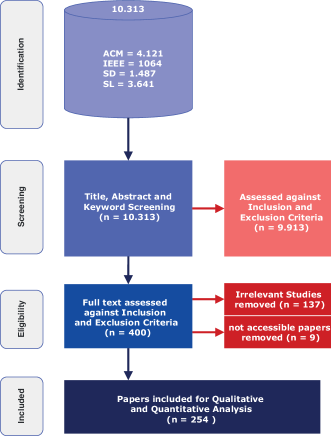
- Systematic Literature Review (SLR) following established guidelines
- Search across ACM, IEEE, SpringerLink, and Elsevier ScienceDirect targeting peer‑reviewed papers
- Use search query incorporating AI/ML terms with ethics, trust, explainability, privacy
- Screen by title/abstract/keywords and eligibility criteria to exclude non-relevant studies
- Conduct qualitative and quantitative analyses of the 254 included papers
- Synthesize definitions and related terms to formulate a unified concept of Responsible AI
Experimental results
Research questions
- RQ1RQ1 What is a general or agreed-on definition of Responsible AI and what terms define it?
- RQ2RQ2 What does Responsible AI encompass across related concepts like trust, ethics, explainability, privacy, and security?
Key findings
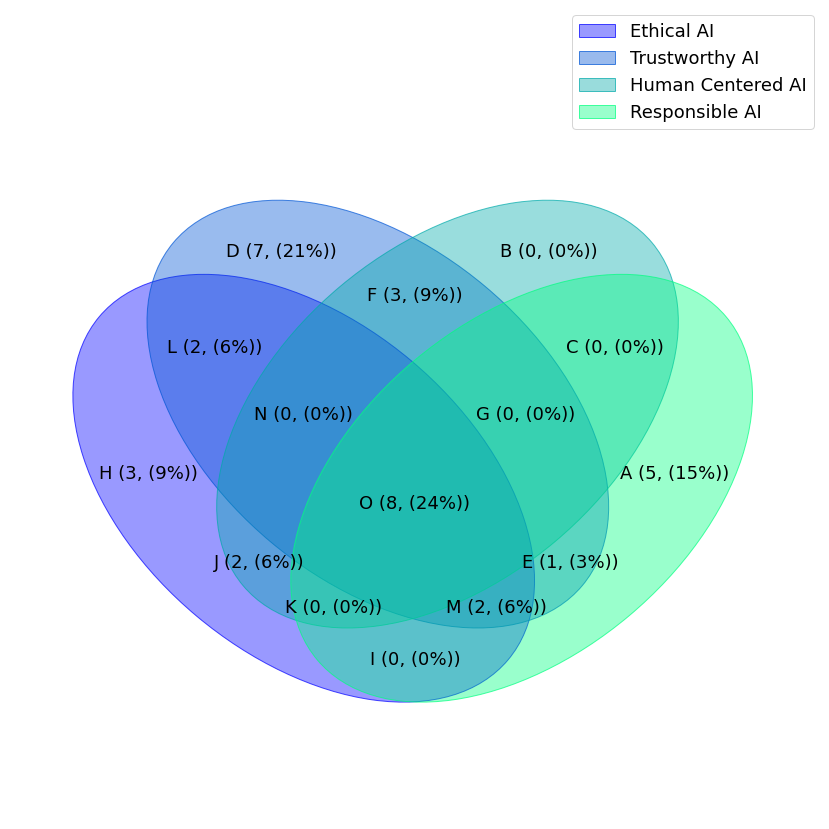
- There is substantial terminology overlap; Responsible AI is best described as Ethics, Trustworthiness, Security, Privacy, and Explainability.
- The authors propose a definition: Responsible AI is human-centered and ensures users’ trust through ethical decision making, fair and non-discriminating processes, and alignment with laws and norms.
- Explainability, safety, fairness, accountability, ethics, security, privacy, and transparency are key overlapping terms across definitions.
- Trust should be viewed as an outcome of a responsible AI system, while human-centered design remains essential.
- Content-wise similar expressions include Trustworthy AI, Ethical AI, and Human-Centered AI, which converge on core terms that define Responsible AI.
- The study provides a structured portrayal of state-of-the-art topics: Trustworthy AI, Ethical AI, Explainable AI, Privacy-preserving AI, and Secure AI, with emphasis on their interrelations and challenges.
Read this paper
Open the full text in the Nubint reader and ask about any passage as you read.
Read this paper on NubintThis review was generated by AI from the original paper. Please check the paper before citing it.