
[Paper Review] Reusable MLOps: Reusable Deployment, Reusable Infrastructure and Hot-Swappable Machine Learning models and services
The paper presents Reusable MLOps through the Acumos AI platform, enabling reusable deployment, reusable infrastructure, and hot-swappable ML models to continuously productionize models without tearing down infrastructure.
Although Machine Learning model building has become increasingly accessible due to a plethora of tools, libraries and algorithms being available freely, easy operationalization of these models is still a problem. It requires considerable expertise in data engineering, software development, cloud and DevOps. It also requires planning, agreement, and vision of how the model is going to be used by the business applications once it is in production, how it is going to be continuously trained on fresh incoming data, and how and when a newer model would replace an existing model. This leads to developers and data scientists working in silos and making suboptimal decisions. It also leads to wasted time and effort. We introduce the Acumos AI platform we developed and we demonstrate some unique novel capabilities that the Acumos model runner possesses, that can help solve the above problems. We introduce a new sustainable concept in the field of AI/ML operations - called Reusable MLOps - where we reuse the existing deployment and infrastructure to serve new models by hot-swapping them without tearing down the infrastructure or the microservice, thus achieving reusable deployment and operations for AI/ML models while still having continuously trained models in production.
Motivation & Objective
- Motivate the operationalization challenges in ML/AI pipelines and silos between data scientists and developers.
- Introduce the concept of Reusable MLOps to reuse deployments and infrastructure for multiple models.
- Demonstrate how Acumos enables hot-swapping and continual retraining of production models without downtime.
- Highlight governance, licensing, and marketplace aspects to facilitate model sharing and reuse.
Proposed method
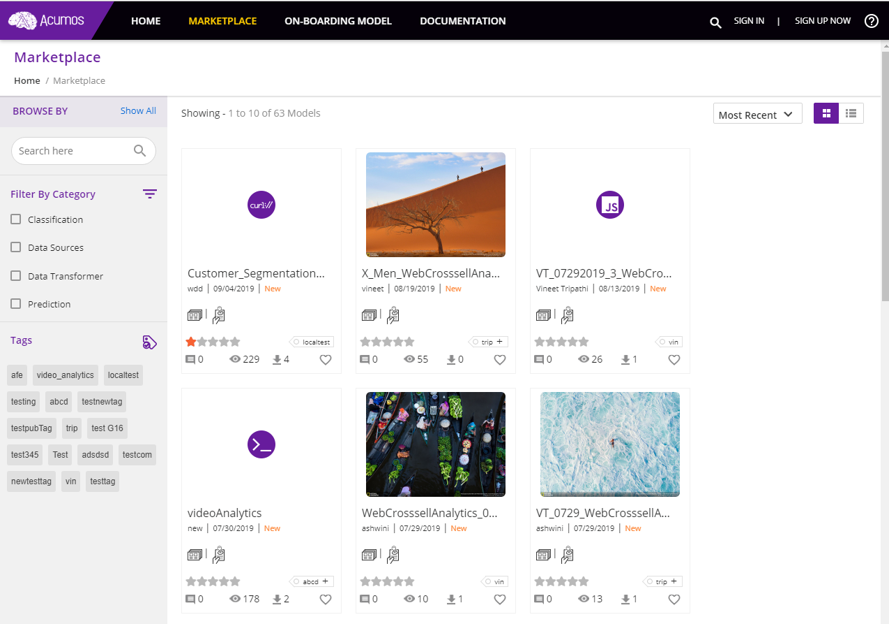
- Describe the Acumos platform and its components (Model Runner, Java client, Design Studio) for onboarding and deploying models.
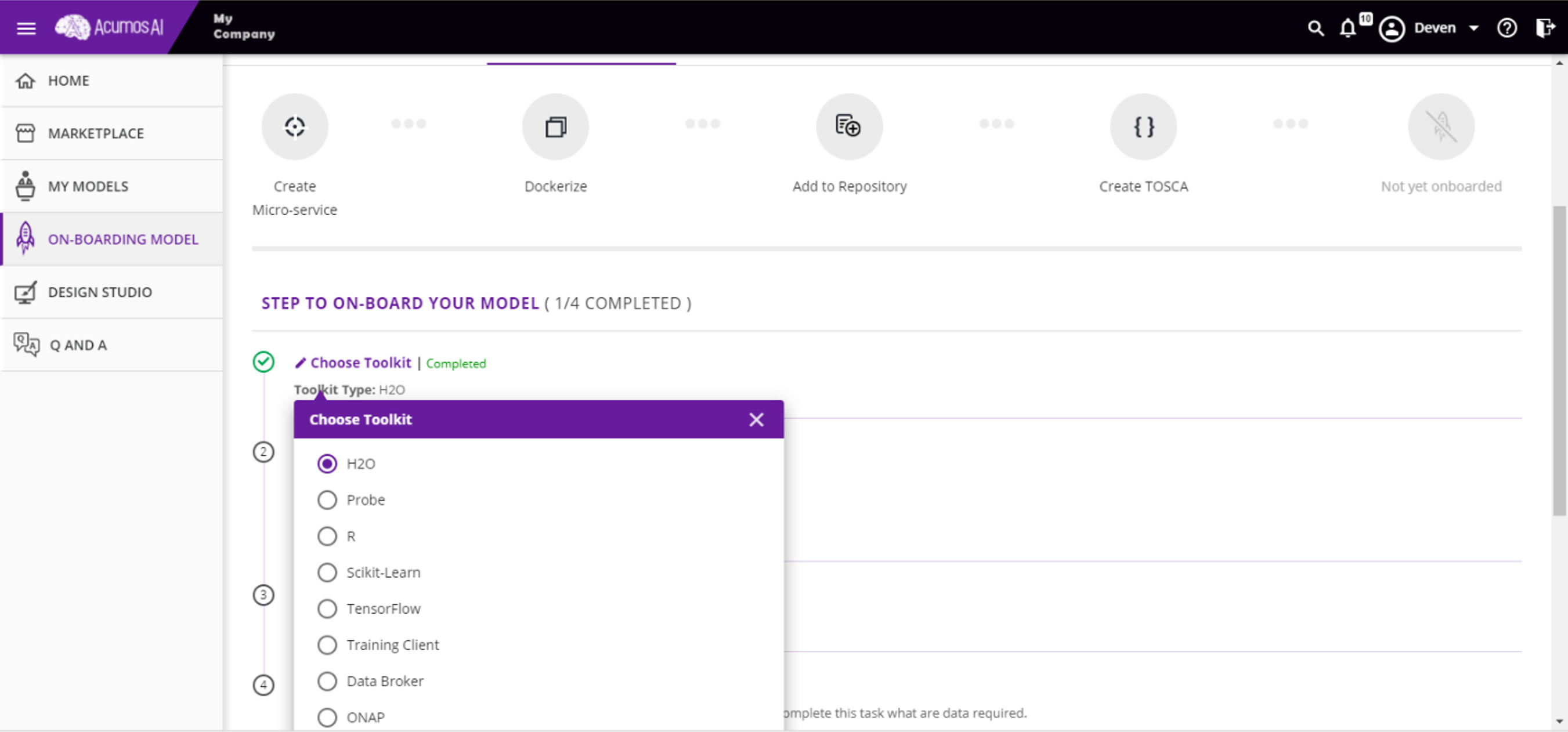
- Explain how models are exported (MOJO zip, jar) and wrapped into a common Acumos microservice via the Model Runner.
- Show how Protobuf serialization is used to achieve low-latency, language-neutral data exchange and dynamic class loading in the JVM.
- Detail the API surface of the Acumos Model Runner and how endpoints enable model replacement, proto updates, and on-the-fly behavior changes.
- Illustrate deployment pathways to Kubernetes, AWS, Azure, GCP, or standalone Docker deployments and model reuse across services.
Experimental results
Research questions
- RQ1How can model deployments and infrastructure be reused across multiple ML models without tearing down services?
- RQ2What capabilities does the Acumos Model Runner provide to hot-swap models or alter model behavior in production?
- RQ3How can ML pipelines support continuous training and seamless model replacement in production environments?
- RQ4What governance, licensing, and federation mechanisms support sharing and monetization of ML models in a reusable MLOps framework?
Key findings
- The Acumos Model Runner enables hot-swapping of models within a standing microservice without downtime.
- Models are wrapped into a common Acumos microservice and can be updated or replaced via a rich API surface.
- Protobuf-based serialization supports low-latency, cross-language data exchange and dynamic class loading for model artifacts.
- The platform supports deploying hosted models to common cloud and container runtimes, facilitating reusable deployment and infrastructure reuse.
- Design Studio and the Java client streamline onboarding of models from H2O, Java, or Spark into production-ready microservices.
Read this paper
Open the full text in the Nubint reader and ask about any passage as you read.
Read this paper on NubintThis review was generated by AI from the original paper. Please check the paper before citing it.