
[Paper Review] Review of Extreme Multilabel Classification
This paper provides a comprehensive review of extreme multilabel classification (XMC), covering techniques like deep learning, tree-based methods, compressed sensing, and attention mechanisms to address challenges such as head-tail label imbalance and scalability. It highlights that deep learning-based methods, especially Siamese networks and attention models, now lead in performance despite higher computational costs.
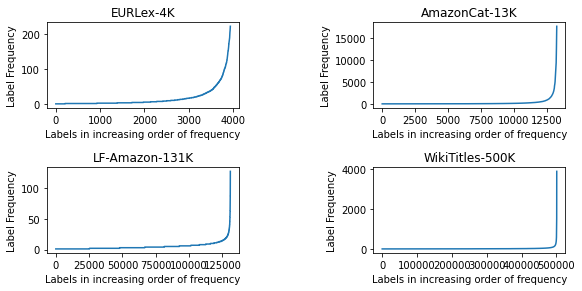
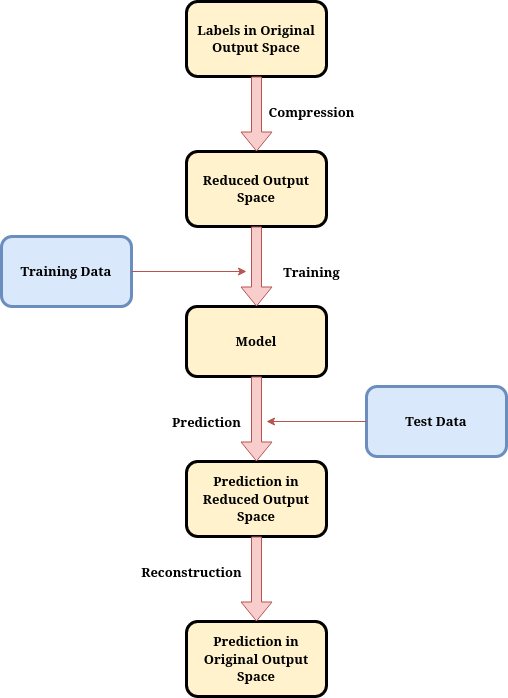
Extreme multi-label classification or XMLC, is an active area of interest in machine learning. Compared to traditional multi-label classification, here the number of labels is extremely large, hence, the name extreme multi-label classification. Using classical one-versus-all classification does not scale in this case due to large number of labels; the same is true for any other classifier. Embedding labels and features into a lower-dimensional space is a common first step in many XMLC methods. Moreover, other issues include existence of head and tail labels, where tail labels are those that occur in a relatively small number of samples. The existence of tail labels creates issues during embedding. This area has invited application of wide range of approaches ranging from bit compression motivated from compressed sensing, tree based embeddings, deep learning based latent space embedding including using attention weights, linear algebra based embeddings such as SVD, clustering, hashing, to name a few. The community has come up with a useful set of metrics to identify correctly the prediction for head or tail labels.
Motivation & Objective
- To survey and categorize existing approaches to extreme multilabel classification (XMC), where the number of labels reaches millions.
- To analyze key challenges in XMC, including head-tail label imbalance, scalability, and memory constraints in large-scale settings.
- To evaluate the effectiveness of various embedding techniques—such as SVD, hashing, clustering, and deep learning—in reducing label space while preserving predictive performance.
- To identify performance trade-offs between accuracy, training speed, and model size across different XMC methods.
- To provide a structured overview of benchmark datasets, evaluation metrics (e.g., AUPRC), and practical applications in document tagging, product recommendation, and advertising.
Proposed method
- The paper reviews a wide range of XMC methods, including classical approaches like one-vs-all and SVM, and modern techniques such as deep neural networks and attention mechanisms.
- It emphasizes label and feature embedding into lower-dimensional spaces as a core step to improve scalability and performance.
- The review discusses methods that specifically address tail labels, such as hard negative mining in Siamese networks and contrastive loss functions.
- It examines tree-based methods, compressed sensing-inspired techniques, and matrix factorization (e.g., SVD) for efficient label space reduction.
- The paper evaluates models like AttentionXML, XTransformer, SiameseXML, NGAME, and ECLARE, focusing on their architecture, training dynamics, and performance trade-offs.
- It uses a timeline and categorization of methods to illustrate the evolution of XMC techniques from traditional to deep learning-based frameworks.
Experimental results
Research questions
- RQ1How do different embedding techniques—such as SVD, hashing, and clustering—impact the performance and efficiency of extreme multilabel classification?
- RQ2What are the key challenges introduced by head and tail label distributions in XMC, and how do modern methods address them?
- RQ3Why do deep learning-based methods like Siamese networks and attention mechanisms outperform traditional or tree-based approaches in XMC?
- RQ4How do training and inference complexities vary across XMC methods, and what trade-offs exist between model size, speed, and accuracy?
- RQ5What are the most effective evaluation metrics for XMC, particularly in distinguishing performance on head versus tail labels?
Key findings
- Deep learning-based methods such as SiameseXML, NGAME, and ECLARE have become the state-of-the-art in XMC, significantly outperforming tree-based and classical methods in terms of accuracy.
- Attention-based models like AttentionXML and XTransformer achieve high performance on long-text datasets but require substantial training time and computational resources.
- Siamese network-based methods like NGAME improve training efficiency by constructing informative mini-batches with close samples, reducing reliance on random negative sampling.
- The use of contrastive or triplet loss in Siamese networks enables better label and feature embedding learning, especially for rare (tail) labels.
- Despite their performance, deep learning models in XMC often have larger model sizes and higher inference latency compared to tree-based or compressed sensing methods.
- The paper confirms that metrics like AUPRC are essential for evaluating model performance on tail labels, which are often neglected by models with implicit bias toward head labels.
Read this paper
Open the full text in the Nubint reader and ask about any passage as you read.
Read this paper on NubintThis review was generated by AI from the original paper. Please check the paper before citing it.