
[Paper Review] Robust agents learn causal world models
The paper proves that learning an approximate causal model of the data generating process is necessary and sufficient for robust adaptation under a wide class of distributional shifts, and shows how this enables causal discovery from adaptive policies.
It has long been hypothesised that causal reasoning plays a fundamental role in robust and general intelligence. However, it is not known if agents must learn causal models in order to generalise to new domains, or if other inductive biases are sufficient. We answer this question, showing that any agent capable of satisfying a regret bound under a large set of distributional shifts must have learned an approximate causal model of the data generating process, which converges to the true causal model for optimal agents. We discuss the implications of this result for several research areas including transfer learning and causal inference.
Motivation & Objective
- Motivate the role of causal reasoning in robust general intelligence and domain adaptation.
- Establish that regret-bounded adaptation under distributional shifts implies learning a causal model.
- Provide a formal equivalence between learning causal structure and achieving robust policies under interventions.
- Discuss implications for transfer learning, causal representation learning, and causal discovery.
Proposed method
- Model decision tasks using causal influence diagrams (CIDs) and causal Bayesian networks (CBNs).
- Define local interventions and mixtures of local interventions to model domain shifts.
- Prove identifiability of the causal graph and joint distribution over ancestors of the utility from optimal policies across shifted domains (Theorem 1).
- Relax optimality to regret-bounded policies and show approximate causal model identification with error bounds (Theorem 2).
- Demonstrate sufficiency by showing that an approximate causal model enables regret-bounded policies under interventions (Theorem 3).
- Discuss interpretations for transfer learning, adaptive agents, and causal inference, and outline a causal discovery approach using policy responses.
Experimental results
Research questions
- RQ1Does robust adaptation to distributional shifts require learning a causal model of the environment?
- RQ2Can optimal policies under domain shifts identify the underlying causal graph and distributions?
- RQ3What happens if policies are only approximately optimal (regret-bounded) – can we still recover an approximate causal model?
- RQ4Is learning a causal world model sufficient to achieve regret-bounded policies across various interventions?
- RQ5What are the implications of these results for transfer learning, causal representation learning, and causal discovery?
Key findings
- For almost all causal influence diagrams satisfying the stated assumptions, optimal policies across mixtures of local interventions identify the causal graph and joint distribution over ancestors of the utility (Theorem 1).
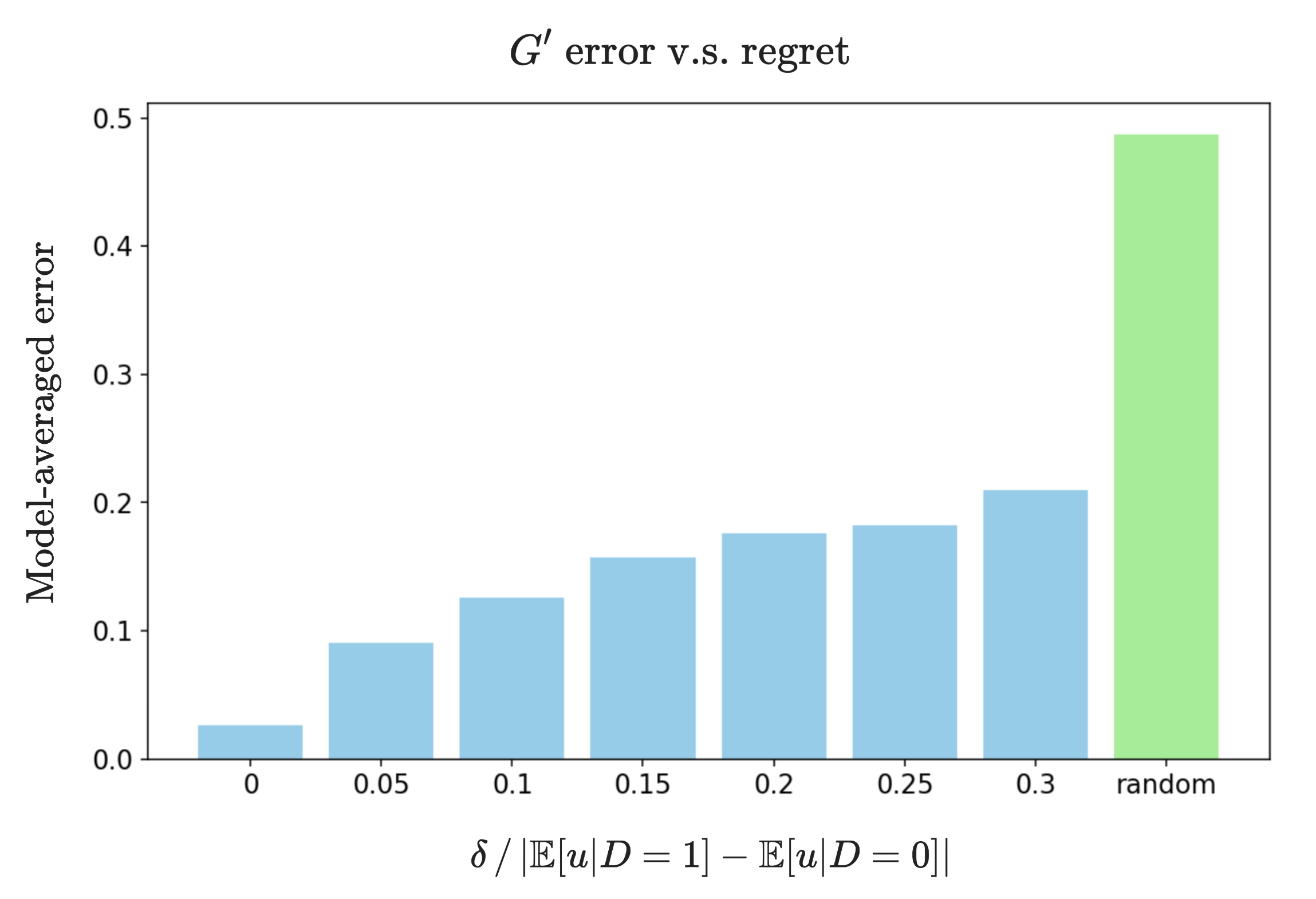
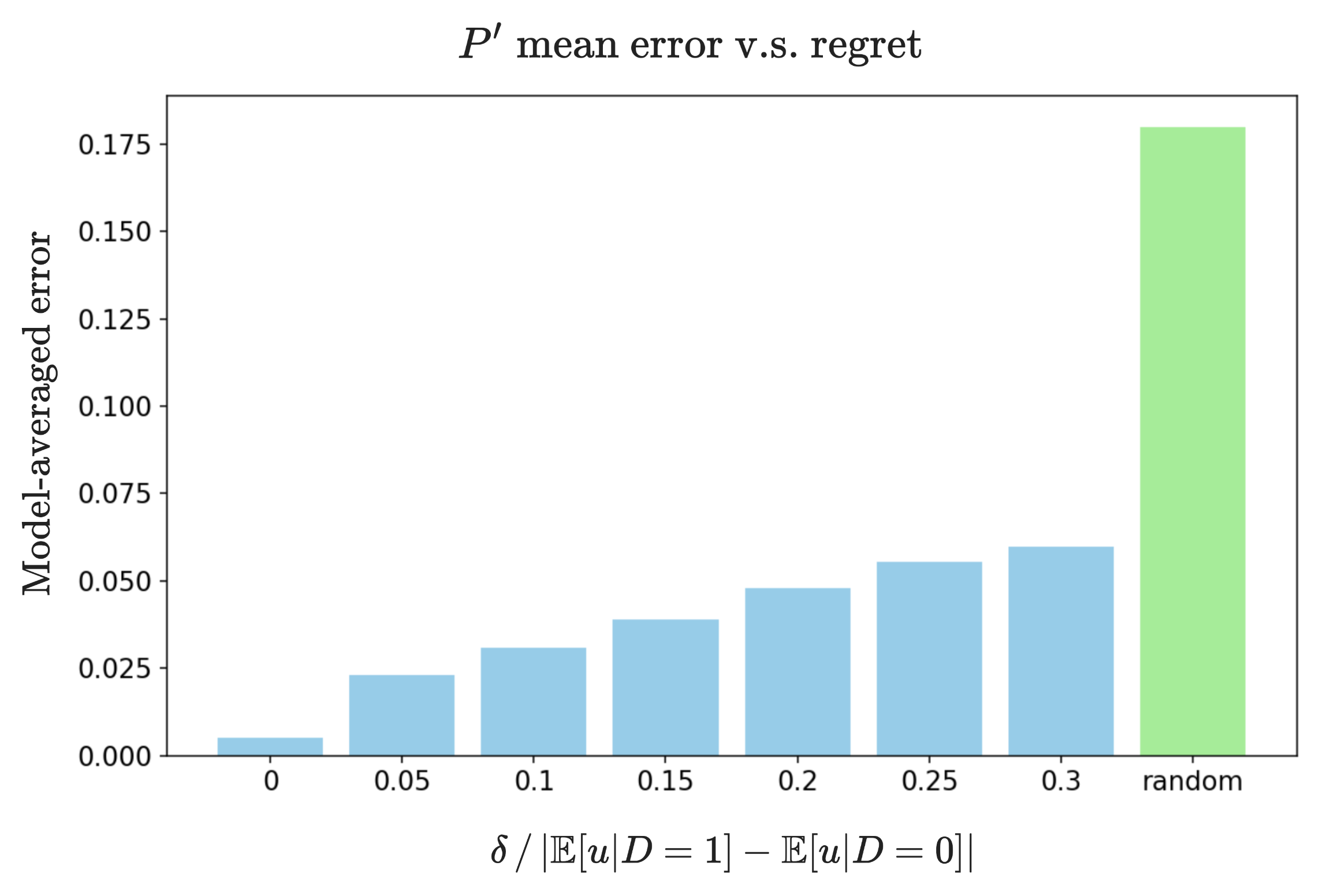
- Approximate causal models can be identified from regret-bounded policies, with parameter estimation errors growing linearly with the regret level (Theorem 2).
- An approximate causal model is sufficient to identify regret-bounded policies under local interventions (Theorem 3).
- Thus learning a causal model is necessary and sufficient for robust adaptation to a broad class of domain shifts.
- The results connect domain adaptation, causal representation learning, and causal discovery, suggesting agents trained across many domains will learn causal world models and enable broader task generalization.
Read this paper
Open the full text in the Nubint reader and ask about any passage as you read.
Read this paper on NubintThis review was generated by AI from the original paper. Please check the paper before citing it.