
[Paper Review] Robust Mixture-of-Expert Training for Convolutional Neural Networks
This paper proposes AdvMoE, a novel adversarial training framework for Mixture-of-Experts convolutional neural networks (MoE-CNNs) that alternately optimizes routers and experts to improve adversarial robustness. Unlike standard adversarial training, which fails on MoE-CNNs, AdvMoE achieves 1%–4% higher robust accuracy than standard dense CNNs while reducing inference cost by over 50% through sparse expert routing.
Sparsely-gated Mixture of Expert (MoE), an emerging deep model architecture, has demonstrated a great promise to enable high-accuracy and ultra-efficient model inference. Despite the growing popularity of MoE, little work investigated its potential to advance convolutional neural networks (CNNs), especially in the plane of adversarial robustness. Since the lack of robustness has become one of the main hurdles for CNNs, in this paper we ask: How to adversarially robustify a CNN-based MoE model? Can we robustly train it like an ordinary CNN model? Our pilot study shows that the conventional adversarial training (AT) mechanism (developed for vanilla CNNs) no longer remains effective to robustify an MoE-CNN. To better understand this phenomenon, we dissect the robustness of an MoE-CNN into two dimensions: Robustness of routers (i.e., gating functions to select data-specific experts) and robustness of experts (i.e., the router-guided pathways defined by the subnetworks of the backbone CNN). Our analyses show that routers and experts are hard to adapt to each other in the vanilla AT. Thus, we propose a new router-expert alternating Adversarial training framework for MoE, termed AdvMoE. The effectiveness of our proposal is justified across 4 commonly-used CNN model architectures over 4 benchmark datasets. We find that AdvMoE achieves 1% ~ 4% adversarial robustness improvement over the original dense CNN, and enjoys the efficiency merit of sparsity-gated MoE, leading to more than 50% inference cost reduction. Codes are available at https://github.com/OPTML-Group/Robust-MoE-CNN.
Motivation & Objective
- To address the lack of adversarial robustness in Mixture-of-Experts convolutional neural networks (MoE-CNNs), which are increasingly used for efficient inference but remain vulnerable to adversarial attacks.
- To investigate why conventional adversarial training (AT) fails for MoE-CNNs despite its success in standard CNNs.
- To develop a new training paradigm that enables effective adversarial robustness in MoE-CNNs without sacrificing the efficiency benefits of sparse expert routing.
- To establish a new understanding of robustness in MoE-CNNs by decomposing it into router robustness and expert robustness.
Proposed method
- Proposes a router-expert alternating adversarial training framework (AdvMoE) that performs bi-level optimization to jointly improve the robustness of routers and expert pathways.
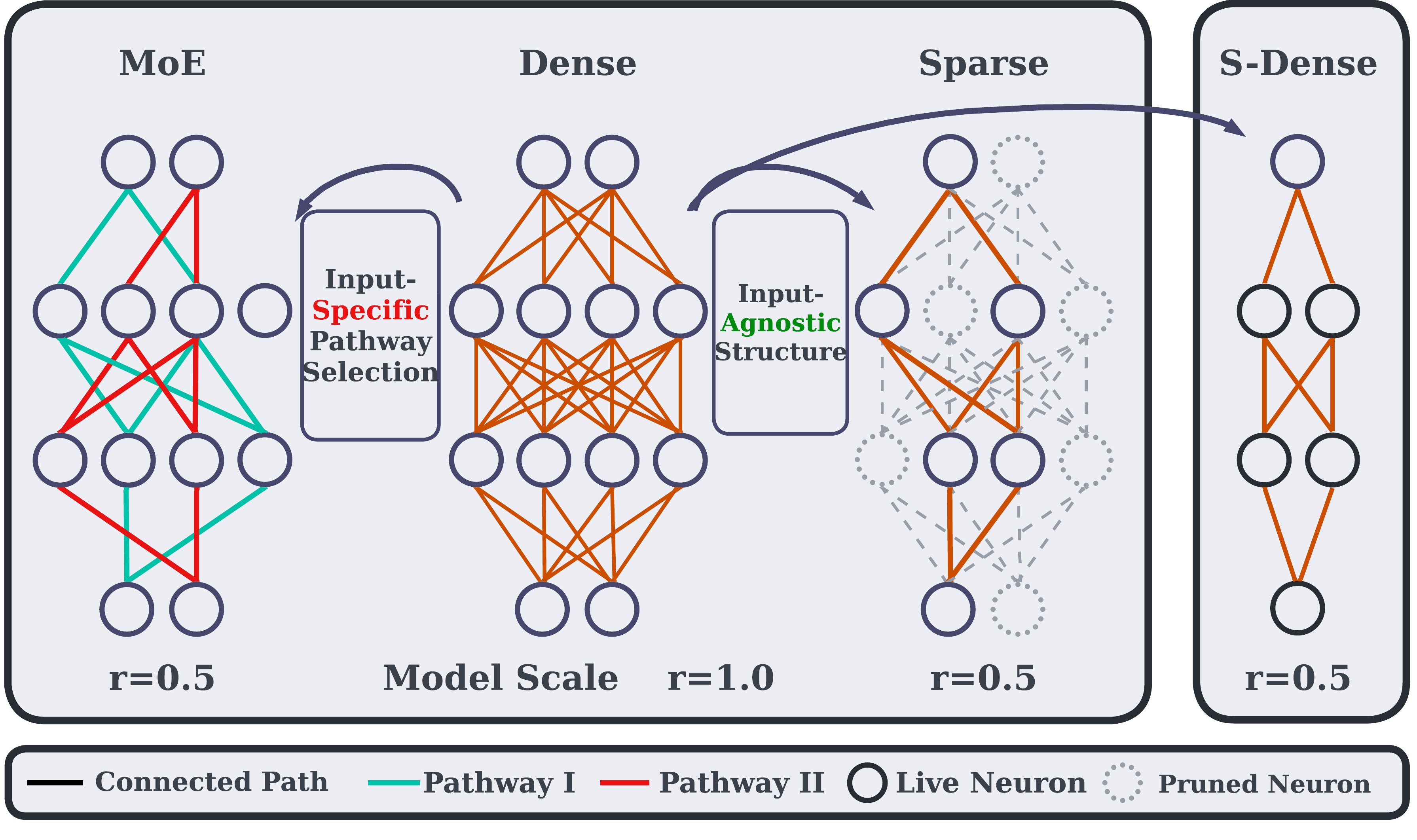
- Decomposes MoE robustness into two distinct dimensions: robustness of the gating function (router) and robustness of the expert subnetworks (pathways) to enable targeted optimization.
- Alternates between updating the router using adversarial examples and updating the experts using their respective adversarial gradients, ensuring coordinated learning.
- Employs a sparsity-inducing routing mechanism where only a small subset of experts are activated per input, preserving the efficiency of MoE inference.
- Uses PGD-based adversarial attacks during training with a step size and number of iterations tuned to balance robustness and convergence.
- Employs a dual-backward pass per training step to enable gradient flow through both router and expert components during alternating optimization.
Experimental results
Research questions
- RQ1Why does standard adversarial training fail to improve the robustness of MoE-CNNs despite its effectiveness in standard CNNs?
- RQ2How do the robustness of routers and experts interact in MoE-CNNs, and can they be optimized jointly for better defense?
- RQ3Can a new adversarial training framework be designed that effectively enhances robustness in MoE-CNNs without compromising inference efficiency?
- RQ4What is the impact of expert count and model scaling on the effectiveness of adversarial training in MoE-CNNs?
Key findings
- Conventional adversarial training (AT) fails to improve robustness in MoE-CNNs, as routers and experts cannot adapt to each other under standard AT.
- AdvMoE achieves 1%–4% higher robust accuracy than standard dense CNNs trained with conventional AT, demonstrating superior robustness.
- AdvMoE reduces inference cost by over 50% compared to dense models by leveraging sparse expert routing while maintaining high robustness.
- The method is effective across four CNN architectures and four benchmark datasets, including CIFAR-10, CIFAR-100, SVHN, and Tiny ImageNet.
- The optimal configuration for AdvMoE uses 2 experts and a model scale of r=0.5, balancing robustness and efficiency.
- AdvMoE also improves robustness on MoE-ViT models, achieving over 1% higher robust accuracy than the SOTA baseline on ImageNet with DeiT-Tiny.

Read this paper
Open the full text in the Nubint reader and ask about any passage as you read.
Read this paper on NubintThis review was generated by AI from the original paper. Please check the paper before citing it.