
[Paper Review] SCANIA Component X Dataset: A Real-World Multivariate Time Series Dataset for Predictive Maintenance
This paper introduces the SCANIA Component X Dataset, a publicly available, real-world multivariate time series dataset from anonymized heavy-duty truck engines, designed for predictive maintenance research. It enables advanced machine learning tasks such as classification, regression, survival analysis, and anomaly detection using real operational data, repair records, and vehicle specifications, with a custom cost-sensitive evaluation framework to reflect industrial priorities.
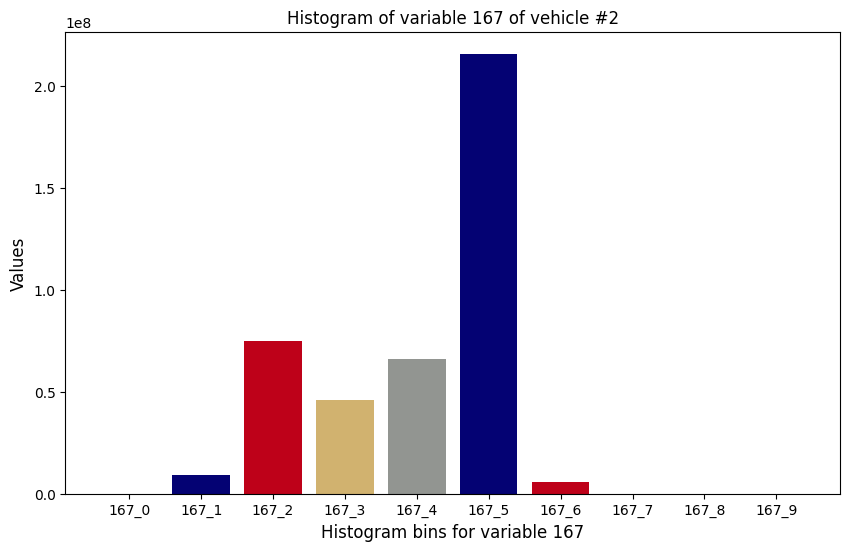
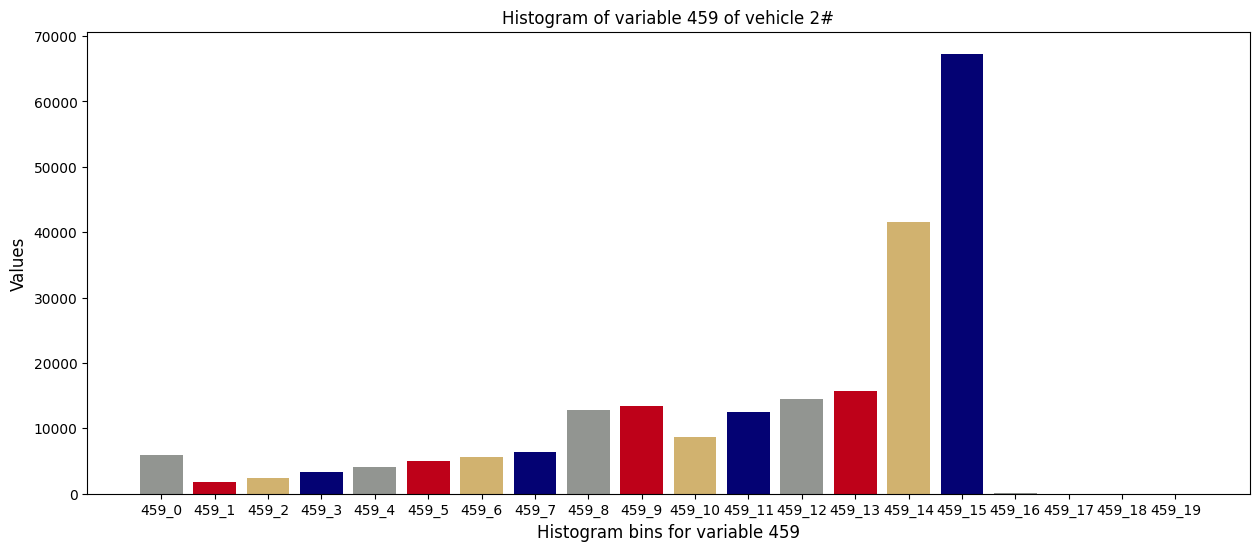
Predicting failures and maintenance time in predictive maintenance is challenging due to the scarcity of comprehensive real-world datasets, and among those available, few are of time series format. This paper introduces a real-world, multivariate time series dataset collected exclusively from a single anonymized engine component (Component X) across a fleet of SCANIA trucks. The dataset includes operational data, repair records, and specifications related to Component X, while maintaining confidentiality through anonymization. It is well-suited for a range of machine learning applications, including classification, regression, survival analysis, and anomaly detection, particularly in predictive maintenance scenarios. The dataset's large population size, diverse features (in the form of histograms and numerical counters), and temporal information make it a unique resource in the field. The objective of releasing this dataset is to give a broad range of researchers the possibility of working with real-world data from an internationally well-known company and introduce a standard benchmark to the predictive maintenance field, fostering reproducible research.
Motivation & Objective
- To address the critical lack of publicly available, real-world multivariate time series datasets in predictive maintenance (PdM) for industrial applications.
- To provide a benchmark dataset from an internationally recognized OEM (SCANIA) to enable reproducible research and method comparison in PdM.
- To support diverse machine learning tasks including classification, regression, survival analysis, and anomaly detection using real operational and maintenance data.
- To reflect industrial priorities through a custom cost function that penalizes false negatives (missed failures) much more heavily than false positives (unnecessary checks).
- To foster collaboration between industry and academia by releasing a dataset collected from real trucks under real-world operating conditions.
Proposed method
- The dataset comprises three core data sources: operational data from onboard sensors (14 variables, 198,140 readouts), repair records from workshops (labeled failure states), and truck specifications (categorical features).
- Temporal information is preserved through time-series readouts, enabling modeling of gradual degradation and failure progression over time.
- Data is anonymized to protect proprietary information, with component names and sensitive identifiers removed while maintaining data integrity and confidentiality.
- The dataset is structured into training, validation, and test sets, with the test labels withheld for the IDA 2024 industrial challenge.
- A cost-sensitive evaluation framework is defined using a 5-class confusion matrix (classes 0–4), where misclassification costs are asymmetric and reflect real-world financial and operational consequences.
- Equation (1) defines the total cost as the sum of individual cost terms: $Total\_cost = \sum_{n,m} Cost_{n,m} \times No\_instances$, with higher penalties for false negatives (e.g., Cost_4_0 = 500).
Experimental results
Research questions
- RQ1How effective are machine learning models in predicting imminent failures of Component X using real-world multivariate time series data?
- RQ2To what extent does incorporating temporal degradation patterns improve failure prediction performance compared to static or non-temporal models?
- RQ3How do cost-sensitive evaluation metrics influence model selection and performance in real-world PdM scenarios?
- RQ4Can this dataset serve as a reliable benchmark for comparing predictive maintenance models across different research groups?
- RQ5What are the key features and signal patterns that best predict component failure in heavy-duty truck engines?
Key findings
- The dataset contains 198,140 operational readouts from 5,045 unique vehicles, with less than 1% missing values across all features, ensuring high data quality and usability.
- The test set labels are withheld for the IDA 2024 industrial challenge, with the final labels to be released post-challenge to ensure fair evaluation.
- The cost function assigns significantly higher penalties to false negative predictions (e.g., Cost_4_0 = 500) than false positives (e.g., Cost_0_1 = 7), reflecting the high cost of undetected failures.
- The dataset is publicly available under a CC BY 4.0 license, enabling broad access and reproducible research in predictive maintenance.
- The dataset is unique in its combination of real-world data, multivariate time series structure, and temporal degradation modeling, surpassing previous datasets like the APS dataset which lacked temporal sequencing.
- The dataset supports a wide range of PdM tasks, including survival analysis, regression for remaining useful life estimation, and anomaly detection, due to its rich temporal and multivariate structure.
Better researchstarts right now
From reading papers to final review, dramatically reduce your research time.
No credit card · Free plan available
This review was created by AI and reviewed by human editors.