
[Paper Review] Scientific Computing with Open SageMath not only for Physics Education
This paper demonstrates SageMath as a free, open-source scientific computing platform that enhances STEM education by enabling symbolic computation, numerical solving, and visualization of complex physical problems. By integrating SageMath into physics and interdisciplinary courses, students and educators gain access to a powerful, research-grade tool that supports interactive learning, modeling, and problem-solving across STEM fields.
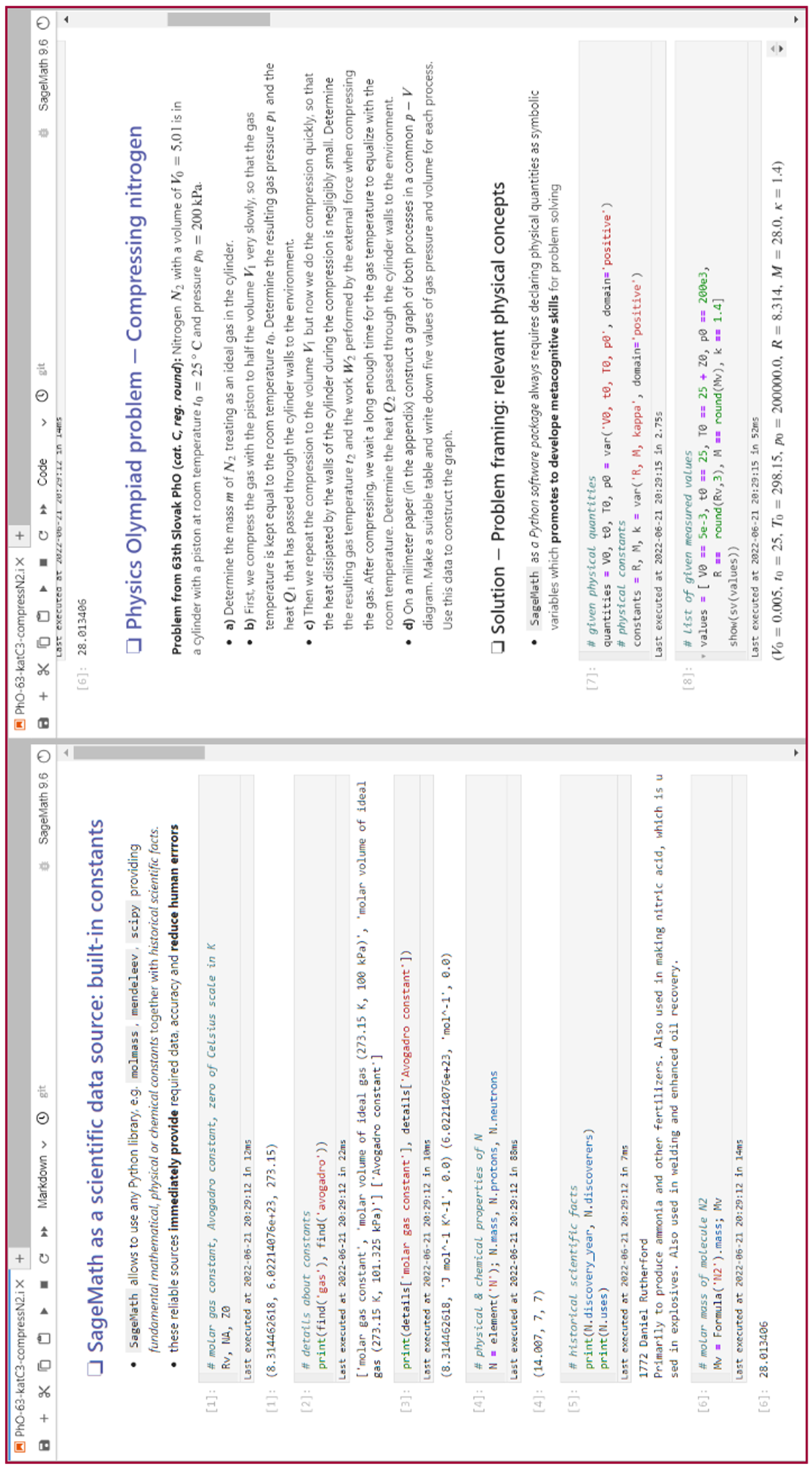
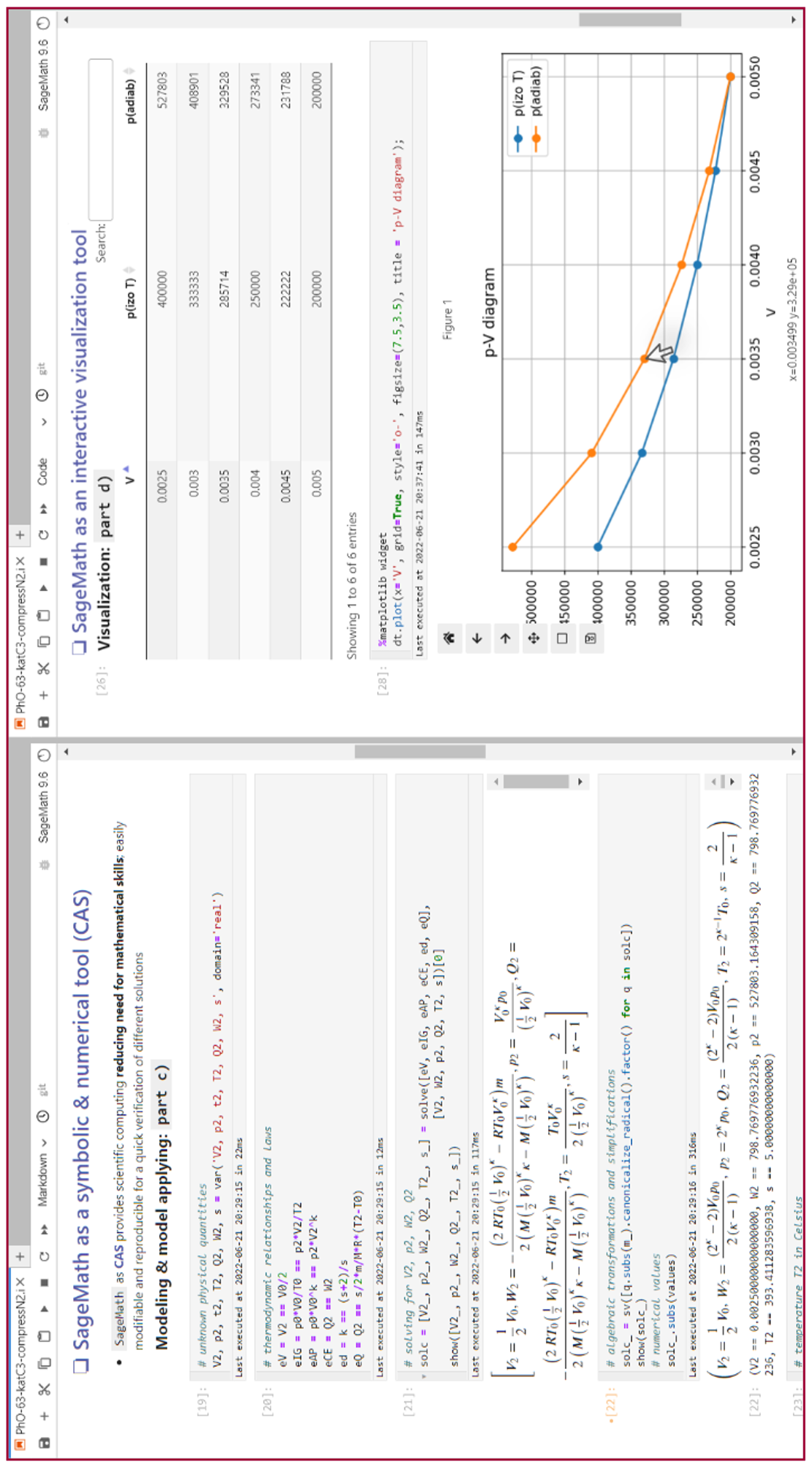
Nowadays interactive digital scientific environments have become an integral part of scientific computing in solving various scientific tasks in research, but also STEM education. We introduce SageMath or shortly Sage -- a free open Python-based alternative to the well-known commercial software -- in the frame of our course Methods of Physical Problems Solving for future scientists and science teachers. Particularly, in the 1st illustrative example from the Physics Olympiad, we present Sage as a scientific open data source, symbolic, numerical, and visualization tool. The 2nd example from the Young Physicists' Tournament shows Sage as a multimedia, modeling, and programming tool. By employing SageMath as an open digital environment for scientific computing in the education of all STEM disciplines, teachers and students are empowered not only with a universal educational tool, but a real research tool, enabling them to engage in interactive visualization, modeling, programming, and solving of authentic, complex interdisciplinary problems, thus naturally enhancing their motivation to pursue science in alignment with the core mission of STEM education.
Motivation & Objective
- To address the growing need for transdisciplinary, real-world problem-solving skills in STEM education by integrating advanced digital tools.
- To overcome limitations of traditional teaching methods by introducing an open, accessible, and research-capable computational environment.
- To empower future scientists and science teachers with hands-on experience in scientific computing through authentic, complex problems.
- To demonstrate SageMath’s effectiveness in both symbolic and numerical computation for advanced physics problems, such as the Wilberforce pendulum.
- To support innovative pedagogical models like flipped and project-based learning through interactive, Jupyter-based computational notebooks.
Proposed method
- Employing SageMath as a unified computational environment that integrates Python with existing open-source scientific libraries (e.g., NumPy, SciPy, SymPy, Matplotlib).
- Using Jupyter notebooks to create interactive, narrative-rich computational documents combining code, visualizations, and explanations.
- Implementing symbolic computation to derive and manipulate Lagrangian equations for mechanical systems, reducing manual algebraic errors.
- Applying numerical solvers like `desolve_odeint` (optimized in Fortran) to solve differential equations for systems with general initial conditions.
- Developing reusable Python functions within Sage to automate problem-solving workflows, such as generating Lagrange equations from system energy expressions.
- Validating results by comparing symbolic solutions with numerical simulations through graphical visualization in real time.
Experimental results
Research questions
- RQ1How can SageMath be effectively integrated into STEM education to support transdisciplinary problem-solving?
- RQ2To what extent does SageMath reduce cognitive load and error rates in solving complex physical problems compared to manual computation?
- RQ3Can SageMath serve as a viable open-source alternative to commercial CAS tools like Mathematica or Maple in academic and research settings?
- RQ4How does the use of SageMath in Jupyter notebooks enhance student engagement and motivation in physics and mathematics education?
- RQ5What are the pedagogical benefits of using SageMath for implementing inquiry-based and project-based learning in STEM curricula?
Key findings
- SageMath enables accurate and efficient symbolic derivation of Lagrange equations, significantly reducing the risk of human error in complex analytical mechanics problems.
- The numerical solution of the Wilberforce pendulum’s equations using `desolve_odeint` in SageMath produces results consistent with analytical solutions, as confirmed by visual comparison in the study.
- Students with basic Python knowledge can successfully implement and modify computational workflows in SageMath to solve advanced physics problems, demonstrating accessibility for beginners.
- The integration of SageMath with Jupyter notebooks supports blended and flipped learning models by allowing students to engage with interactive, annotated computational documents.
- SageMath facilitates the exploration of general conditions in physical systems—beyond simplified cases—by enabling fast, reliable numerical solutions without analytical constraints.
- The platform supports real research-grade computations, as demonstrated by its successful application in calculating the gamma difference distribution with high accuracy and speed.
Read this paper
Open the full text in the Nubint reader and ask about any passage as you read.
Read this paper on NubintThis review was generated by AI from the original paper. Please check the paper before citing it.