
[Paper Review] Serious Games: An Updated Systematic Literature Review
This updated systematic literature review analyzes 37 recent studies on serious games to identify trends in application domains, game types, evaluation methods, quality attributes, and assessment techniques. It finds that virtual worlds and 3D games are most prevalent in education and healthcare, with pre/post-tests and questionnaires being the dominant evaluation methods, and usability emerging as the most critical quality attribute for effective game design and learning outcomes.
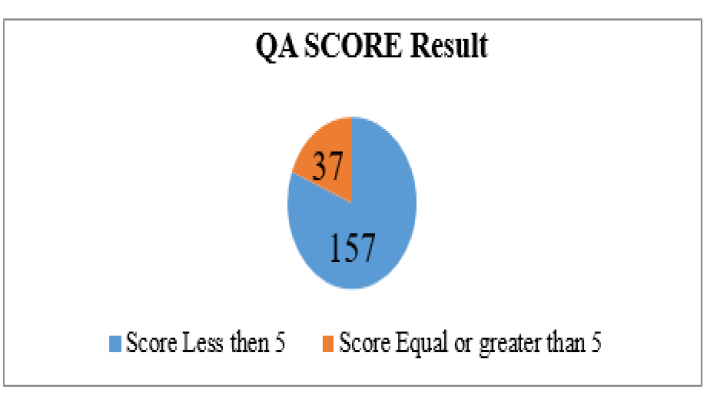
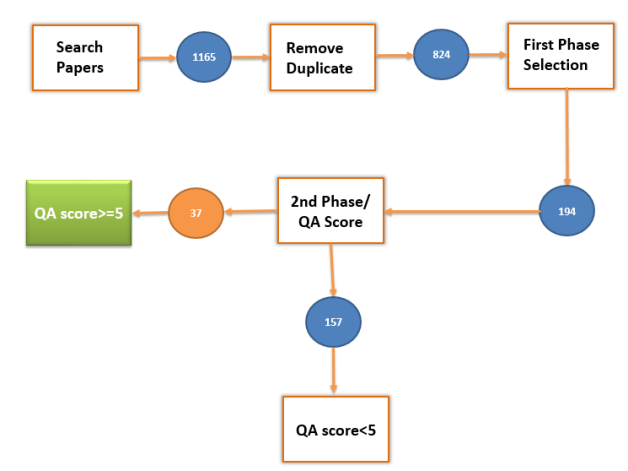
Serious games are simulation software designed to assist people in learning the practical concepts of various application fields such as Health, wellness, Education and Culture. People improve their individual knowledge, skills and attitude through training. This study identified the changing trends with existing studied applications, approaches and methods. We collected 37 papers from Google Scholar, Elsevier, Springer, IEEE Xplore and ACM Digital library. We have collected the evidence answer to six research questions and analyzed the result and identify the change in trends with the comparison with previous systematic literature review (SLR) results. We achieved the best results by techniques (questionnaires and interviews) and procedure (pre/post). Our findings will be useful for practitioners and researchers who can test serious games in different fields.
Motivation & Objective
- To identify and classify the primary application domains where serious games are being evaluated, including education, health, and professional training.
- To examine the types of serious games being developed and deployed, such as mobile, virtual world, and web-based games.
- To analyze the assessment methods and evaluation techniques used in serious game research, particularly pre/post-tests and questionnaires.
- To identify the key quality attributes used to evaluate serious games, with a focus on usability, playability, and cognitive engagement.
- To update and compare findings with prior systematic literature reviews (SLRs) to reveal evolving trends in serious game research and development.
Proposed method
- Conducted a systematic literature review (SLR) using databases including Google Scholar, IEEE Xplore, ACM Digital Library, Springer, and Elsevier to identify relevant studies.
- Selected 37 papers based on predefined inclusion and exclusion criteria focusing on serious games in education, health, wellness, and professional training.
- Mapped findings across six research questions (RQs) to analyze application areas, game types, evaluation methods, quality attributes, assessment techniques, and sample sizes.
- Employed thematic analysis to categorize and synthesize data on evaluation methods, including statistical tests (e.g., T-test, Mann-Whitney U test, Shapiro-Wilk test).
- Used PRISMA guidelines to ensure transparency and reproducibility in study selection and data extraction.
- Compared current findings with previous SLRs to identify shifts in research focus, such as increased emphasis on usability and playability.
Experimental results
Research questions
- RQ1What are the primary application domains for serious games, and which domain has the highest number of evaluated games?
- RQ2What types of serious games are most commonly used, and how do they differ across application domains?
- RQ3Which assessment and evaluation methods are most frequently used in serious game research?
- RQ4Which quality attributes are most commonly used to evaluate serious games, and how have they evolved over time?
- RQ5What are the typical sample sizes used in serious game evaluation studies, and how do they vary across domains?
Key findings
- The education domain had the highest number of evaluated serious games, followed by health and wellness, professional training, and social applications.
- Virtual world 3D games were the most frequently used game type, especially in medical and educational training contexts.
- Pre/post-tests were the most widely used evaluation method, providing clear before-and-after comparisons of learning outcomes.
- Questionnaires and frameworks were the most common assessment tools, used in the majority of studies to evaluate usability, engagement, and satisfaction.
- Usability emerged as the most frequently used quality attribute, followed by playability and cognitive behavior (DE C), indicating a strong focus on user experience.
- Most studies used small sample sizes, with 50 or fewer participants, though some studies used over 100 participants, particularly in clinical or large-scale educational trials.
Read this paper
Open the full text in the Nubint reader and ask about any passage as you read.
Read this paper on NubintThis review was generated by AI from the original paper. Please check the paper before citing it.