
[Paper Review] Service Level Agreements and Security SLA: A Comprehensive Survey
This survey presents a comprehensive analysis of Service Level Agreements (SLAs) and Security SLAs (SecSLA), proposing a novel lifecycle-based classification to organize research from 2017–2023. It identifies key challenges in integrating measurable security and privacy metrics into SLAs, highlights underdeveloped areas like real-time monitoring and legal enforceability, and calls for standardized KPIs to enhance trust and compliance in Cloud and IoT environments.
A Service Level Agreement (SLA) is a formal contract between a service provider and a consumer, representing a crucial instrument to define, manage, and maintain relationships between these two parties. The SLA's ability to define the Quality of Service (QoS) expectations, standards, and accountability helps to deliver high-quality services and increase client confidence in disparate application domains, such as Cloud computing and the Internet of Things. An open research direction in this context is related to the possible integration of new metrics to address the security and privacy aspects of services, thus providing protection of sensitive information, mitigating risks, and building trust. This survey paper identifies state of the art covering concepts, approaches, and open problems of SLA management with a distinctive and original focus on the recent development of Security SLA (SecSLA). It contributes by carrying out a comprehensive review and covering the gap between the analyses proposed in existing surveys and the most recent literature on this topic, spanning from 2017 to 2023. Moreover, it proposes a novel classification criterium to organize the analysis based on SLA life cycle phases. This original point of view can help both academics and industrial practitioners to understand and properly locate existing contributions in the advancement of the different aspects of SLA technology. The present work highlights the importance of the covered topics and the need for new research improvements to tackle present and demanding challenges.
Motivation & Objective
- To address the growing need for secure and privacy-preserving service contracts in dynamic environments like Cloud computing and IoT.
- To identify research gaps in integrating measurable security and privacy metrics into SLAs, especially given the lack of standardization and enforceability.
- To provide a systematic, lifecycle-based classification of SLA research to improve understanding and navigation of existing contributions.
- To evaluate the maturity of SecSLA research and highlight underexplored areas such as real-time adaptation and legal enforceability.
- To guide future research by identifying open challenges and future directions in SLA and SecSLA management.
Proposed method
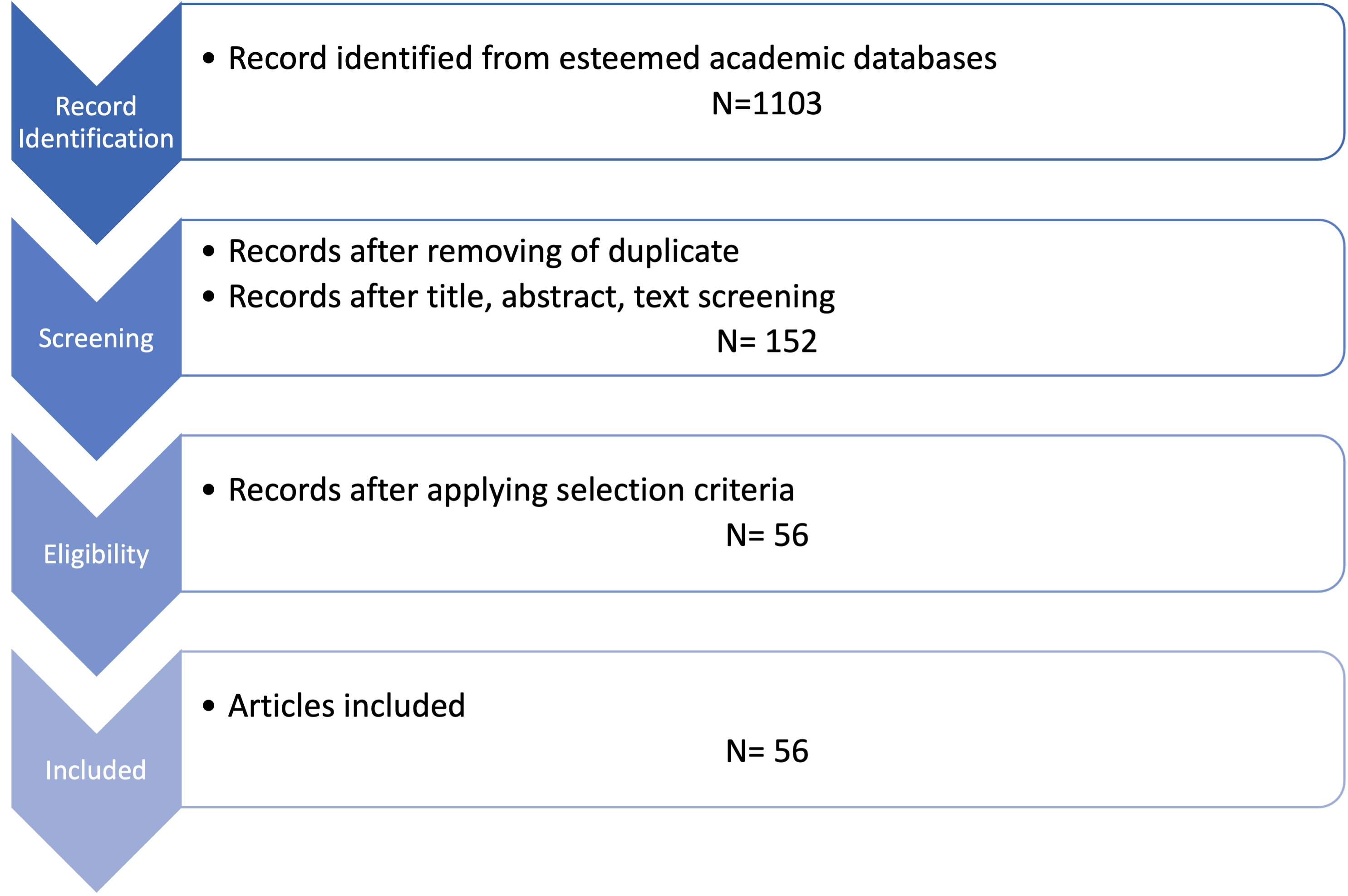
- Conducting a systematic literature review of 56 recent papers (2017–2023) from top-tier conferences, journals, and workshops in the SLA and SecSLA domain.
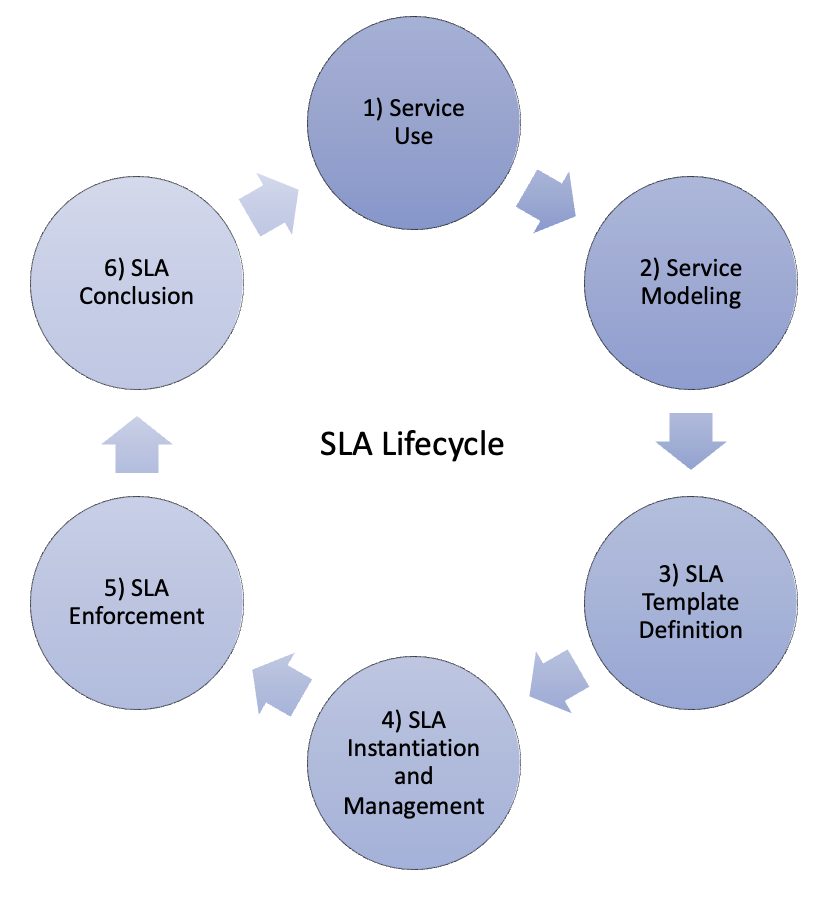
- Proposing a novel classification framework based on the SLA lifecycle: modeling, negotiation, monitoring/violation, and security/privacy integration.
- Analyzing contributions across the lifecycle phases to map trends, techniques, and research focus over time.
- Evaluating the maturity of SecSLA research by quantifying publication distribution across topics and identifying underrepresented areas.
- Using quantitative analysis (e.g., 16% of papers on Security and Privacy SLA) and qualitative synthesis to assess research trends and gaps.
- Drawing on existing standards and reports (e.g., European Commission report) to ground the lifecycle model in established frameworks.
Experimental results
Research questions
- RQ1How are SLAs currently modeled, negotiated, monitored, and enforced across different application domains like Cloud and IoT?
- RQ2What are the key challenges in defining and measuring security and privacy metrics within SLAs, and why are they difficult to standardize?
- RQ3How has the research focus on Security SLAs evolved from 2017 to 2023, and what are the dominant approaches in this area?
- RQ4What are the main open issues in SLA management, particularly regarding real-time adaptation, legal enforceability, and scalability in dynamic environments?
- RQ5What future research directions are needed to bridge the gap between theoretical SLA models and industrial deployment in secure, trustworthy service provisioning?
Key findings
- Of the 56 reviewed papers, 32% focused on SLA negotiation and 32% on monitoring/violation, indicating strong research interest in runtime management.
- Only 16% of the reviewed literature addressed Security and Privacy SLAs, with a declining trend—dropping to 6% in the last three years—highlighting underdevelopment in this critical area.
- The integration of measurable security metrics into SLAs remains a major challenge due to the lack of universally accepted KPIs and the dynamic nature of Cloud and IoT environments.
- Legal and contractual ambiguities in international or multi-party SLAs remain unresolved, limiting enforceability and trust across jurisdictions.
- Real-time SLA adaptation and dynamic negotiation mechanisms are still underdeveloped, especially for emerging Industry 5.0 and highly scalable IoT use cases.
- Existing certification schemes for security compliance are in early stages, and there is insufficient alignment between regulatory requirements and SLA-based assurance mechanisms.
Read this paper
Open the full text in the Nubint reader and ask about any passage as you read.
Read this paper on NubintThis review was generated by AI from the original paper. Please check the paper before citing it.