
[Paper Review] Sharing to Learn and Learning to Share; Fitting Together Meta, Multi-Task, and Transfer Learning: A Meta Review
A meta-review examining how transfer learning, meta-learning, and multi-task learning are combined across domains, and proposing a generic task- and model-agnostic integrated learning network.
Integrating knowledge across different domains is an essential feature of human learning. Learning paradigms such as transfer learning, meta-learning, and multi-task learning reflect the human learning process by exploiting the prior knowledge for new tasks, encouraging faster learning and good generalization for new tasks. This article gives a detailed view of these learning paradigms and their comparative analysis. The weakness of one learning algorithm turns out to be a strength of another, and thus, merging them is a prevalent trait in the literature. Numerous research papers focus on each of these learning paradigms separately and provide a comprehensive overview of them. However, this article reviews research studies that combine (two of) these learning algorithms. This survey describes how these techniques are combined to solve problems in many different fields of research, including computer vision, natural language processing, hyper-spectral imaging, and many more, in a supervised setting only. Based on the knowledge accumulated from the literature, we hypothesize a generic task-agnostic and model-agnostic learning network – an ensemble of meta-learning, transfer learning, and multi-task learning, termed Multi-modal Multi-task Meta Transfer Learning. We also present some open research questions, limitations, and future research directions for this proposed network. The aim of this article is to spark interest among scholars in effectively merging existing learning algorithms with the intention of advancing research in this field. Instead of presenting experimental results, we invite readers to explore and contemplate techniques for merging algorithms while navigating through their limitations.
Motivation & Objective
- Explain how transfer learning, multi-task learning, and meta-learning share information to improve learning across tasks.
- Survey existing works that combine two or more of these paradigms across computer vision, NLP, and other domains.
- Highlight strengths, weaknesses, and common misconceptions among these paradigms.
- Propose a generic, task- and model-agnostic learning network that integrates the three paradigms and outline open research questions.
Proposed method
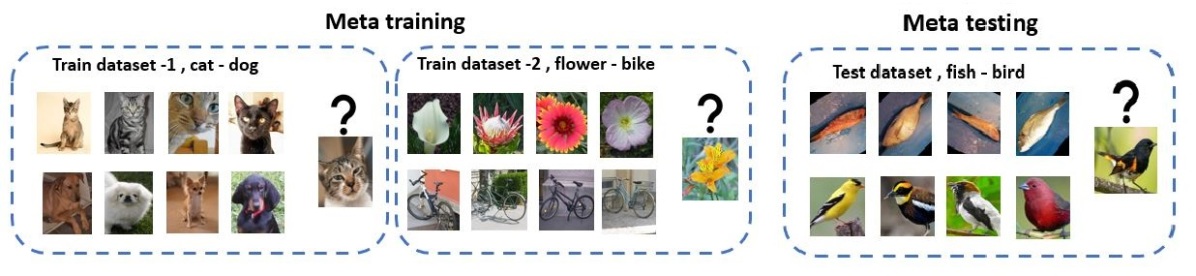
- Define and differentiate transfer learning, multi-task learning (MTL), and meta-learning, including their information-sharing mechanisms and objectives.
- Survey literature focusing on combinations of these paradigms, including meta-transfer learning, multi-task meta-learning, and related hybrids.
- Discuss architectures and training strategies for shared vs. task-specific components in MTL, including hard vs. soft parameter sharing.
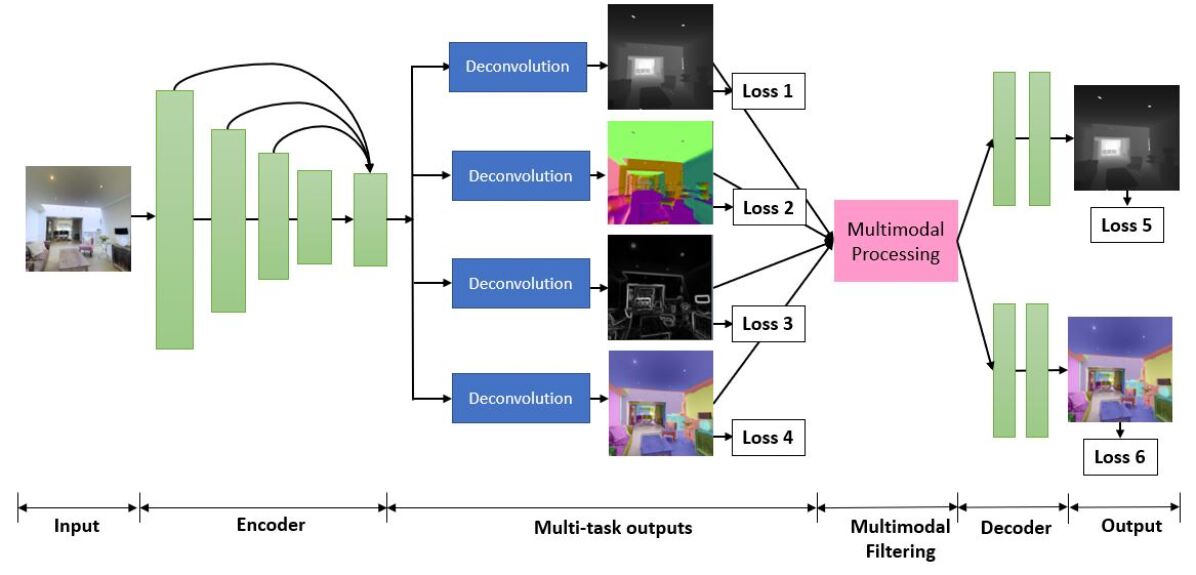
- Present a conceptual generic network that integrates all three paradigms and examine its potential, limitations, and future research directions.
- Summarize notations and provide a structured comparison of the paradigms with examples from vision, NLP, and other fields.
Experimental results
Research questions
- RQ1What are the core similarities and differences among transfer learning, meta-learning, and multi-task learning in terms of information sharing and objectives?
- RQ2How have researchers combined two or all three paradigms, and what empirical patterns emerge across domains?
- RQ3What is a generic, task-agnostic and model-agnostic learning network that can integrate meta-learning, transfer learning, and multi-task learning, and what are its open challenges?
- RQ4What open research questions and limitations remain for ensemble and integration of these learning paradigms?
Key findings
- There is widespread interest in combining two of the paradigms, and the article argues for an integrated framework that leverages their complementary strengths.
- Negative transfer and improper sharing can hinder performance, highlighting the need for balanced sharing architectures and task relationship learning.
- The survey covers a broad set of domains and datasets, and summarizes how task types and data heterogeneity affect knowledge sharing.
- It proposes a generic, task- and model-agnostic network—Multi-modal Multi-task Meta Transfer Learning—as a conceptual direction for unified learning.
- The work identifies open questions, limitations, and future research directions for ensemble approaches that combine MTL, meta-learning, and transfer learning.
Read this paper
Open the full text in the Nubint reader and ask about any passage as you read.
Read this paper on NubintThis review was generated by AI from the original paper. Please check the paper before citing it.