
[Paper Review] SoK: Cross-Domain MEV
This paper introduces a novel framework for analyzing cross-domain MEV by categorizing extractable value into intrinsic-extractable and time-extractable value, enabling systematic evaluation of protocols that enable or mitigate MEV across blockchains. It identifies shared sequencers and order-flow auctions as the most promising solutions, despite significant technical barriers, and highlights RFQs and batch settlement as key mechanisms for reducing MEV through improved price discovery and censorship resistance.
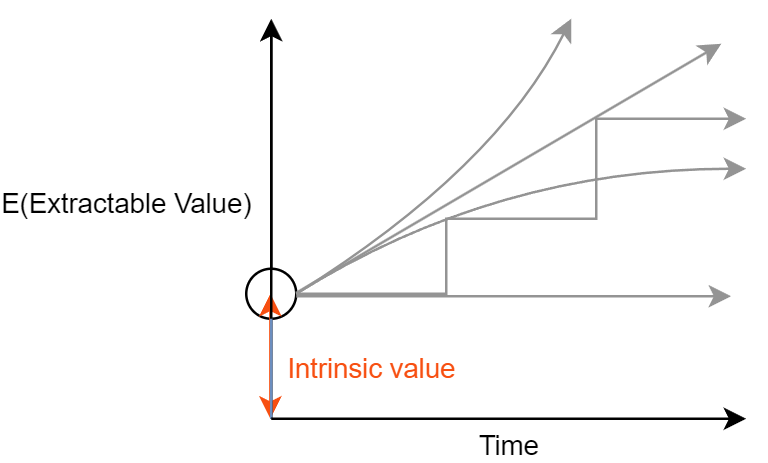
We examine the current state of the cross-domain world, with particular focus on the protocols being used/planned for use by multi-domain users. We build on existing frameworks for analyzing how MEV is extracted, while also adding a new categorization of intrinsic-extractable value vs. time-extractable value to describe how MEV is generated for an extractor. Together, this provides us with a framework with which we compare classes of protocols enabling cross-domain MEV, and the MEV occurring within these classes. We analyze each protocol class separately and compare current implementations to an ideal functionality for each. We primarily focus on analyzing the MEV mitigations that these protocols provide, both now, and into the future. In each case, we also outline the technical barriers that current protocol implementations face. With this methodology, we identify sequencers and order-flow auctions as cross-domain protocols with the greatest potential to mitigate MEV, but also as protocols with some of the biggest technical barriers.
Motivation & Objective
- To systematize the analysis of cross-domain MEV across emerging blockchain protocols.
- To address the lack of actionable frameworks for reasoning about cross-domain MEV, especially in light of existing formalisms that are too abstract for practical application.
- To evaluate how different protocols—such as bridges, batch auctions, and RFQs—generate or mitigate MEV, focusing on extractability mechanisms and source of value.
- To identify ideal functionalities for MEV mitigation and assess current implementations against them, highlighting technical barriers.
- To guide future research by outlining open questions in censorship resistance, decentralization, and protocol design for cross-chain MEV.
Proposed method
- Proposes a dual categorization of MEV: intrinsic-extractable value (derived from on-chain state and transaction ordering) and time-extractable value (derived from off-chain signals and timing advantages).
- Applies this framework to analyze 12 protocol classes, including shared sequencers, order-flow auctions, bridges, and RFQs, evaluating their MEV-generating and MEV-mitigating properties.
- Compares current protocol implementations to ideal functionalities, identifying gaps in decentralization, censorship resistance, and MEV mitigation.
- Uses proposer-builder separation (PBS) and order-flow auction models as foundational reference points for MEV extraction and redistribution.
- Evaluates technical barriers such as trust assumptions in bridge key-holders, liveness risks in batch settlement, and latency constraints in cross-chain coordination.
- Integrates insights from existing works on MEV (e.g., Flashbots, PBS) while extending them to cross-domain contexts where MEV is amplified by multi-chain interaction.
Experimental results
Research questions
- RQ1How can MEV be systematically categorized in cross-domain blockchain environments, particularly distinguishing between value derived from ordering versus off-chain signals?
- RQ2Which cross-domain protocols—such as shared sequencers, order-flow auctions, or RFQs—offer the most effective mitigation of MEV, and what are their inherent technical limitations?
- RQ3To what extent can existing protocols like bridges or batch auctions be redesigned to eliminate intrinsic MEV while preserving decentralization and liveness?
- RQ4What role do trust assumptions in third-party validators or key-holders play in enabling MEV attacks, especially in cross-chain bridges?
- RQ5How can future protocol designs balance MEV mitigation with scalability, censorship resistance, and economic efficiency in a multi-chain world?
Key findings
- Shared sequencers and order-flow auctions are identified as the most promising protocols for mitigating cross-domain MEV, though they face major technical barriers including liveness risks and trust assumptions.
- Bridges are a primary vector for intrinsic MEV due to their reliance on trusted third parties for message verification, making them vulnerable to ordering attacks and exploits.
- RFQ-based systems like Hashflow and ODOS can eliminate intrinsic MEV by enabling near-instantaneous, quote-driven trades, but depend on active market makers and are not fully compatible with automated market makers.
- Batch settlement protocols (e.g., via batch auctions) reduce time-extractable value by enabling synchronized, competitive execution, but risk liveness issues if coordination fails.
- The ideal functionality of censorship-resistant, decentralized protocols is often undermined in practice due to centralization in key components like sequencers or liquidity providers.
- Open questions remain around building trustless, scalable, and censorship-resistant cross-domain MEV mitigation systems, especially for high-frequency, multi-chain environments.
Read this paper
Open the full text in the Nubint reader and ask about any passage as you read.
Read this paper on NubintThis review was generated by AI from the original paper. Please check the paper before citing it.