
[Paper Review] Stabilizer configuration interaction: Finding molecular subspaces with error detection properties
This paper proposes a hybrid classical-quantum framework that uses a classical algorithm to find optimal stabilizer states as approximations to molecular ground states, then constructs error-detection codes via codeword-stabilized codes. The method enables higher-fidelity preparation of these states on noisy early fault-tolerant quantum devices, with numerical validation on molecules up to 36 qubits and demonstrated error-detection benefits at low error rates.
In this work, we explore a new approach to designing both algorithms and error detection codes for preparing approximate ground states of molecules. We propose a classical algorithm to find the optimal stabilizer state by using excitations of the Hartree-Fock state, followed by constructing quantum error-detection codes based on this stabilizer state using codeword-stabilized codes. Through various numerical experiments, we confirm that our method finds the best stabilizer approximations to the true ground states of molecules up to 36 qubits in size. Additionally, we construct generalized stabilizer states that offer a better approximation to the true ground states. Furthermore, for a simple noise model, we demonstrate that both the stabilizer and (some) generalized stabilizer states can be prepared with higher fidelity using the error-detection codes we construct. Our work represents a promising step toward designing algorithms for early fault-tolerant quantum computation.
Motivation & Objective
- To develop an efficient classical algorithm for constructing stabilizer state approximations to molecular ground states, avoiding costly parameterized quantum circuits.
- To integrate error-detection codes into the state preparation process for early fault-tolerant quantum computation.
- To reduce resource overhead in preparing approximate ground states by leveraging stabilizer subspaces as code spaces.
- To validate the method on molecules of increasing size, up to 36 qubits, with a focus on practical feasibility.
- To demonstrate that error-detection codes improve state fidelity under noise, even with measurement overhead from post-selection.
Proposed method
- A classical algorithm is used to find the best stabilizer state approximation to the true molecular ground state by applying excitations to the Hartree-Fock reference state.
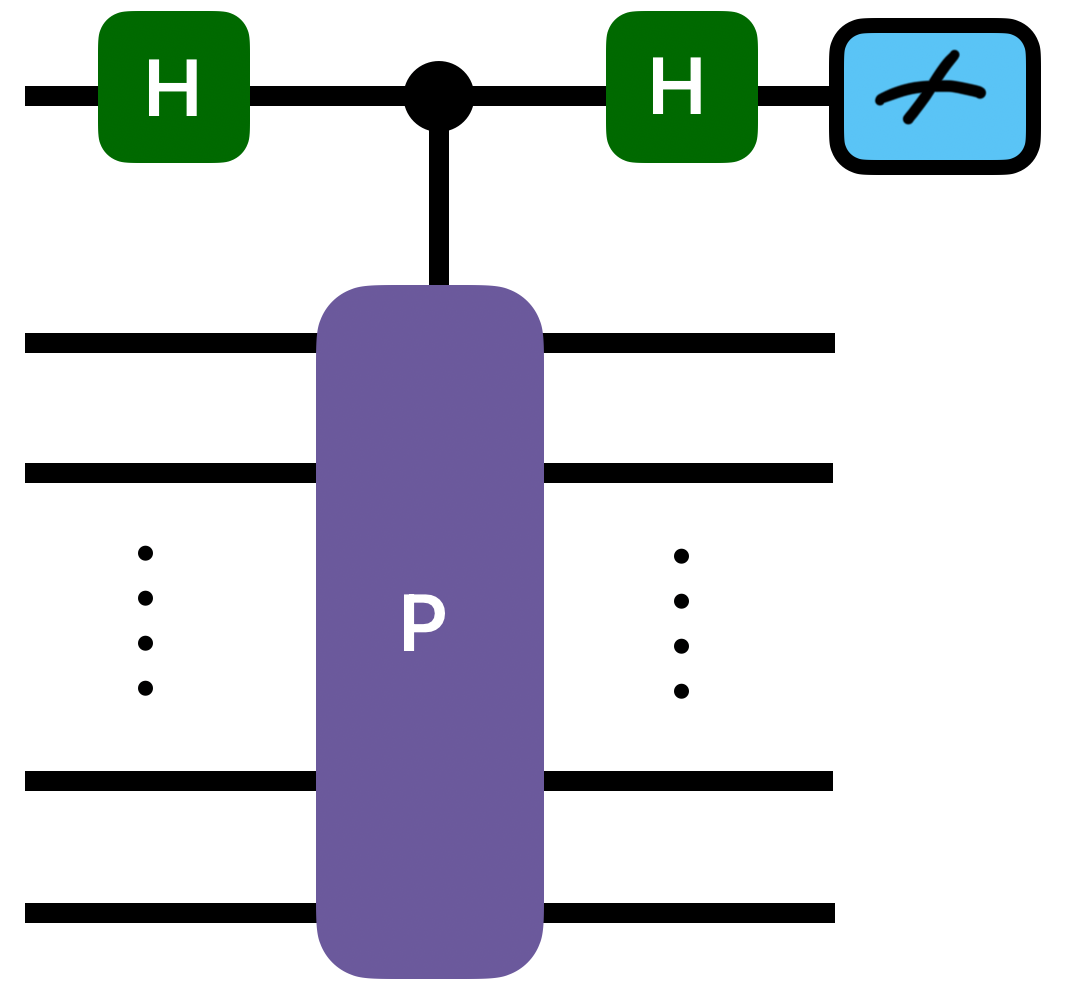
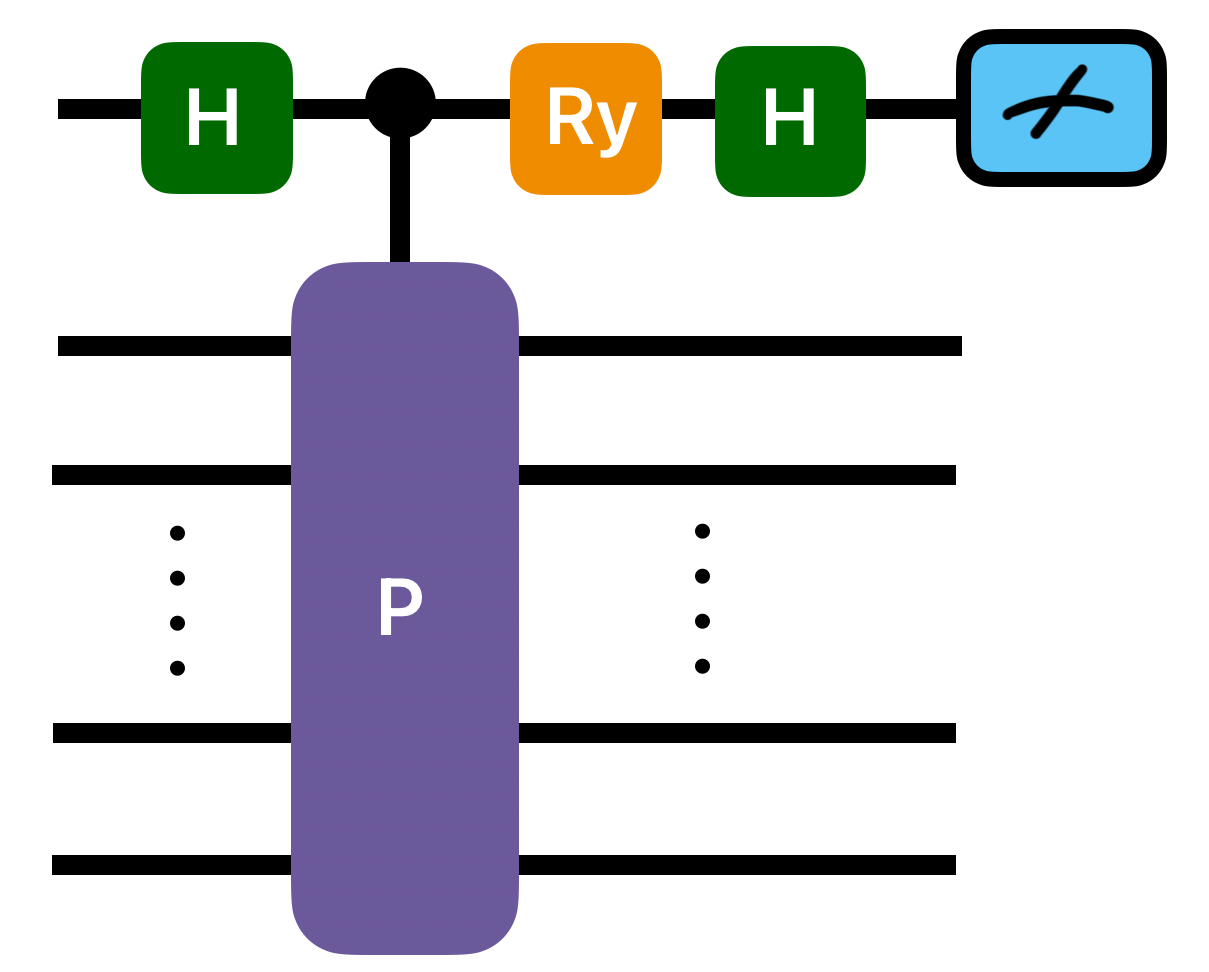
- The stabilizer state is used as the code space for constructing quantum error-detection codes via the codeword-stabilized code framework.
- Generalized stabilizer states are constructed to offer better approximations than standard stabilizer states.
- The method employs a single logical qubit code with minimal resource cost for state preparation and error detection.
- Noisy simulations are performed using a depolarizing channel after state preparation and a bit-flip channel before stabilizer measurement to test error-detection performance.
- Overlaps between ideal and noisy states are calculated with and without error detection, and discard rates are tracked to assess resource trade-offs.
Experimental results
Research questions
- RQ1Can a classical algorithm efficiently find stabilizer state approximations to molecular ground states without relying on parameterized quantum circuits?
- RQ2Can stabilizer states derived from Hartree-Fock excitations provide better energy approximations than the Hartree-Fock state alone?
- RQ3Can codeword-stabilized codes be effectively constructed from these stabilizer approximations to enable error detection during state preparation?
- RQ4Does error detection via these codes improve the fidelity of prepared stabilizer and generalized stabilizer states under realistic noise models?
- RQ5What is the trade-off between fidelity and resource cost (e.g., discard rate) when using error detection in noisy simulations?
Key findings
- The classical algorithm successfully finds stabilizer state approximations to molecular ground states for systems up to 36 qubits, with computation times ranging from seconds (H₂) to several hours (Cr₂).
- Stabilizer states consistently outperform the Hartree-Fock state in energy approximation across all tested molecules.
- The method constructs error-detection codes using codeword-stabilized codes, enabling preparation of both stabilizer and generalized stabilizer states with enhanced fidelity under noise.
- In noisy simulations, error detection maintains high overlap (close to 1) with the ideal state for depolarizing error probabilities below 0.01, with a discard rate of less than 20%.
- The discard rate increases with error probability, indicating a trade-off between fidelity and resource efficiency under higher noise.
- The results suggest that stabilizer states can serve as a promising starting point for further quantum chemistry algorithms, especially when combined with linear combinations of multiple stabilizer states.
Read this paper
Open the full text in the Nubint reader and ask about any passage as you read.
Read this paper on NubintThis review was generated by AI from the original paper. Please check the paper before citing it.