
[Paper Review] STCF Conceptual Design Report: Volume 1 -- Physics & Detector
This paper presents the STCF Conceptual Design Report Volume 1, focusing on the physics goals and detector concepts for the Super Tau-Charm Facility (STCF).
The Super $τ$-Charm facility (STCF) is an electron-positron collider proposed by the Chinese particle physics community. It is designed to operate in a center-of-mass energy range from 2 to 7 GeV with a peak luminosity of $0.5 imes 10^{35}{ m cm}^{-2}{ m s}^{-1}$ or higher. The STCF will produce a data sample about a factor of 100 larger than that by the present $τ$-Charm factory -- the BEPCII, providing a unique platform for exploring the asymmetry of matter-antimatter (charge-parity violation), in-depth studies of the internal structure of hadrons and the nature of non-perturbative strong interactions, as well as searching for exotic hadrons and physics beyond the Standard Model. The STCF project in China is under development with an extensive R\&D program. This document presents the physics opportunities at the STCF, describes conceptual designs of the STCF detector system, and discusses future plans for detector R\&D and physics case studies.
Motivation & Objective
- Describe the STCF conceptual design for physics programs and detector systems.
- Outline detector requirements and performance targets for STCF.
- Provide a framework and roadmap for Volume 1 covering physics reach and detector concepts.
Proposed method
- Present the overarching design philosophy for STCF physics programs.
- Outline detector subsystems and their expected roles in achieving physics goals.
- Discuss integration, feasibility, and phased development considerations for the detector design.
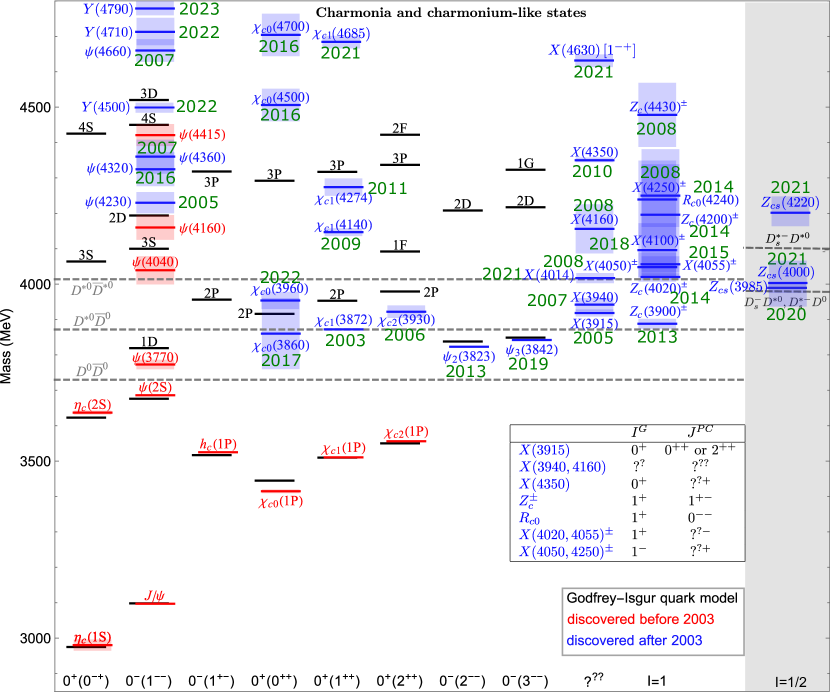
Experimental results
Research questions
- RQ1What physics goals and opportunities motivate the STCF design?
- RQ2What detector capabilities are required to achieve STCF physics objectives?
- RQ3How should the detector be structured and phased to meet performance targets?
Key findings
- No explicit numerical results or findings are provided in the provided text excerpt.
- The excerpt focuses on the existence and scope of the Volume 1 Physics & Detector design rather than experimental outcomes.
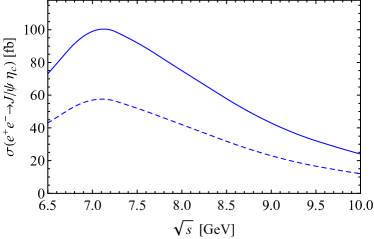
Read this paper
Open the full text in the Nubint reader and ask about any passage as you read.
Read this paper on NubintThis review was generated by AI from the original paper. Please check the paper before citing it.