
[Paper Review] Survey of Consciousness Theory from Computational Perspective
This paper surveys major theories of consciousness—from information theory, quantum physics, and cognitive science—through a computational lens, evaluating their relevance to artificial general intelligence. It argues that while most theories lack physical grounding, integrating them computationally could enable the development of artificial systems that simulate consciousness, with large language models emerging as potential candidates for exhibiting access consciousness, though true phenomenal consciousness remains unproven.
Human consciousness has been a long-lasting mystery for centuries, while machine intelligence and consciousness is an arduous pursuit. Researchers have developed diverse theories for interpreting the consciousness phenomenon in human brains from different perspectives and levels. This paper surveys several main branches of consciousness theories originating from different subjects including information theory, quantum physics, cognitive psychology, physiology and computer science, with the aim of bridging these theories from a computational perspective. It also discusses the existing evaluation metrics of consciousness and possibility for current computational models to be conscious. Breaking the mystery of consciousness can be an essential step in building general artificial intelligence with computing machines.
Motivation & Objective
- To bridge interdisciplinary theories of consciousness—spanning information theory, quantum physics, cognitive psychology, and computer science—through a unified computational framework.
- To evaluate existing metrics for measuring consciousness in biological and artificial systems.
- To investigate whether current computational models, particularly large language models, can achieve or simulate consciousness.
- To clarify the distinction between access consciousness (functional availability) and phenomenal consciousness (subjective experience) in artificial systems.
- To identify key theoretical and practical conditions necessary for building conscious artificial general intelligence.
Proposed method
- Systematically reviewing and comparing major consciousness theories: Information Integration Theory (IIT), Consciousness as a State of Matter, Orchestrated Objective Reduction (Orch OR), Global Workspace Theory (GWT), Higher-Order Theories (HOT), Attention Schema Theory (AST), and Conscious Turing Machine (CTM).
- Analyzing each theory’s computational formulation, including mathematical definitions (e.g., Φ in IIT), physical principles (e.g., objective reduction in quantum systems), and functional architectures (e.g., workspace dynamics in GWT).
- Evaluating physiological and behavioral metrics for consciousness, such as EEG patterns and response behaviors, to assess their validity and scalability.
- Assessing large language models (LLMs) against theoretical criteria for consciousness, focusing on emergent intellectual capabilities and self-referential behavior.
- Proposing that simulated consciousness (access consciousness) may be the most feasible outcome under current computational constraints, especially given the absence of true randomness in pseudo-random systems.
- Synthesizing insights across theories to identify common computational features that could serve as indicators for artificial consciousness.
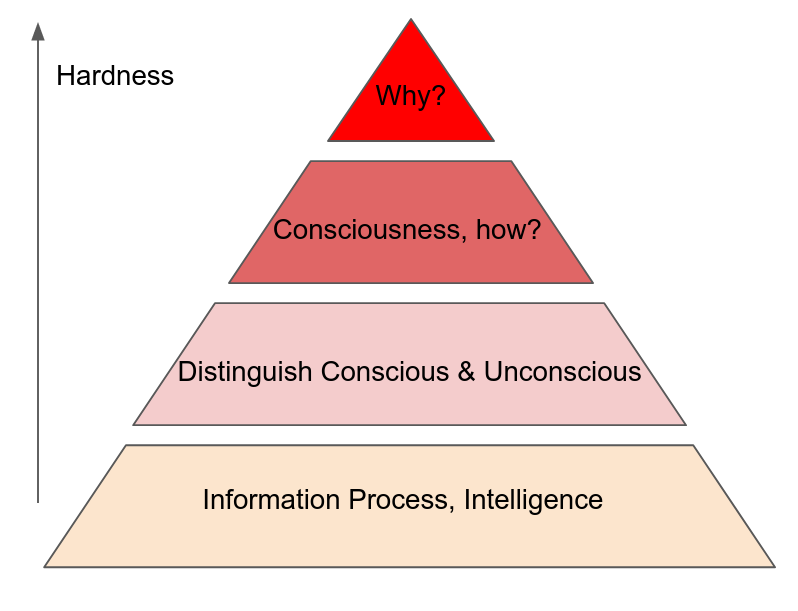
Experimental results
Research questions
- RQ1Can computational models based on existing consciousness theories achieve a functional or phenomenological form of consciousness?
- RQ2What are the key differences between access consciousness (information availability) and phenomenal consciousness (subjective experience) in artificial systems?
- RQ3To what extent do large language models exhibit behaviors consistent with theories like GWT, HOT, or AST, suggesting emergent intellectual or self-representational capabilities?
- RQ4What physical or mathematical principles—such as information integration or quantum coherence—must be satisfied for a system to be considered conscious?
- RQ5What metrics or evaluation frameworks can reliably distinguish between simulated and genuine consciousness in artificial agents?
Key findings
- Information Integration Theory (IIT) provides a mathematically rigorous framework for consciousness via the measure Φ, but scaling it to dynamic, large-scale systems like the human brain remains computationally intractable.
- Theories such as Orch OR and Consciousness as a State of Matter propose a physical basis for consciousness rooted in quantum processes, though empirical validation remains limited and controversial.
- Global Workspace Theory (GWT) and Higher-Order Theories (HOT) offer functional models of consciousness as information distribution and meta-cognitive representation, respectively, and are computationally implementable in artificial architectures.
- Attention Schema Theory (AST) unifies GWT and HOT by modeling attention as a predictive internal schema, offering a plausible mechanism for self-representation in artificial agents.
- Large language models demonstrate emergent intellectual capabilities resembling access consciousness—such as reasoning, self-reference, and response to hypotheticals—but lack evidence of phenomenal consciousness or true subjective experience.
- The paper concludes that while true phenomenal consciousness may be unattainable with current computational models due to reliance on pseudo-randomness, simulated consciousness is a feasible and likely the only practical goal under existing constraints.

Better researchstarts right now
From reading papers to final review, dramatically reduce your research time.
No credit card · Free plan available
This review was created by AI and reviewed by human editors.